RAUL GUERRERO
About the exhibition cycle
Attention
The series of four exhibitions at Plataforma, Attention, is the result of multiple studio visits in Los Angeles, San Diego, Tijuana and Guadalajara. Far from imposing a narrative, this curatorial cycle proposes an open discussion between artists, geographies and languages to highlight the power of cross-reference as well as the direct experience of art.
The two group shows, as well as the two solo shows, reveal the unexpected affinities that come from singular practices. Attention oscillates between receptive attention and the urgent need to look, think and feel.
Rather than illustrating a fixed idea, the selection seeks to make itself an accessible meeting point, without either neutrality or imposed certainties. In a context where curatorial judgment can be seen as intrusive, this project hopes to harness the external but committed gaze that observes without feeling a need to define. Attention, in the end, is an invitation to experiment without prejudice.
About RAUL GUERRERO
Curator: Sacha Craddock
Curatorial cycle: Attention
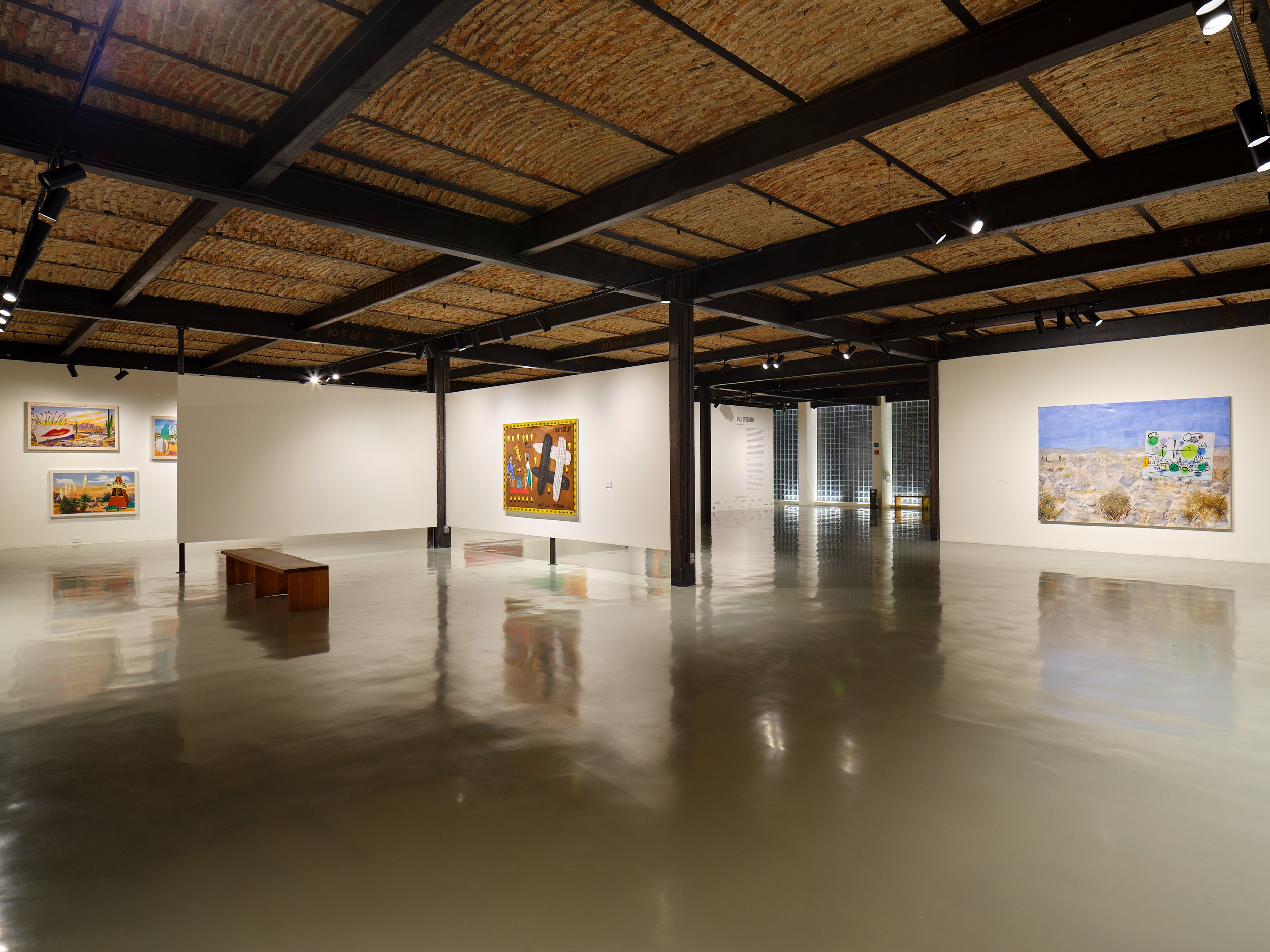
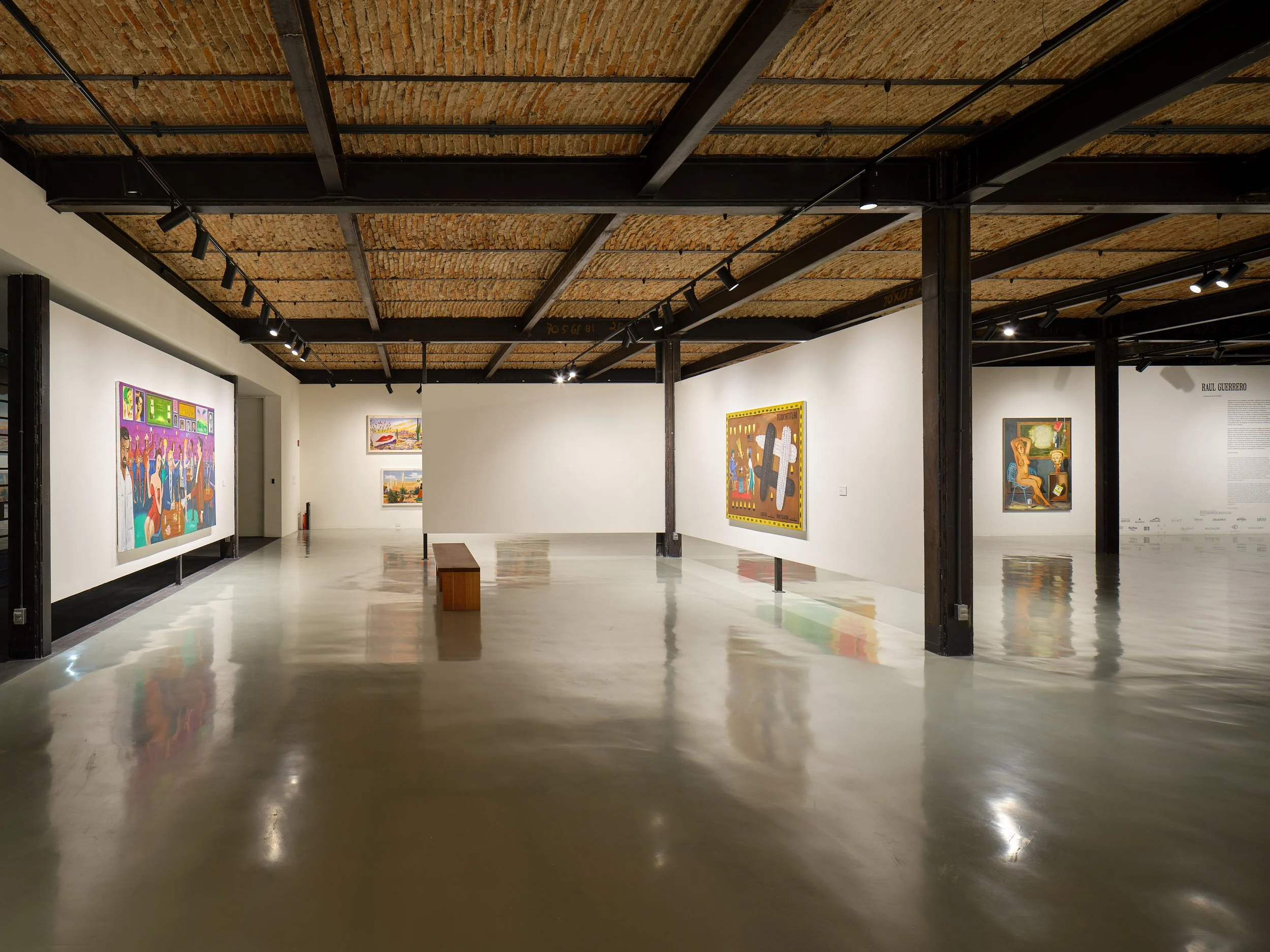
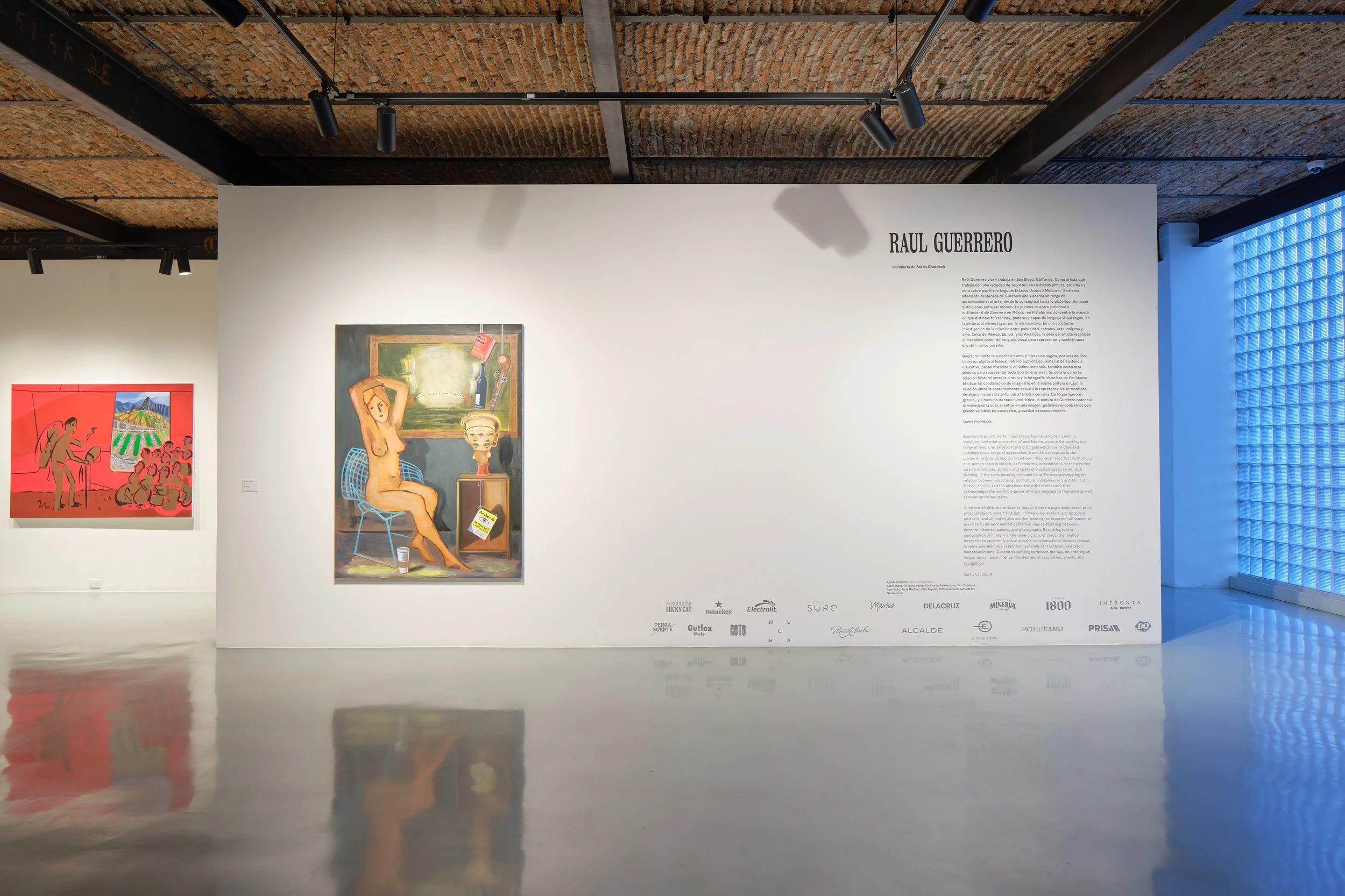
Plataforma presents Raul Guerrero's first solo institutional exhibition in Mexico, curated by Sacha Craddock. Guerrero’s highly distinguished career bridges and encompasses a range of approaches, sometimes with a humorous integration of language. This exhibition focuses on the way that varying references, powers, and layers of visual language can converge, with painting, in the same place by the same hand. Forever investigating the relationship between advertising, portraiture, indigenous art, and film, from both Mexico and the US, as well as the Americas, the artist creates work that acknowledges the inevitable power of visual language to represent as well as conceal various pasts.
Raúl Guerrero
Solo Exhibition
Curated by Sacha Craddock
October 26, 2025 – January 11, 2026
Plataforma, Guadalajara, Mexico
Opening: Sunday, October 26
Raul Guerrero
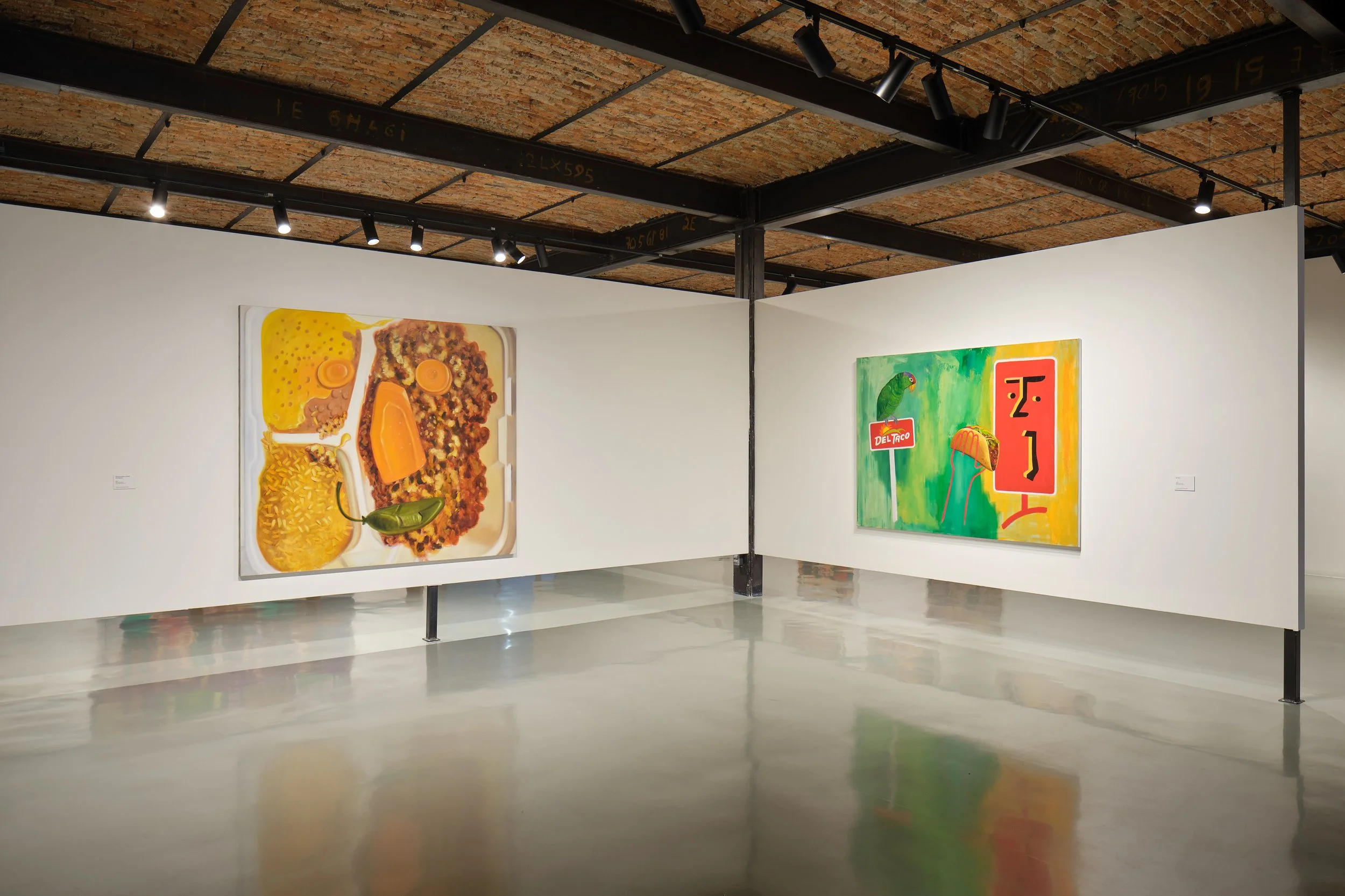
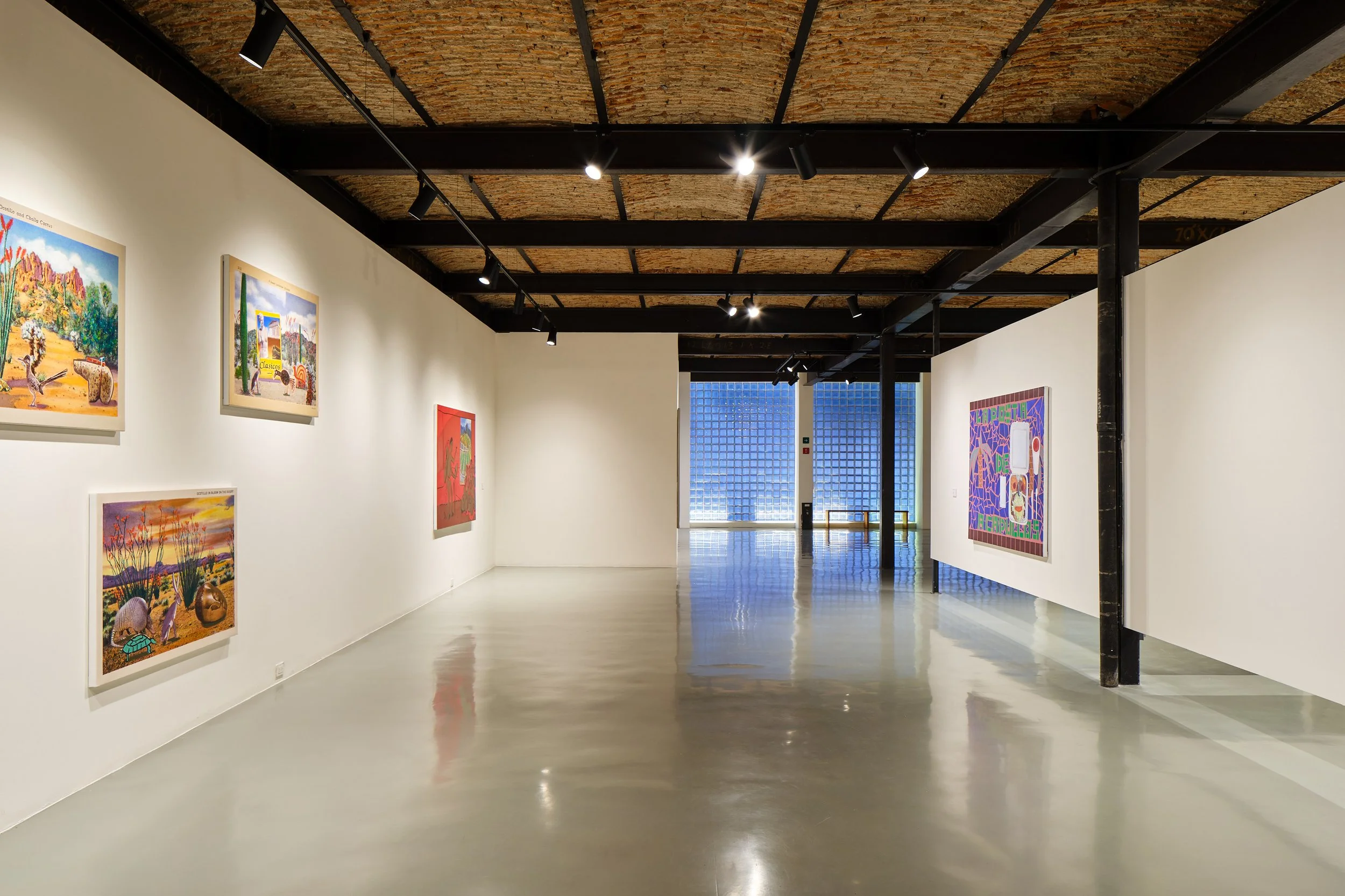
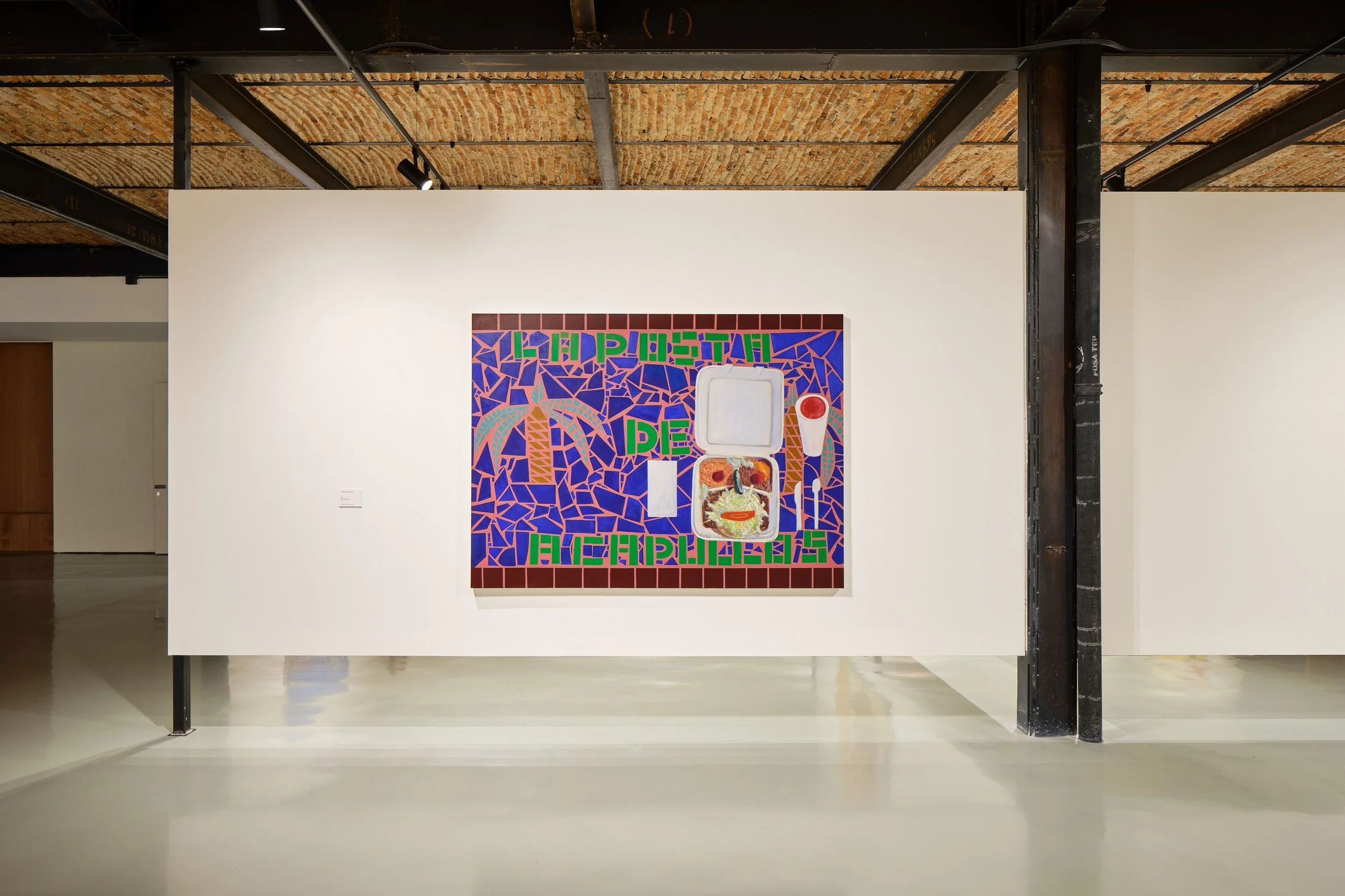
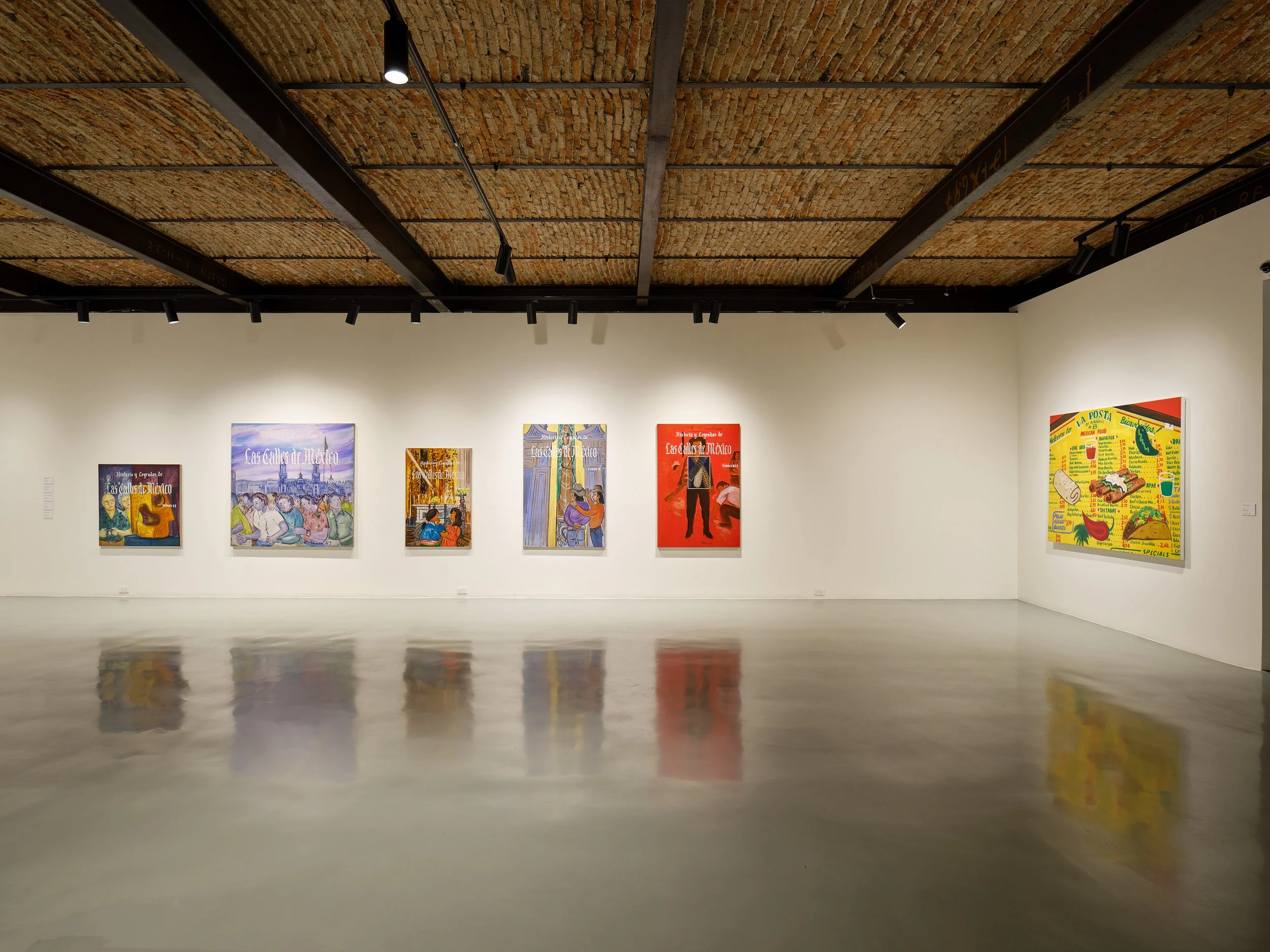
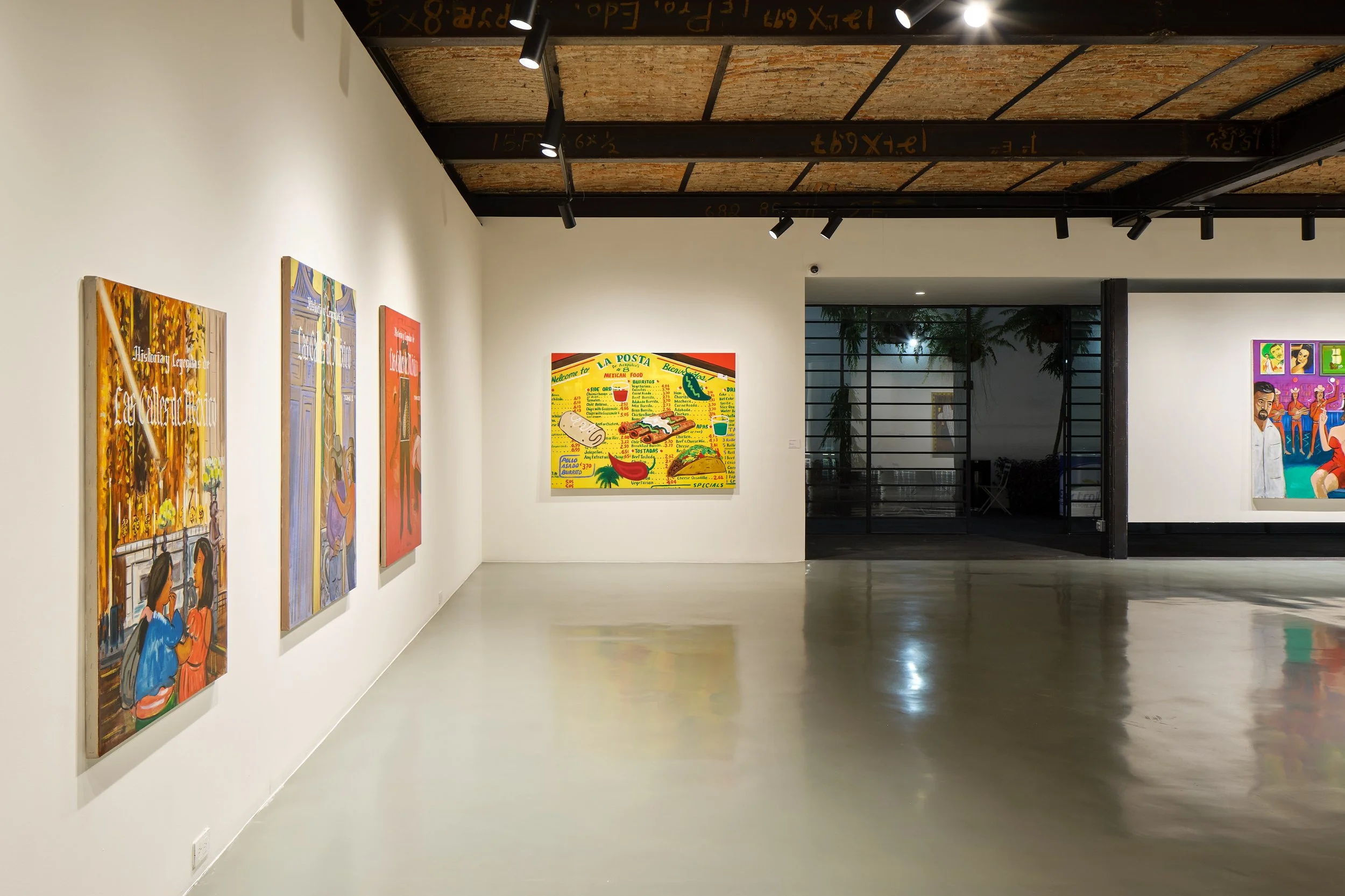
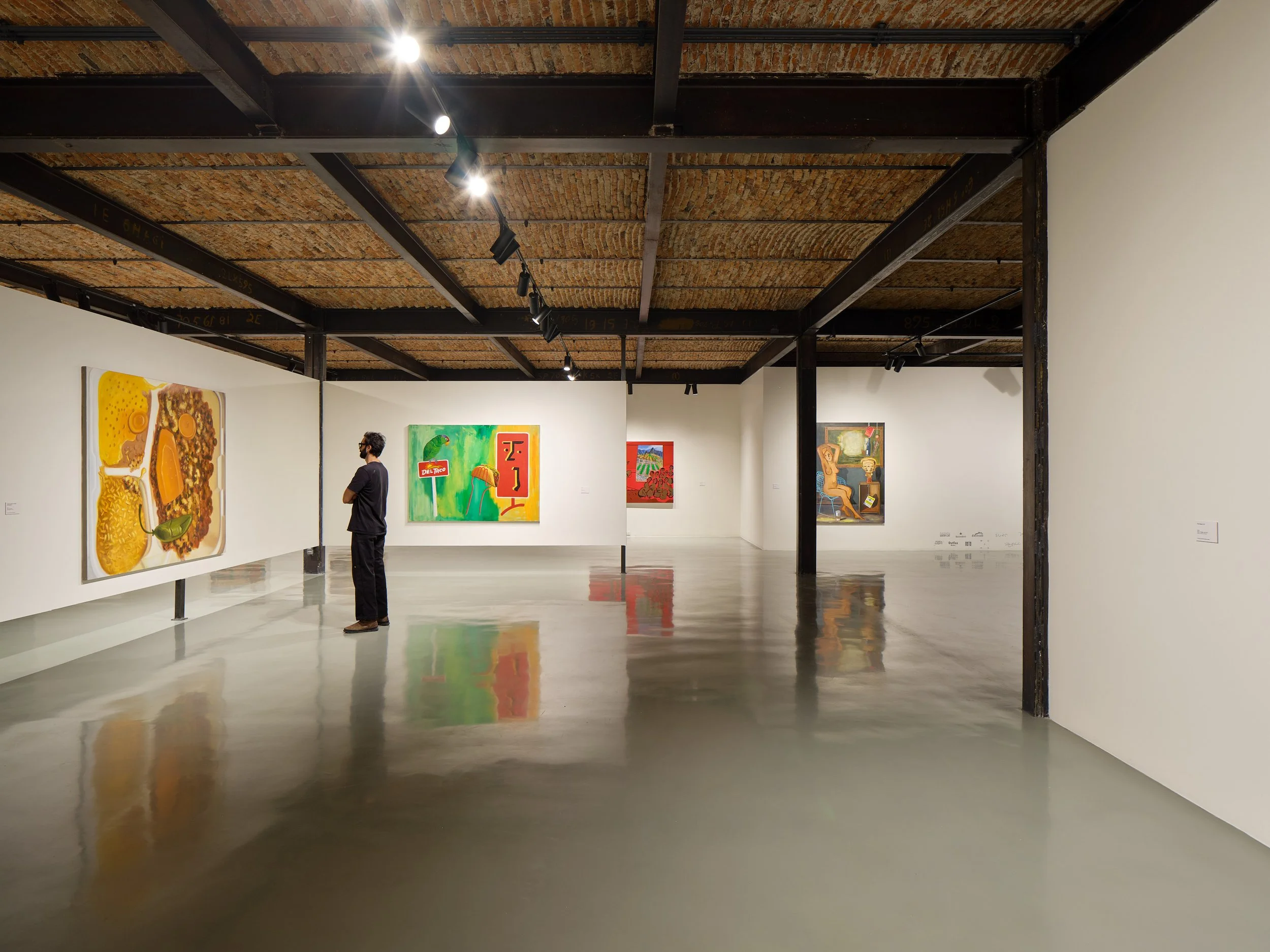
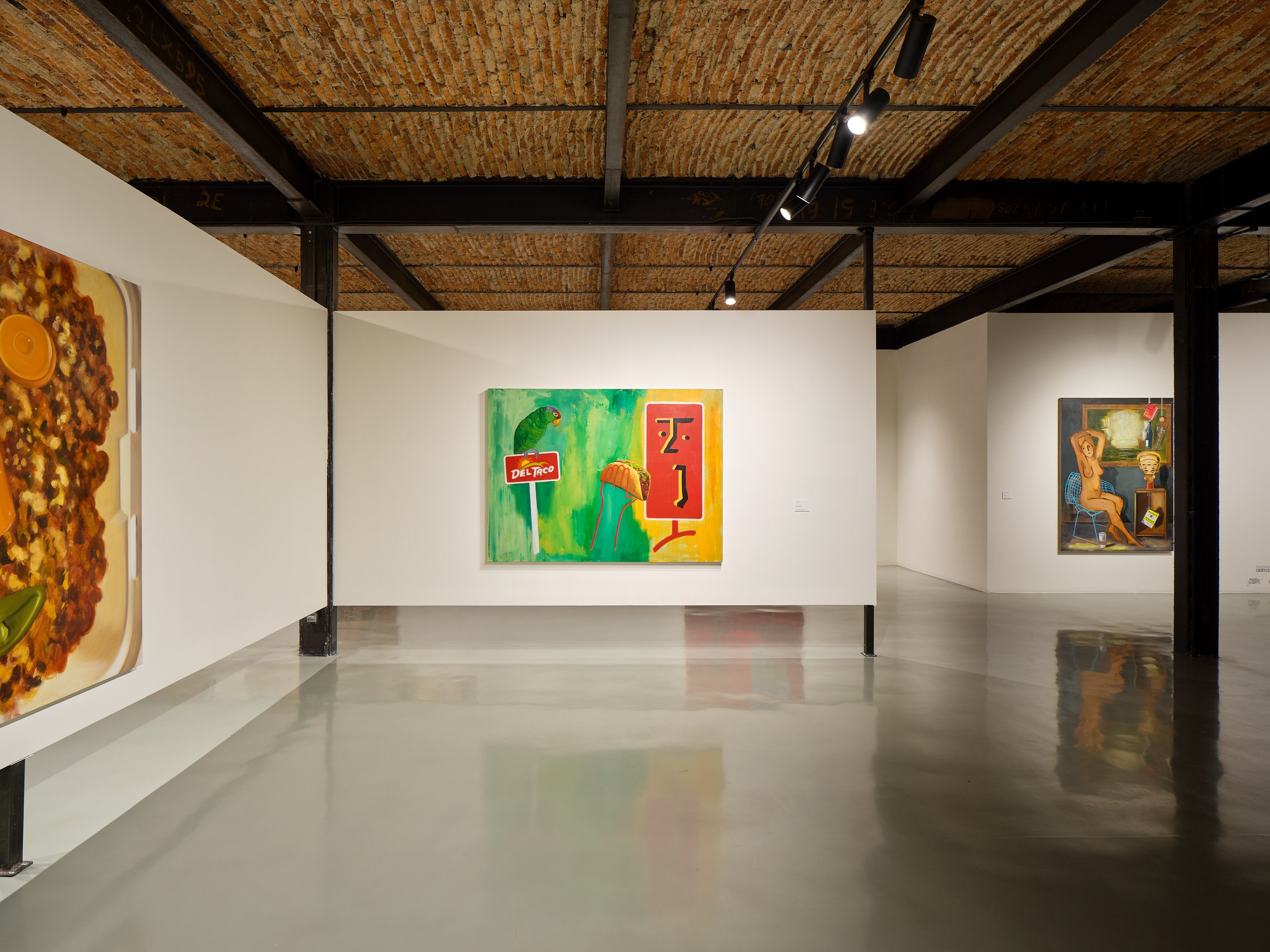
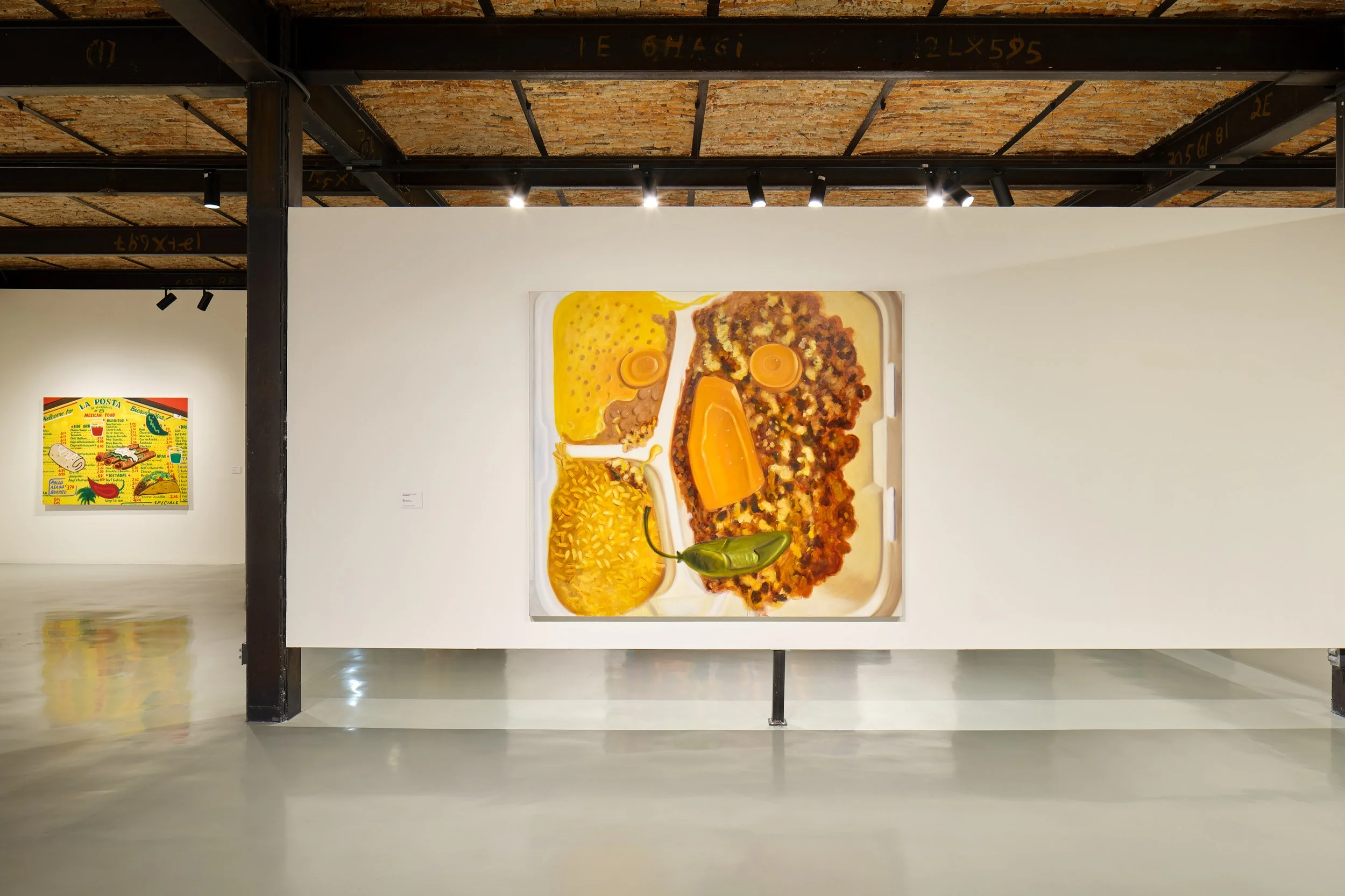
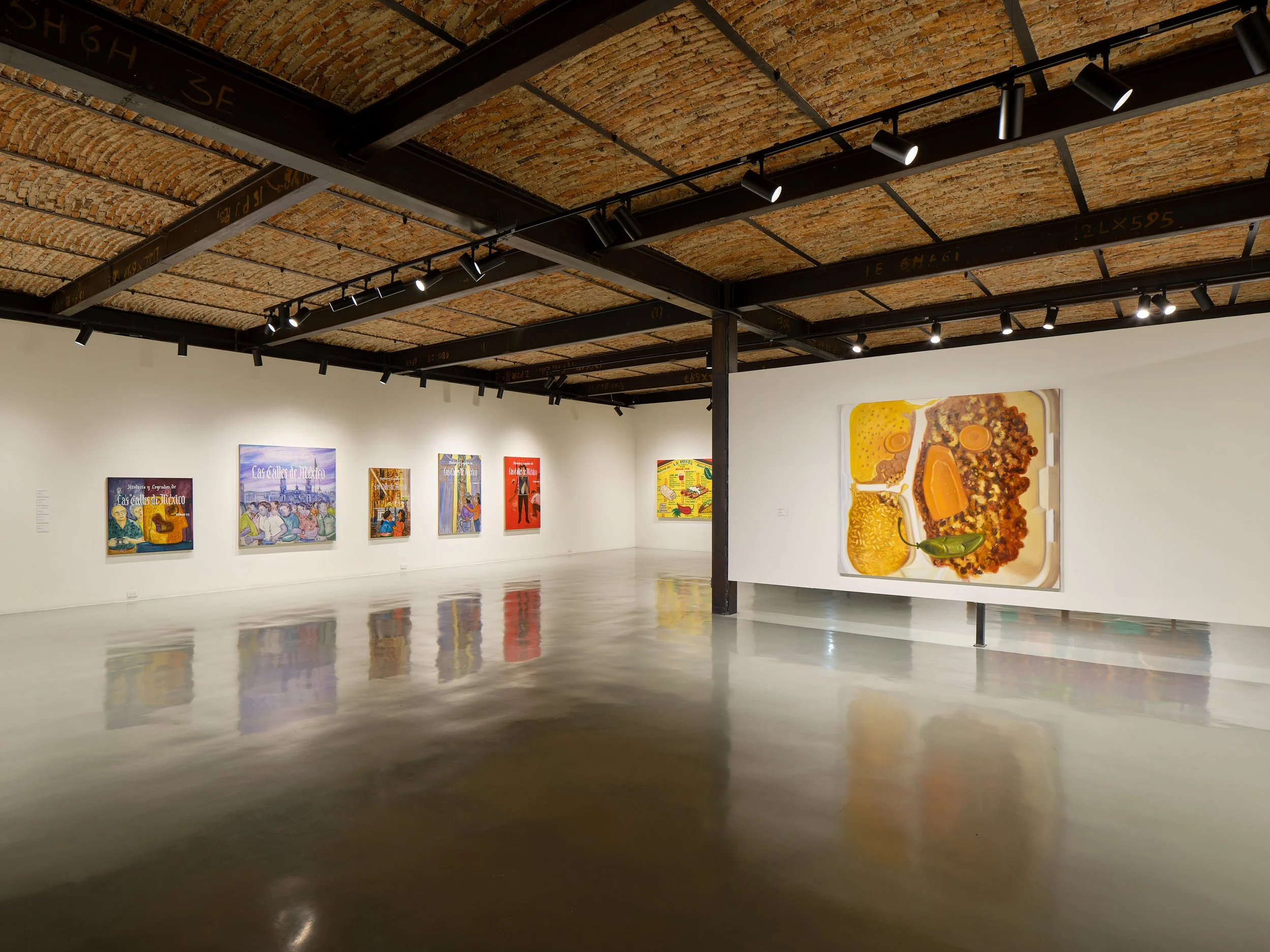
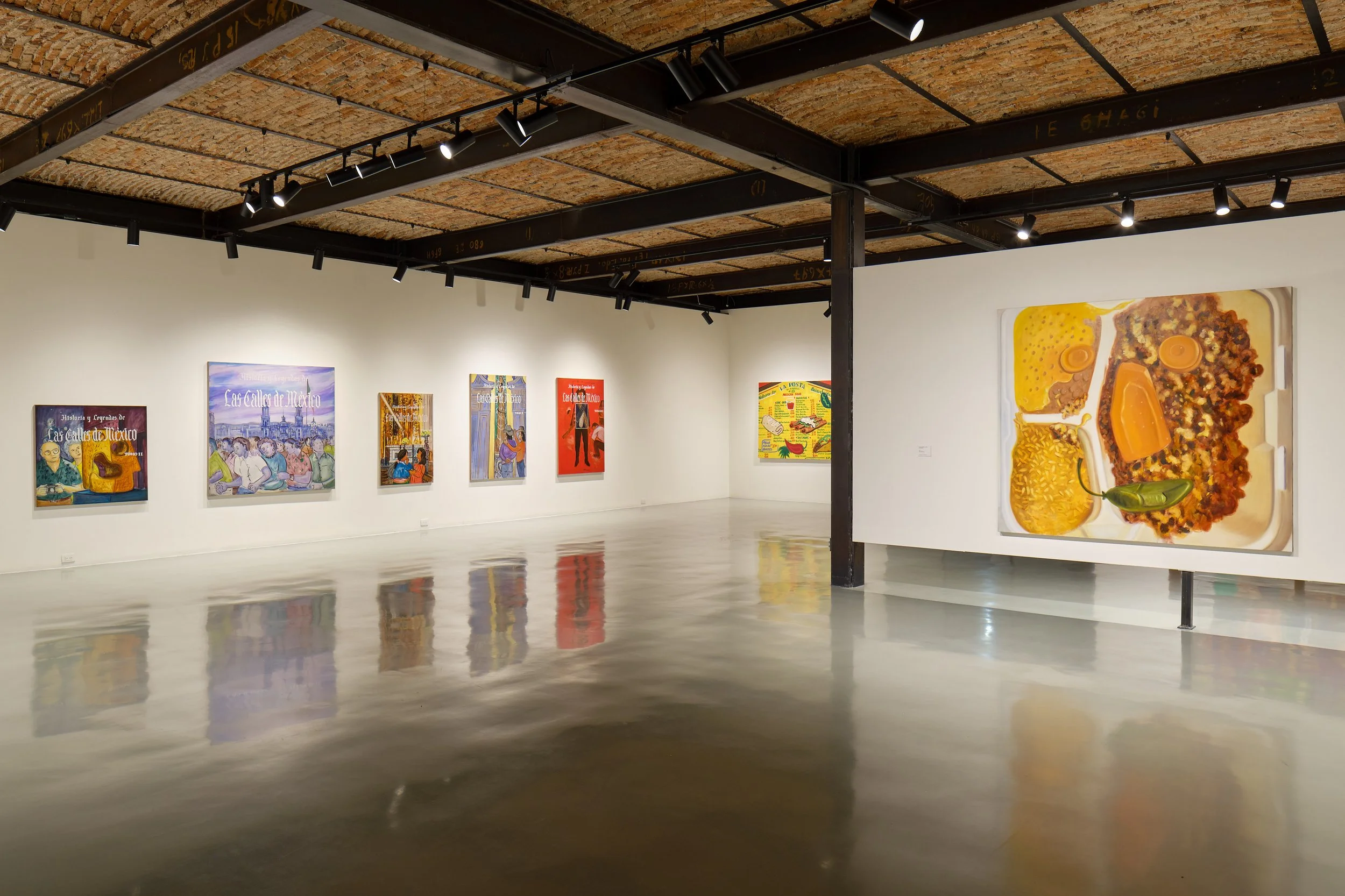
From front to back and across, the paint apes, as well as inhabits, the painted, sometimes printed, surface of Raul Guerrero’s paintings, and carries much time within it. The taco-stand and the fast-food venue, simplistically characterised respectively as traditional and capitalistic, have merged long ago. A mixture of real and imagined homes, of Mexico, never lived in by the artist, but first visited in the 1960s, and California, with its light and graphics, a construction of striving, instinctual gesture. The merging of dietary borders, the influence of bad upon good taste. Tostada Combination, 2023, brings a setting, with food arranged or arraigned, the knife, fork, and cup upon an inlaid mosaic table spelling out “La Posta de Acapulco”, carries heightened pop detail. Here, like his Food Portraits of 2003, the food makes a face, with slices of food for eyes, perhaps a chili for the mouth. This image of an image represents an approach to everything parcelled and portioned that opens out to a topographical view. The work mimics cultural integration and overlap. Still life, sometimes without a subject, becomes imbued with context. It is in the way it is painted. From a loose sense of illustration to the quotation, such movement through print and graphic sense, means that Guerrero manages a light, unstudied gathering of point and style. As the artist conflates and moves easily between apparently disparate geographical and historical languages, text, print, design, and representation, he brings a two-dimensional arena of understanding to the fore.
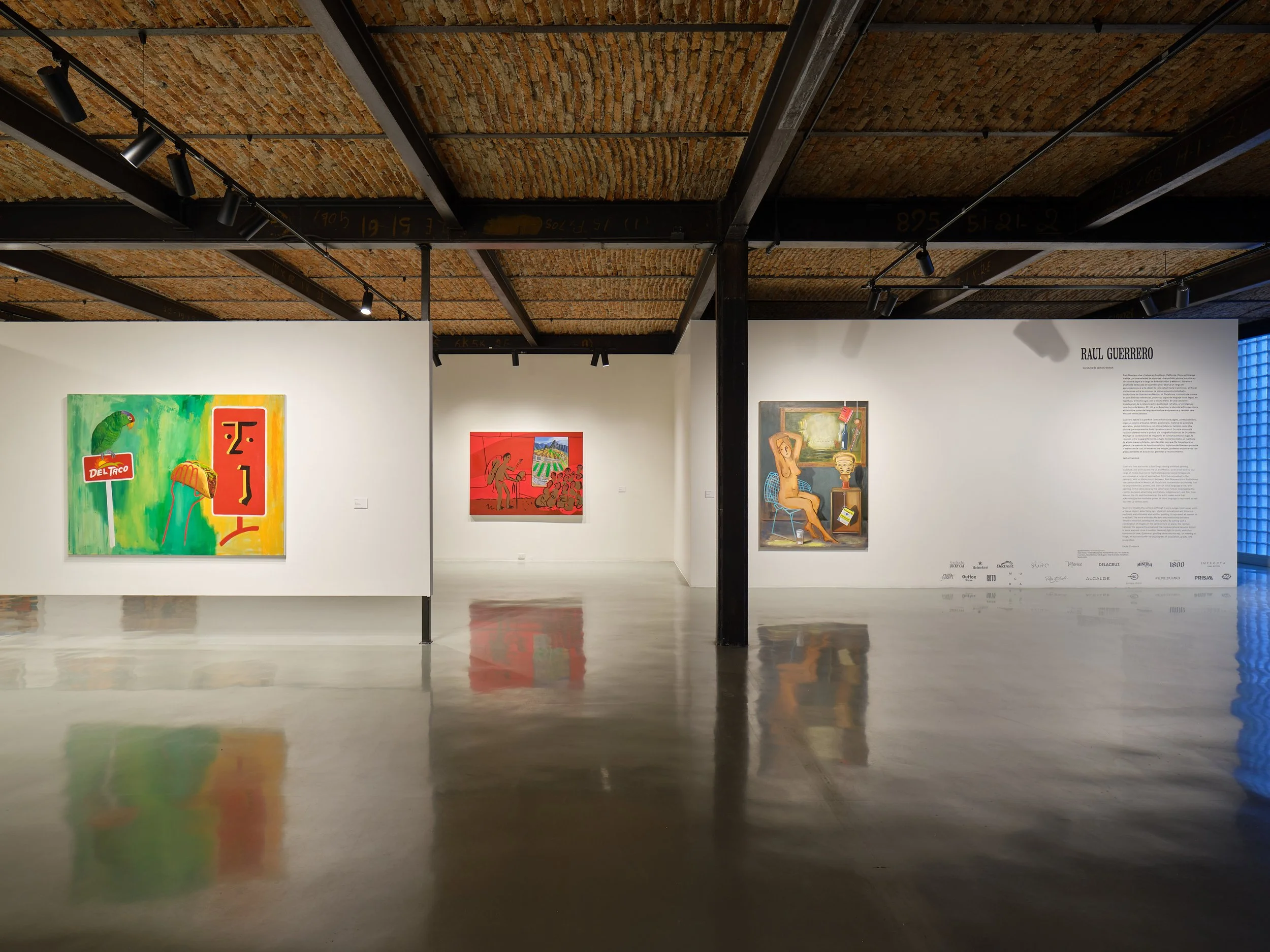
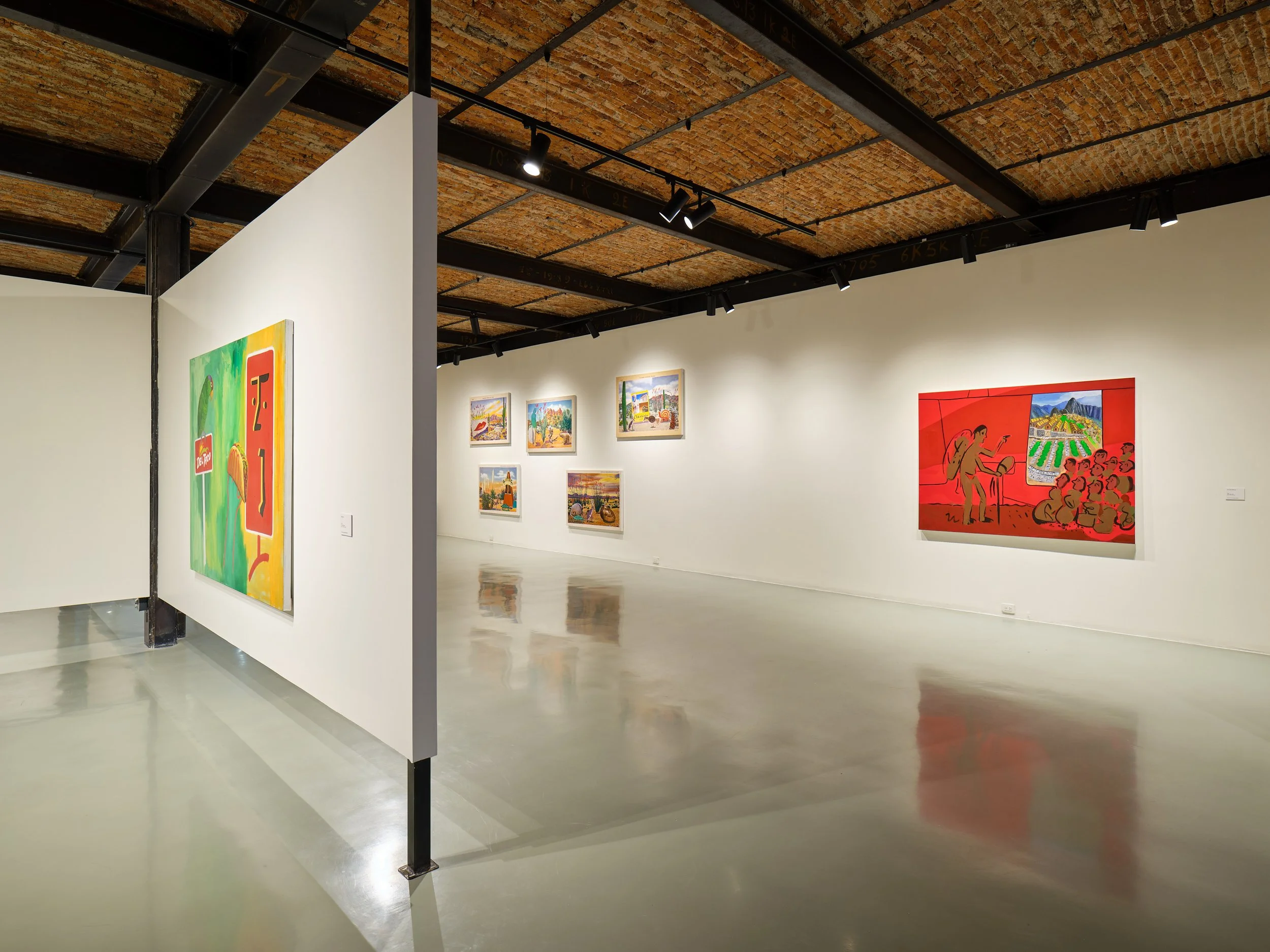
Having previously worked with photography, installation, film, and sculpture, Guerrero’s relation to painting has remained consistent since he first took it up in 1984. The first paintings, the Oaxaca Series, 1984, feature a leopard, masks, the classical nude, to reflect the consistent mixture of languages and elements that will prevail. The print postcard series, for instance, touch on a certain poetry of knowledge that comes not just from Mexico, and Los Angeles, but perhaps the whole of the Americas. Text, print, and various forms of representational and abstract language allude always to a given and understood state or place. The Lunch Drawings, 2003, combine detailed food with a much more “artistically” rendered mouth by a simplified hand, bringing the graphics of advertising as well as a mimicry of the values of European modernism together. Del Taco, 2023, with loose colour behind, a sign with a parrot perching on top, and the mouth also as a sign beckoning from the side of the road. Rolled Tacos, Mandala, 2024, with rolled tacos, red and green chillies, all drawn across and on top of the menu, inhabit the shorthand of illustration and print to energize a play between consumption and composition.
Part of a ‘serving suggestion’, beans in heightened photographic colour, for instance, are soon to be rearranged through consumption. In turn all this alludes to the parallel potential of a palette loaded with paint. Tube squeezed mustard in Hot Dog, 2004-6, mimics paint as food, in a reverse way to early work by Ed Ruscha, where wine and coffee are used as raw art material. The work of the earlier generation of Ruscha, and John Baldessari, who taught Guerrero, conjures a relation to place through suggestion, with a light play on senses gathered by association with architecture, landscape, and advertising. The West Coast is further questioned, romanticized and characterised by the work of major “local” international artist, Ruscha, who said that when he moved in 1956 to LA from Oklahoma City he was excited by jazz, hot-rods, blondes, palm trees, ocean, everything: “I was a sucker for it”, when I came here everything was blunt and clear”.
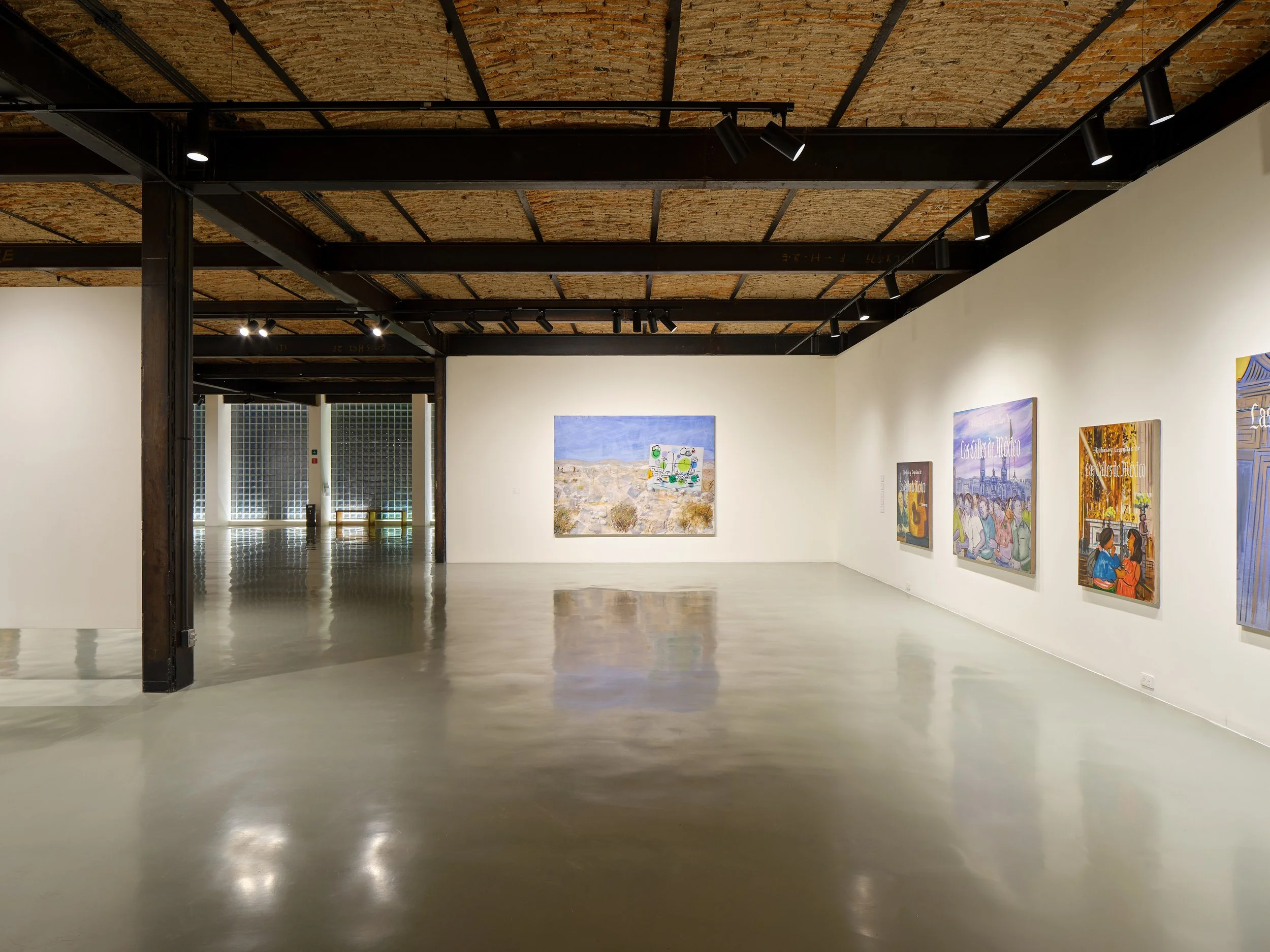
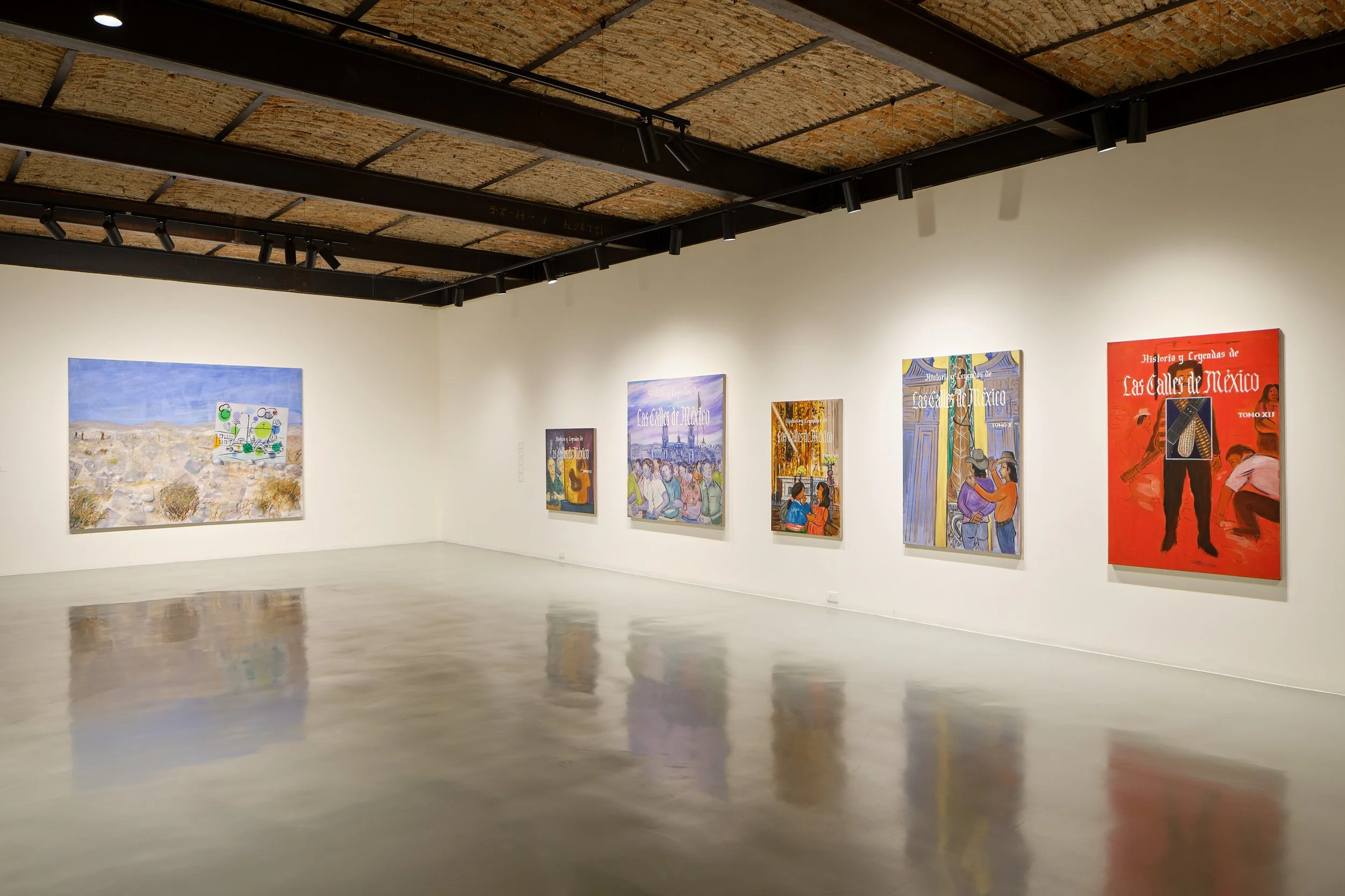
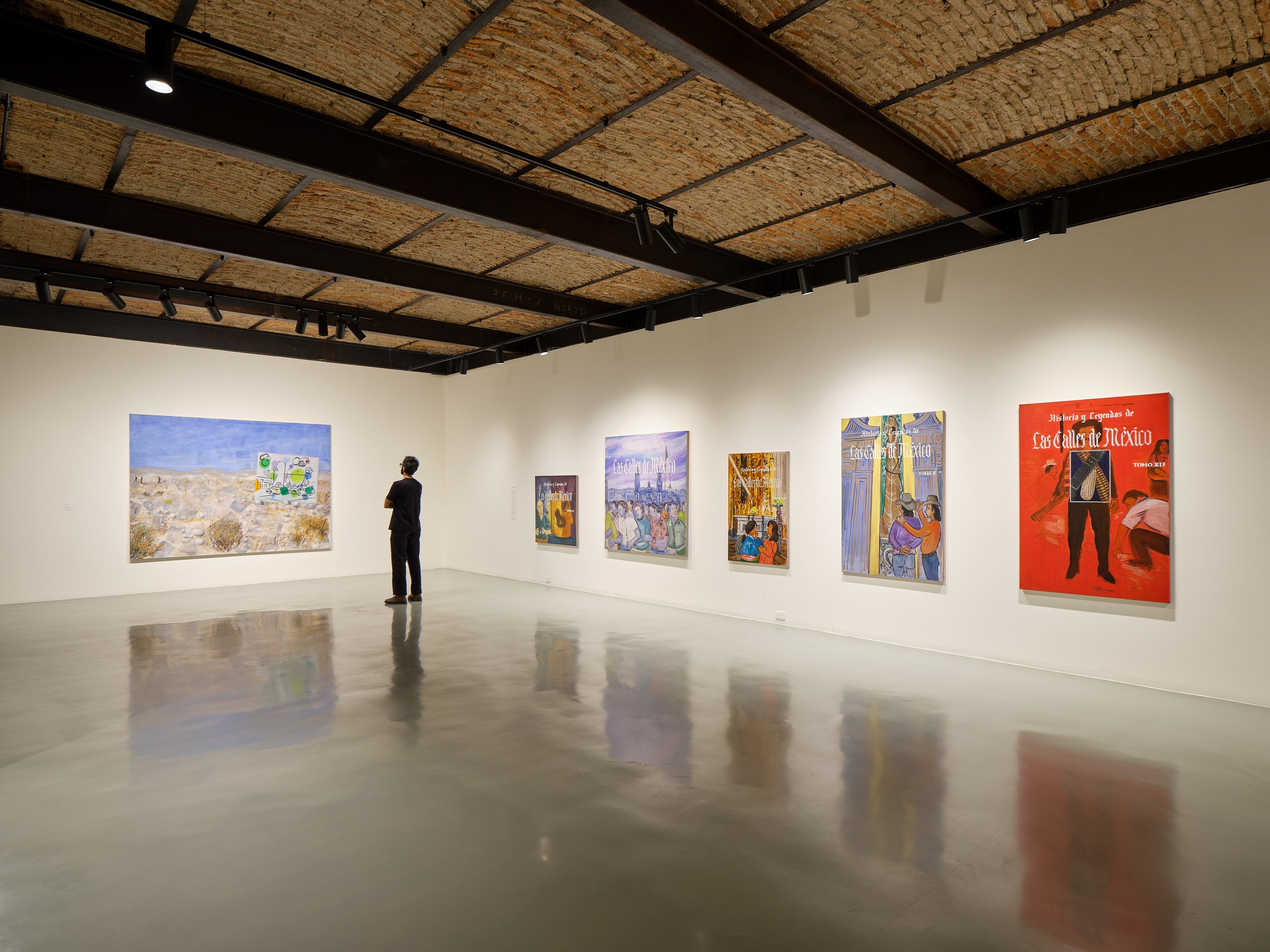
As the grandchild of a Mexican man who undertook an unbelievably perilous journey through rough natural though perhaps less efficiently policed conditions, across a perhaps more porous US border, Guerrero employs the legacy of the surreal, the real, the POP, advertised and illustrated, in a one-to-one relation to material. He creates a relation to place so strong and yet questioning of origin that contemporary modes conflate and collapse. Desert C is a brusque, diffuse, touching painting where people, in the background, make their way across the stark, baked, almost impassable, and uninhabitable desert. The ground is dry, conditions spare and abject. The painting seems to become a difficult place for the artist. Nothing is easy, generous or fun. But then, a billboard, or mirage, appears amongst the tumbleweed that RG makes decidedly un-generous, the opposite of luscious, the outline of how things might be, what might arrive along the line.
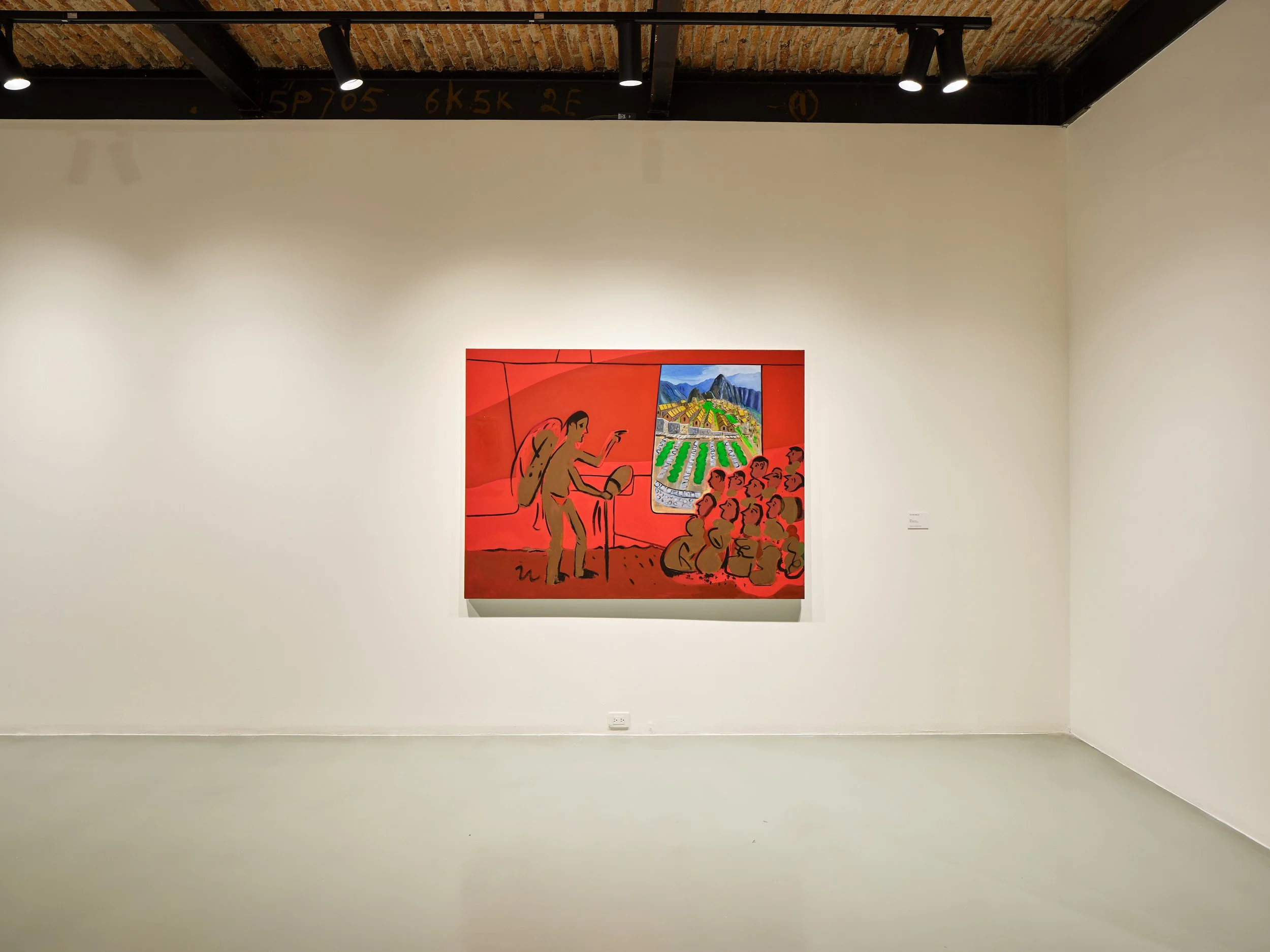
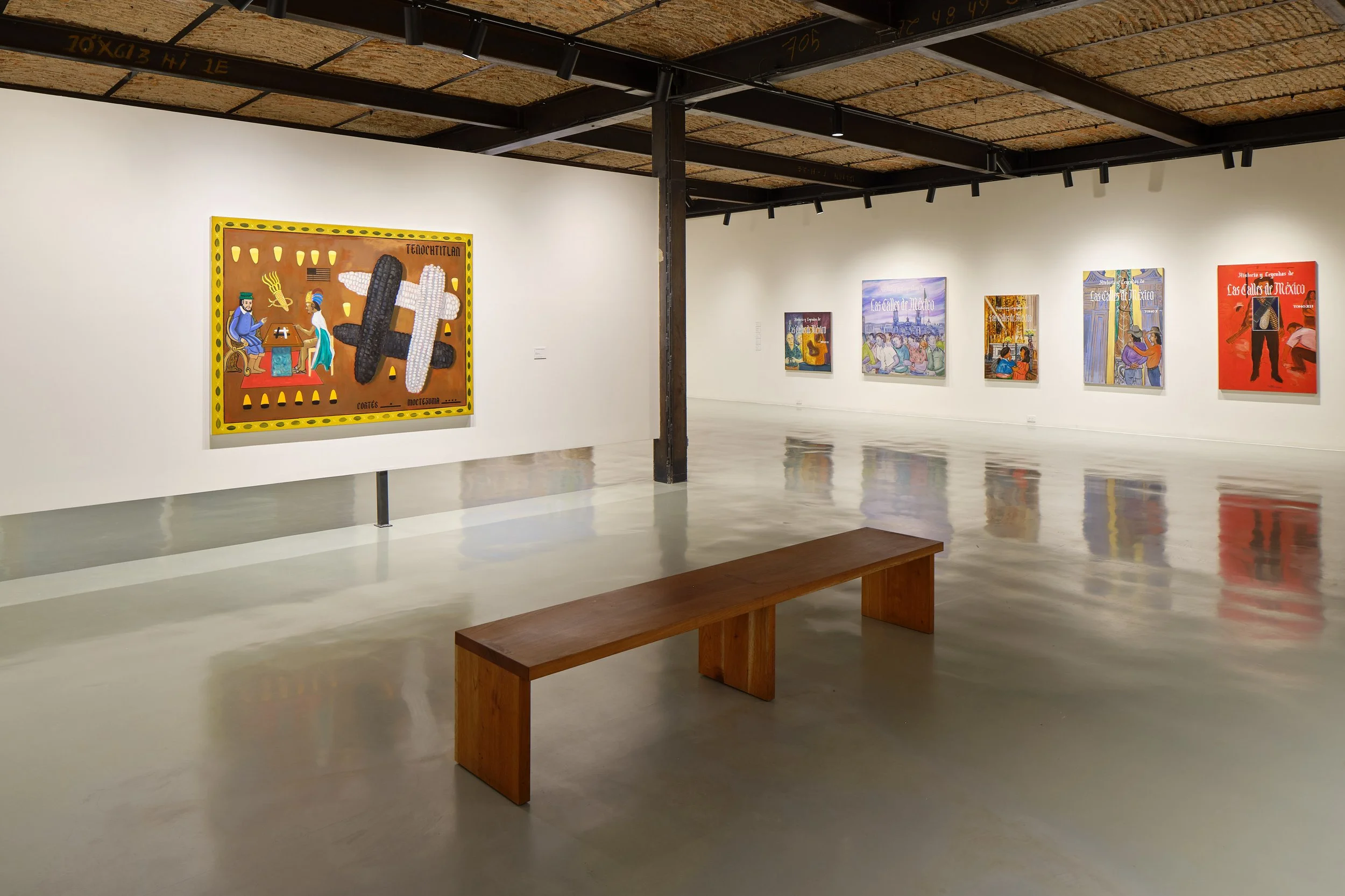
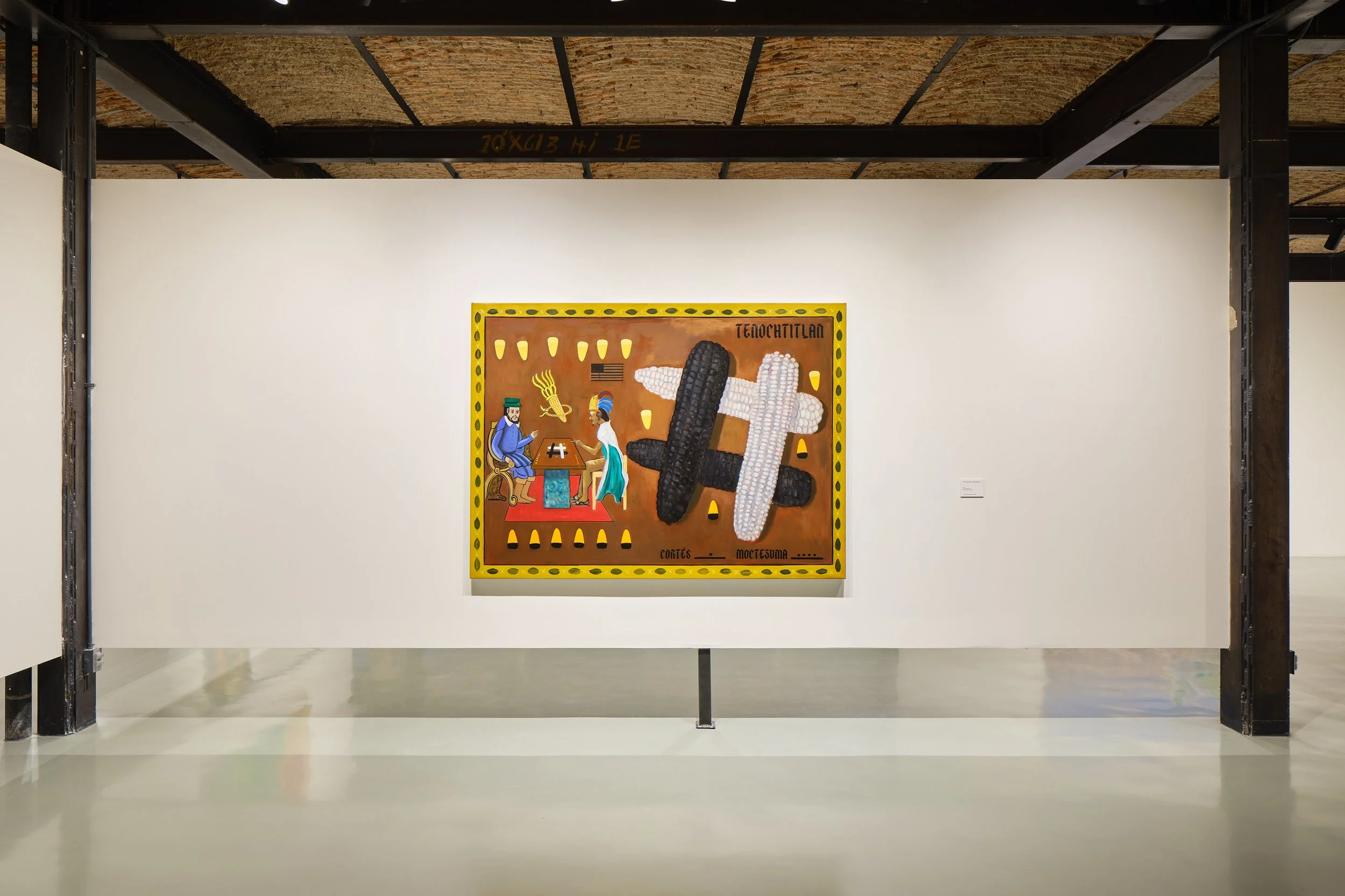
The Lost Codex of Moctezuma, 2024, depicts the 9th Emperor of the Aztec Empire, who reigned from 1502 to 1520. The first contact between Europeans and Indigenous Civilizations took place during his reign. At the table, a Spanish Conquistador (Hernan Cortes) sits with Moctezuma in frock and feathers. On the table are intersecting black and white corn cobs, which act as some sort of puzzle, which is then doubled, detailed, on the right of the composition. Using language that is apt and appropriate, as the mass of food, overseen, with an overview, carries the same relation to corn in detail, almost as a symbol and base of place. Raul Guerrero’s The Buffalo Hunt, (after George Catlin), 2021, represents a perfectly vital moment, with a huge buffalo pursued by a man on a white horse. A light touch with the bright eyes of the buffalo suspended across the ground makes a circular stage, with tufts of grass, and mountains against a heavy pink sky. The atmosphere is one of knowledge and terrain forever transversed and fought over. The buffalo looks sideways in a tired, knowing manner, as it pounds across the ground, to represent ‘the other’ of the world, perhaps from a different side.
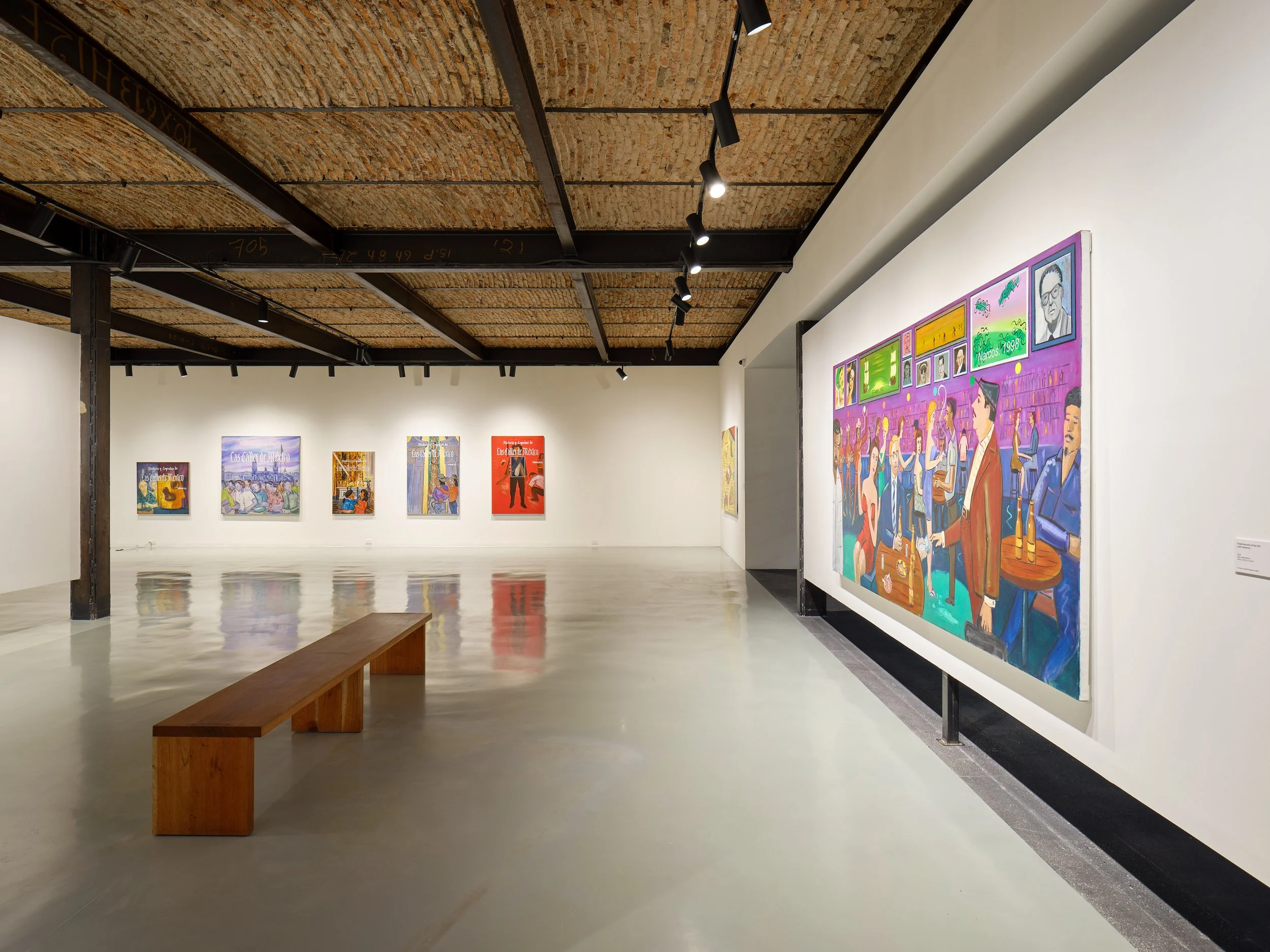
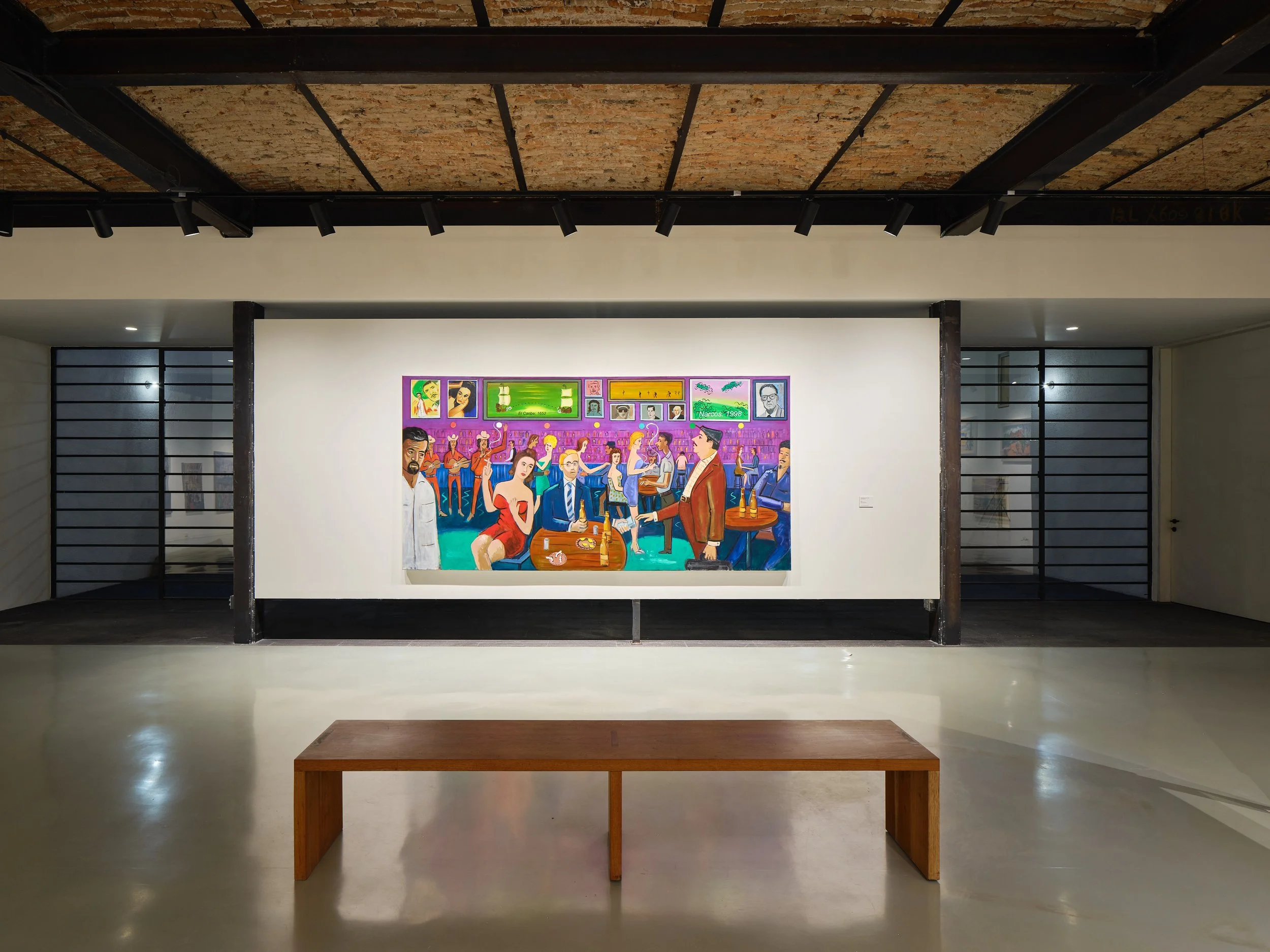
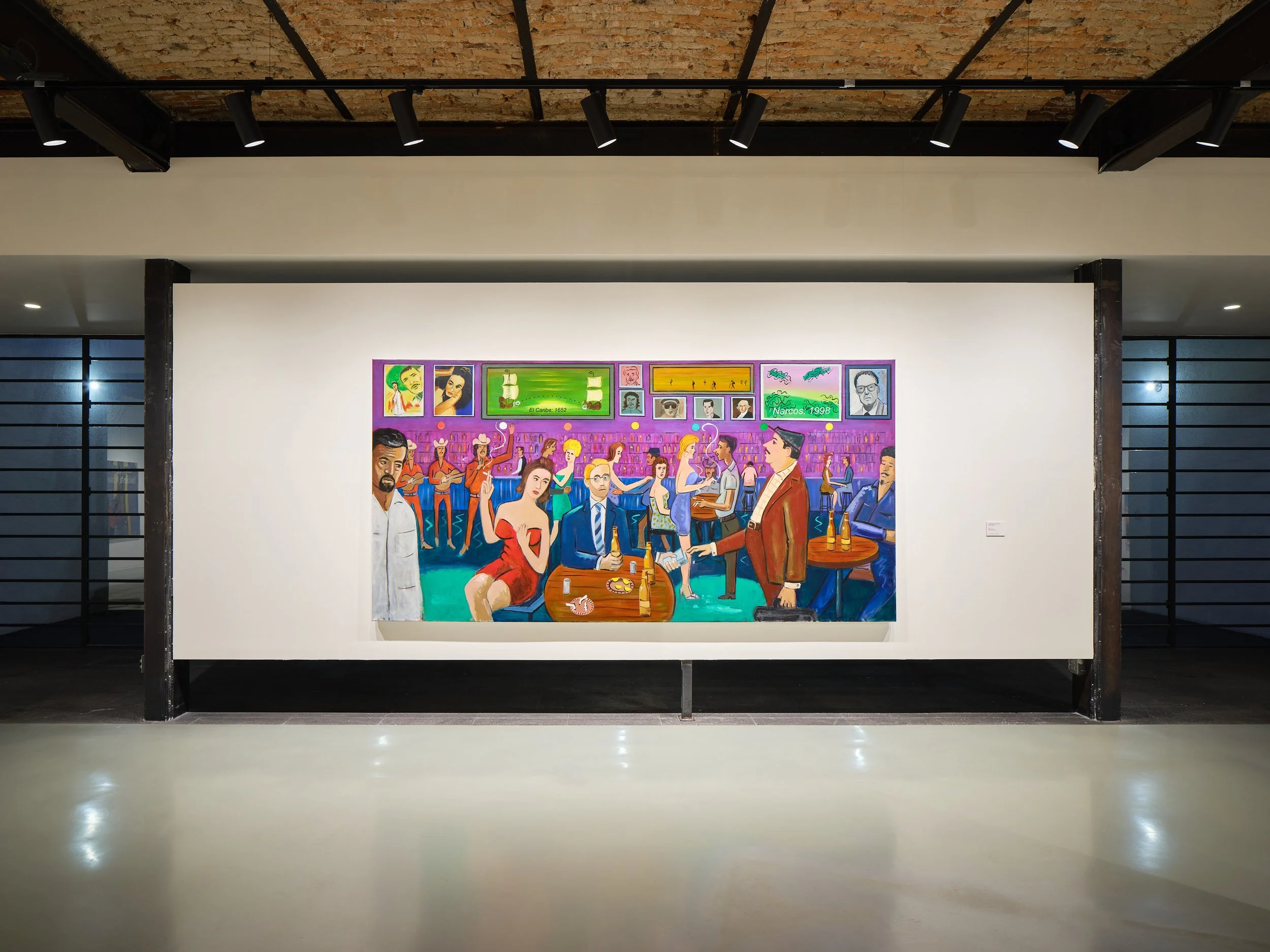
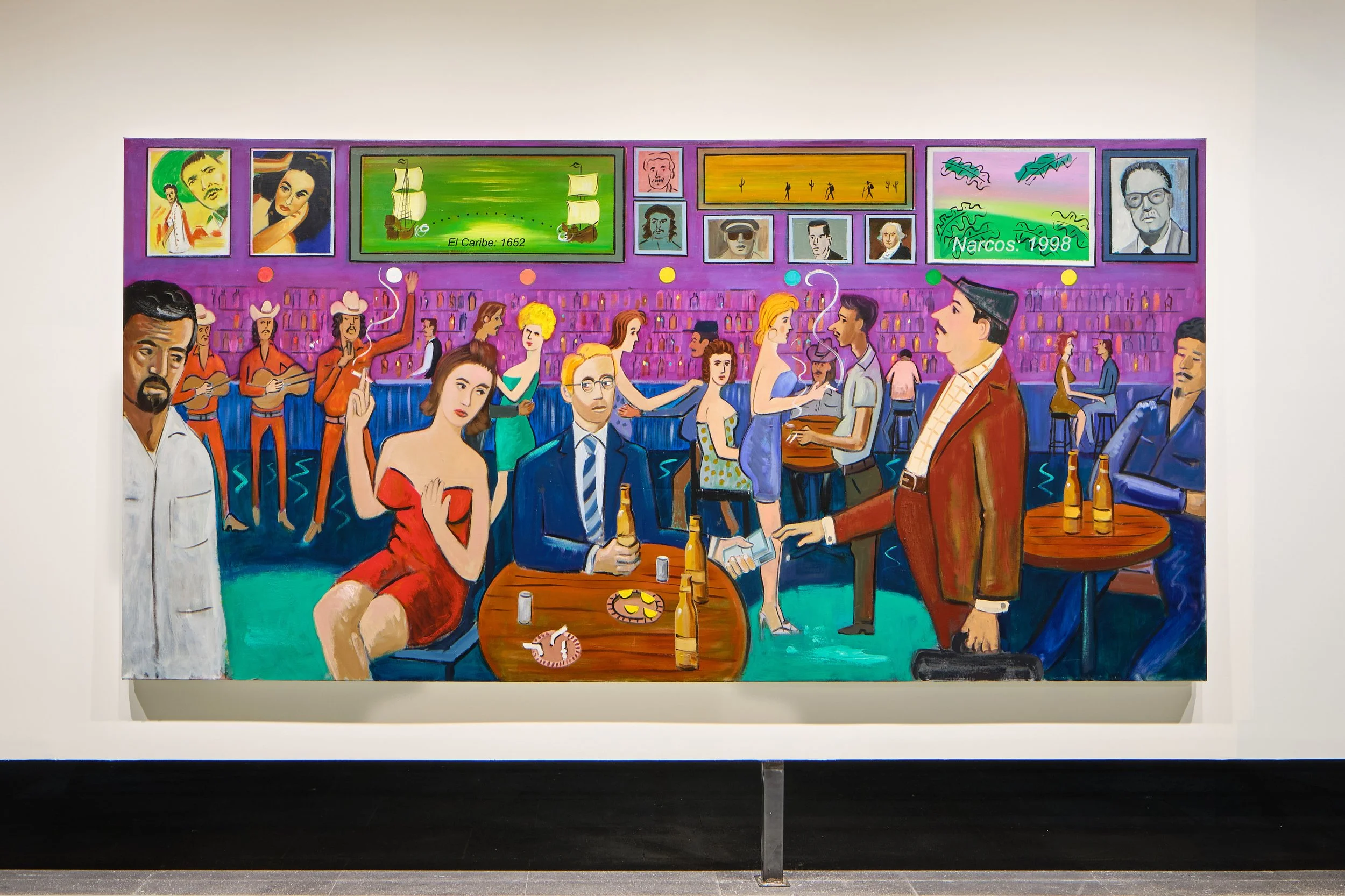
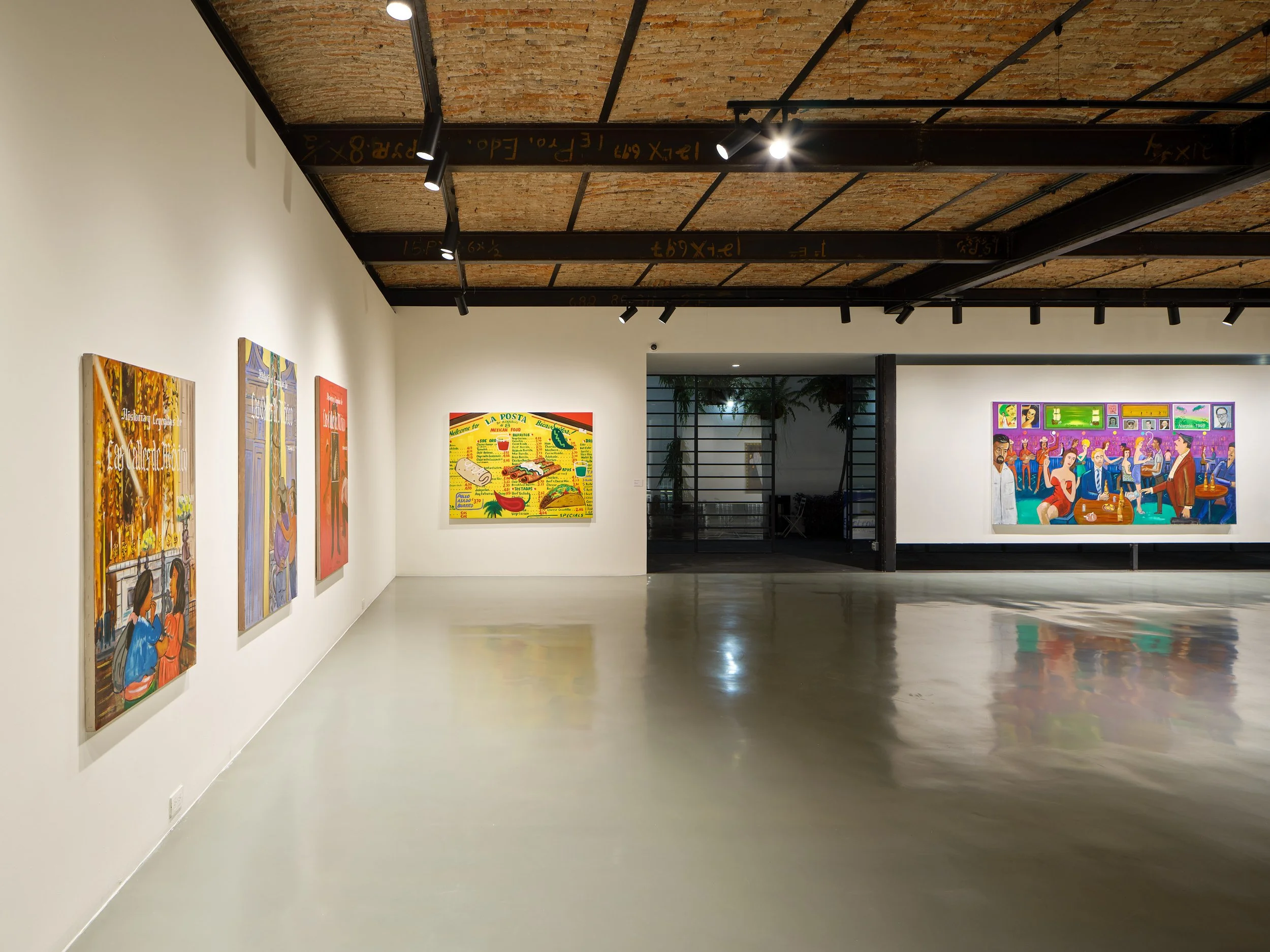
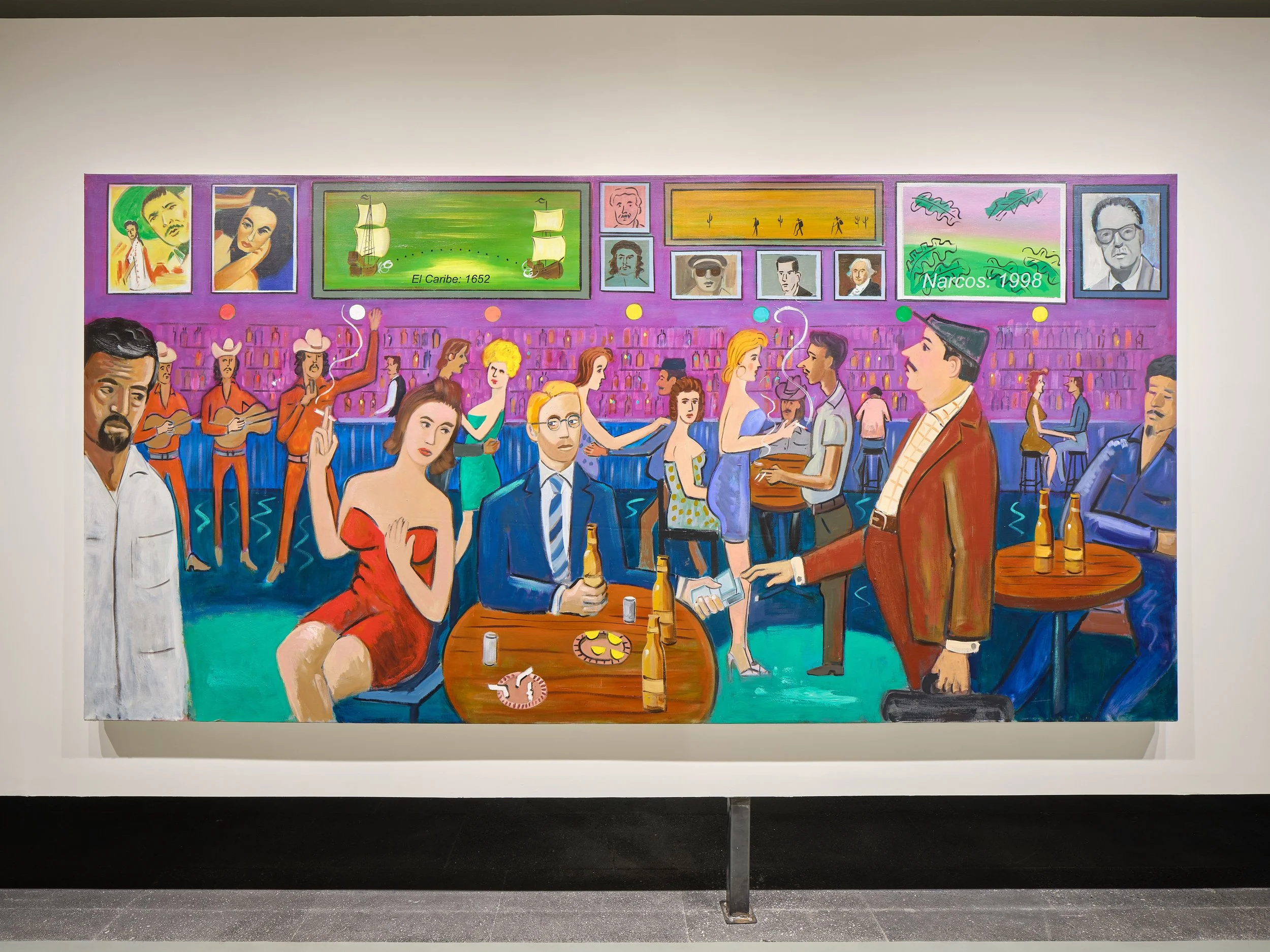
The man in the middle of Guerrero’s CIA Operatives in Latin America, 2024, is looking sideways in much the same manner as the buffalo. A knowing element in a painting can allude to a more permanent state and undermine a simple narrative. A courtly situation extends, however, in an apparently limited, shallow space and highly mannered set-up. Something of a cinematic scene carries within it a sense of formal collapse. So much is going on. Guerrero’s Bar Portraits, 2014, feature extended, romantic, bar interiors, with bottles, lined up, light against dark, to promise a good time. Here, the deliberately wooden characters act out sometimes-devious pursuits. Smoke curls up in single file, from cigarettes held by two apparently provocatively dressed women. In a highly set up, mannered moment, a band plays, a woman smokes, but just one transaction gives all away. In the centre, the blond to red-headed man looks sideways, away from the fist of wrapped non-denominational notes handed to a man who also appears totally unconcerned by the moment. This caricature, or filmic folly, with mariachi singers, unconcerned couples, and a man at the front seeming to know nothing either. A painting on such a scale in this format, maps out a whole procession that refers to a hundred known moments, with colours and unconscious realisations. History in the form of the static, with portraits, from those of Allende to Pinochet, Guevara to Washington, gazing down as fixed references to political will. History is wary, pre-planned, and knowledge has been planted. Political circularity, instead of shock, plays out a trauma caused by a perpetually undermining and destructive CIA. Nicolas Poussin’s Landscape with a Man killed by a Snake,1648, also carries many moments of consciousness within it. From a fixed pastoral set up, the space unfurls backwards; a man has been attacked by a snake at the front, and another person shouts for help into a pastoral silence that is soon to be broken. A fake continuous state has others unaware of the danger in front, as the normality of a constructed idyll expands and extends way back past unaware fishers, through to a city that lies still in the afternoon sunshine.
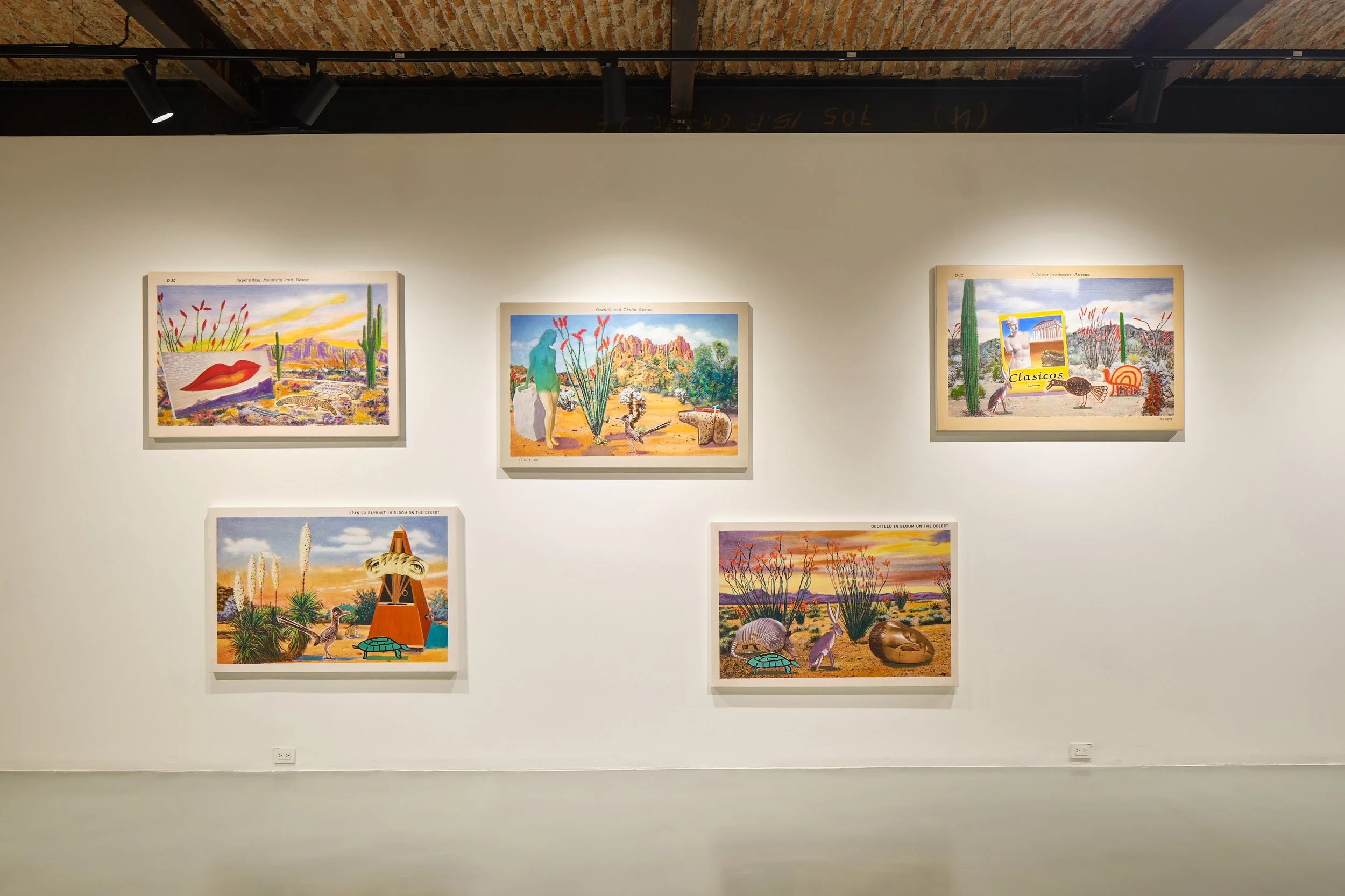
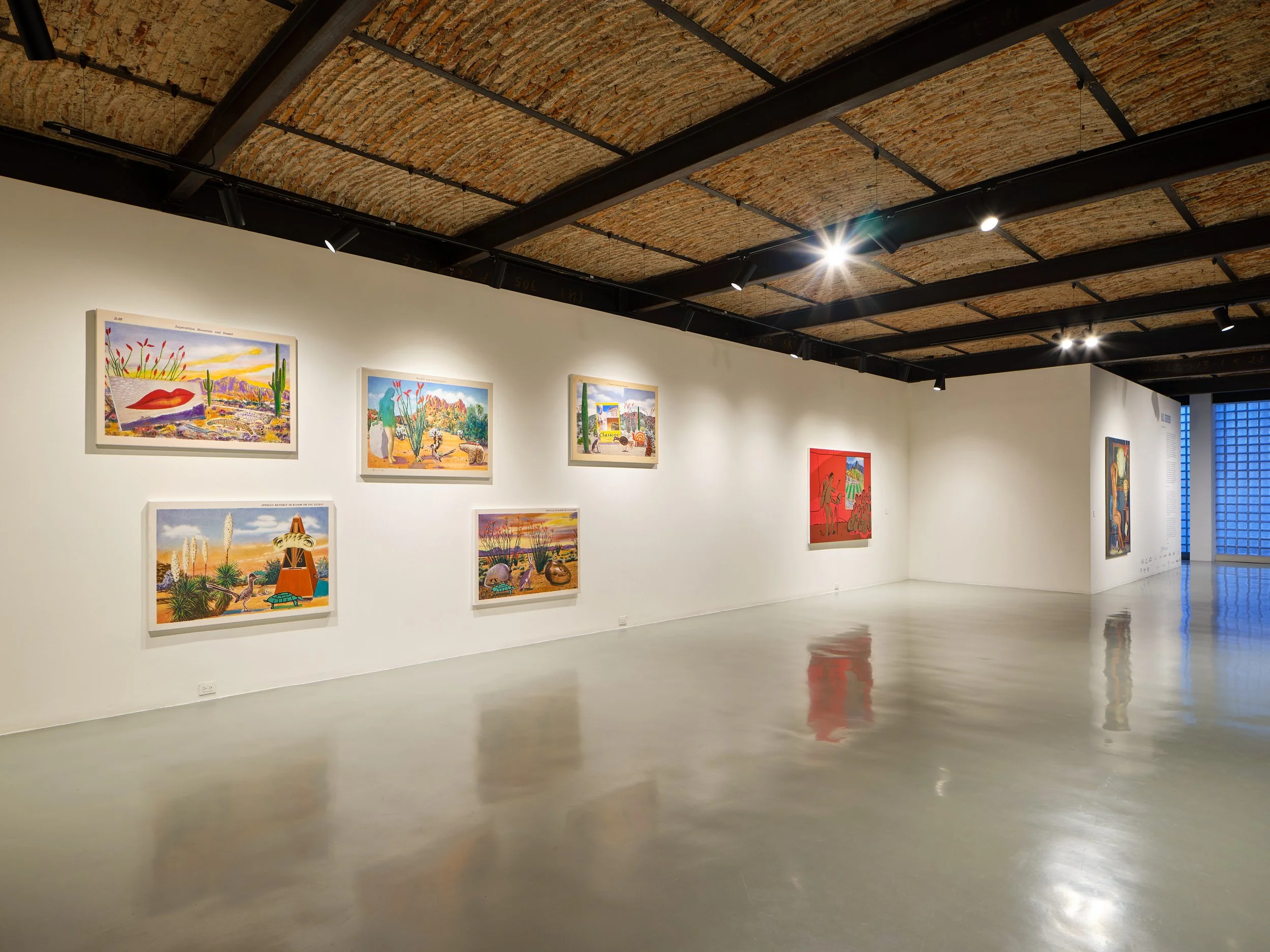
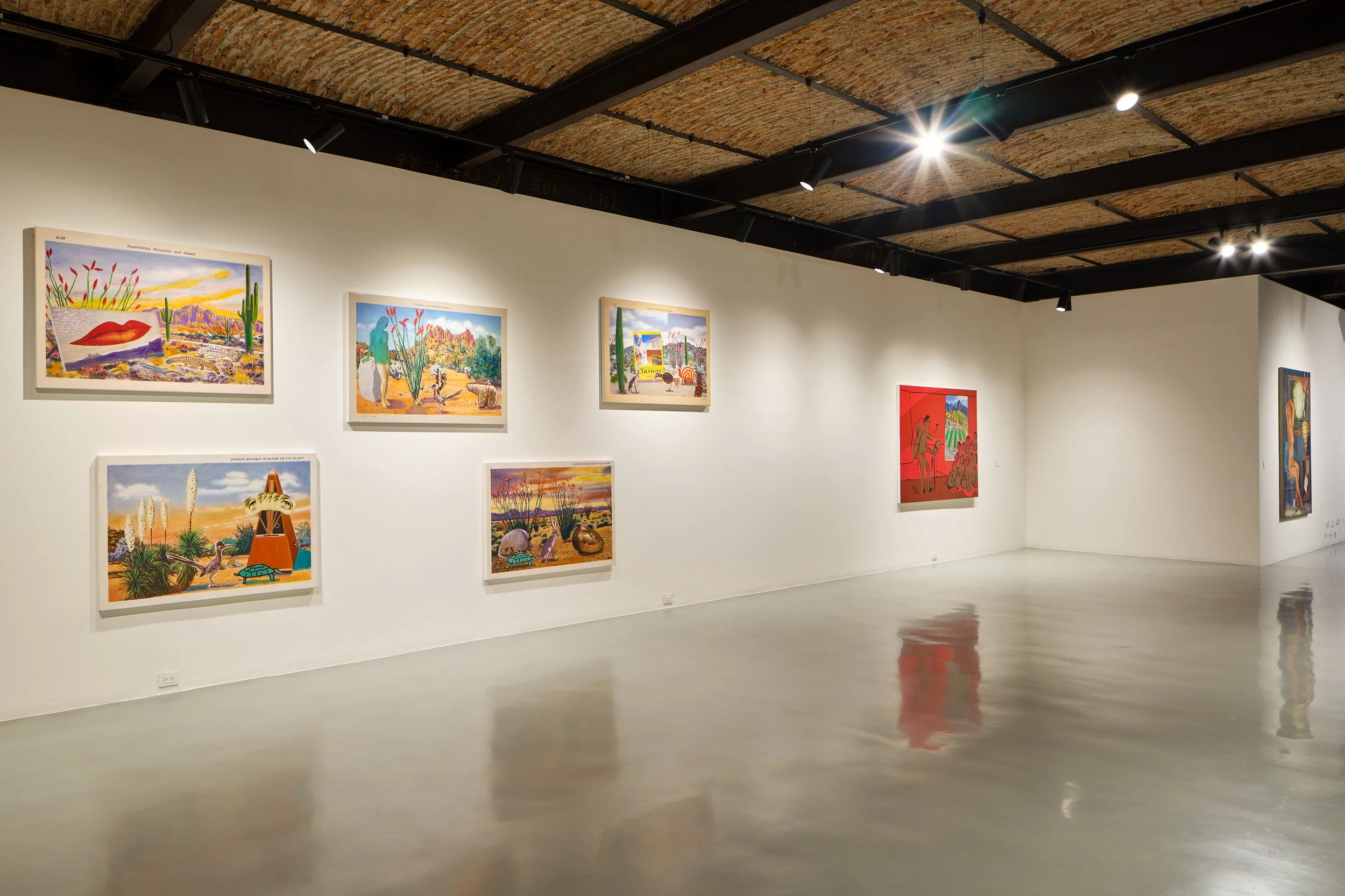
Based on the Arizona Postcard Paintings, 2019, references to the Classical nude, with roadrunner, frog, metronome, and Meret Oppenheim fur cup. With gherkins in a glass jar, a fabulously painted, almost plastic, fried egg next to a lightly touched print base, with blown-up elements tipped in, to make a simple, and for the artist, perpetual jump, between place, perception of place, and impressions of experience. Guerrero is making, in Clasicos, 2025, the series of inkjet prints worked with oil paint, the base of a printed postcard engages with apparently tipped-in colour. This carries a play on a surreal, art historical reference, that pops up in the already photographed equivalent of the ‘landscape’. From Magritte figure, through to the eye metronome, fabulous monumental rock formation, specific detail of grasses, rock, armadillo, and road runners to cartoon creatures that come into the same metaphysical place. The European use of African sculptural heads, for instance, thrown in along with representations of indigenous line drawing. The work marks an in-between state, or point, for a landscape has been traversed, tamed, and apparently made safe. Such an early relation between the hand-coloured early photograph and print in the postcard was about sharing and stating what you might never have seen in the first place, to become an accepted generalised account that long precedes the internet in terms of experience. An account of travel, for the tourist, visitor, or outsider, tells how it is back there; the US equivalent of the Grand Tour, alludes at the same time to the Modern artist who arrived from Europe to a place held together by a score of Modernist totems that relate to Europe’s part in its conquering, but also known as impenetrable.
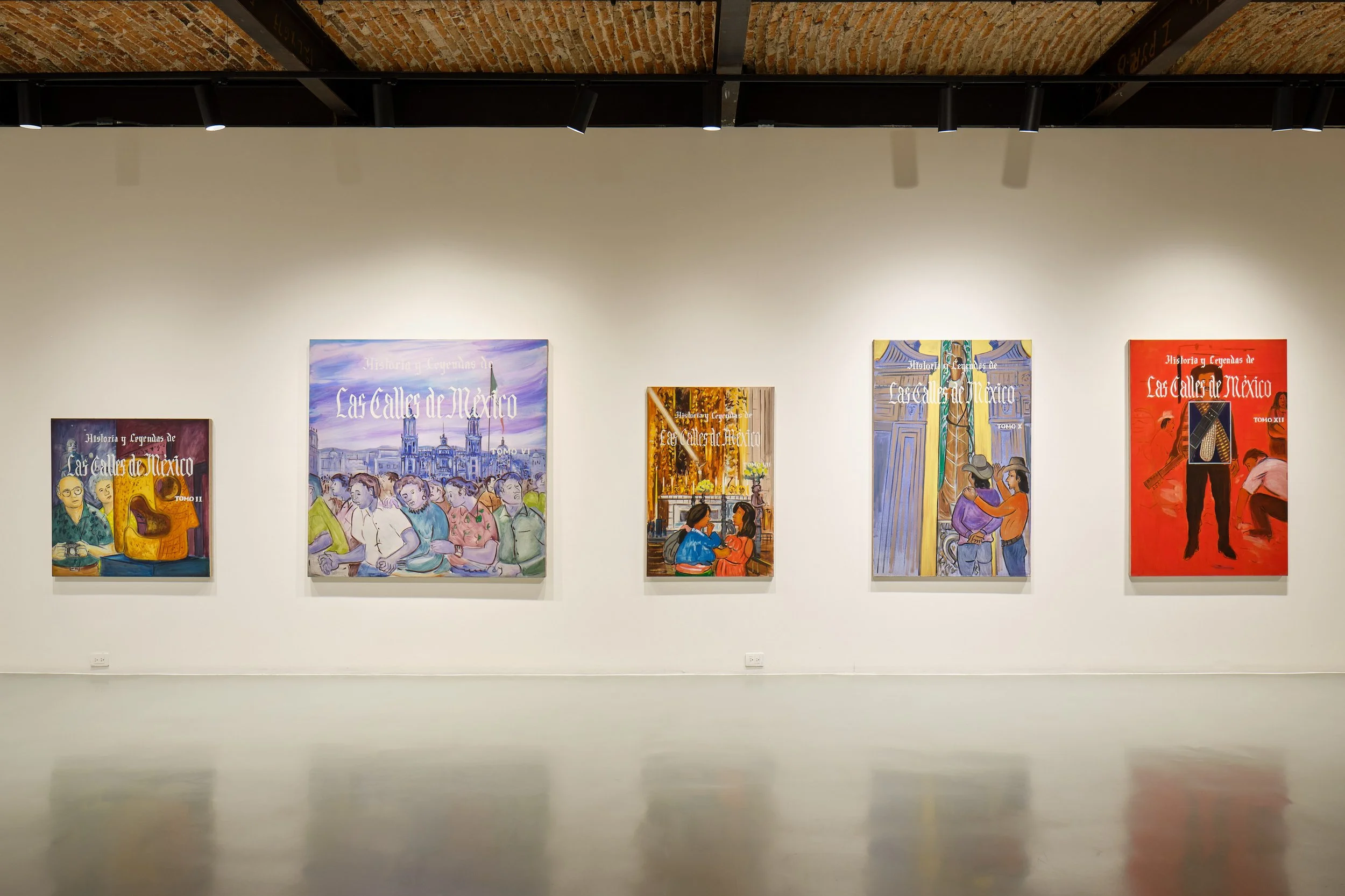
The earlier painting series, Las Calles de Mexico, carries a coherent, perhaps more illustrative, representation of place. Like the cover of an earlier children’s book, perhaps, the history of place is covered, converged, with the ease of association and lettering. Pop art extends here into something of a medieval ‘look and learn’ comic book. The history of a fast-changing Mexico City is represented by a play of adventure, innocence, travel, with the street corner and the monument photographed by the tourist. Tomo 11: Paseo de la Reforma (Chapultepec), 1994, or that loosely illustrative interior of a church, visiting, looking, understanding, perhaps the history of place encapsulated in the street corners. The painted lettering of the overall title enters the language of language, as seen in two dimensions. It is the very choice of medium, here, that holds the key to the poignancy of Guerrero’s show of painting in Guadalajara. As a usually light on dark ground place to be from, as well as one to happily inhabit, the artist is currently making, complex and compulsive, sense.
— Sacha Craddock, 2025.
Images and videos credit: @registro.fotodeobra (Mauricio Vázques & Rui Sam)