HERE, NOW

About the exhibition cycle
Attention
The series of four exhibitions at Plataforma, Attention, is the result of multiple studio visits in Los Angeles, San Diego, Tijuana and Guadalajara. Far from imposing a narrative, this curatorial cycle proposes an open discussion between artists, geographies and languages to highlight the power of cross-reference as well as the direct experience of art.
The two group shows, as well as the two solo shows, reveal the unexpected affinities that come from singular practices. Attention oscillates between receptive attention and the urgent need to look, think and feel.
Rather than illustrating a fixed idea, the selection seeks to make itself an accessible meeting point, without either neutrality or imposed certainties. In a context where curatorial judgment can be seen as intrusive, this project hopes to harness the external but committed gaze that observes without feeling a need to define. Attention, in the end, is an invitation to experiment without prejudice.
About HERE, NOW
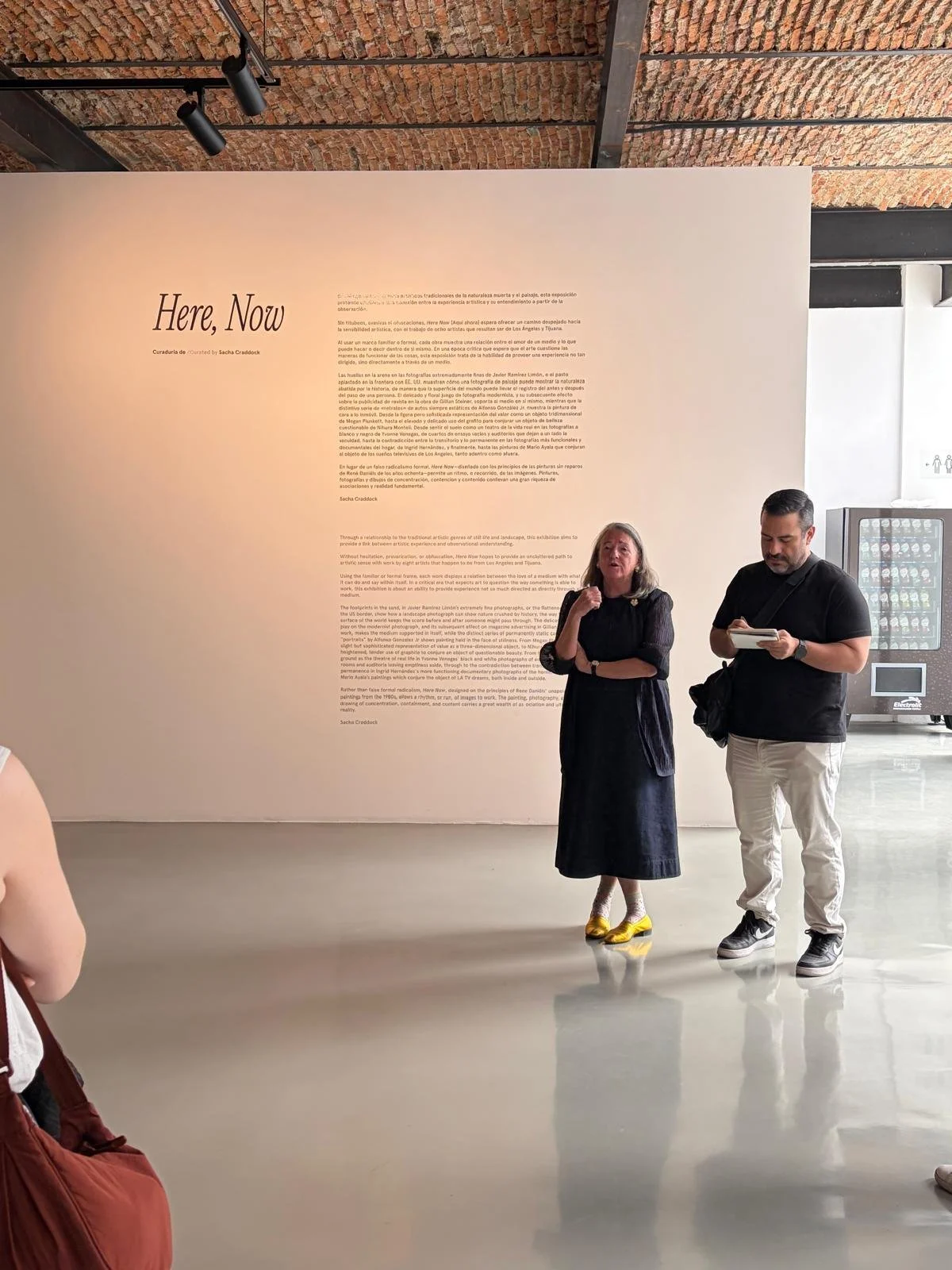
Curator: Sacha Craddock
Curatorial cycle: Attention
Through a relationship to the traditional artistic genres of still life and landscape, this exhibition aims to provide a link between artistic experience and observational understanding.
Without hesitation, prevarication, or obfuscation, ‘Here Now’ hopes to provide an uncluttered path to artistic sense with work by eight artists that happen to be from Los Angeles and Tijuana.
Using the familiar or formal frame, each work displays a relation between the love of a medium with what it can do and say within itself. In a critical era that expects art to question the way something is able to work, this exhibition is about an ability to provide experience not so much directed as directly through a medium.
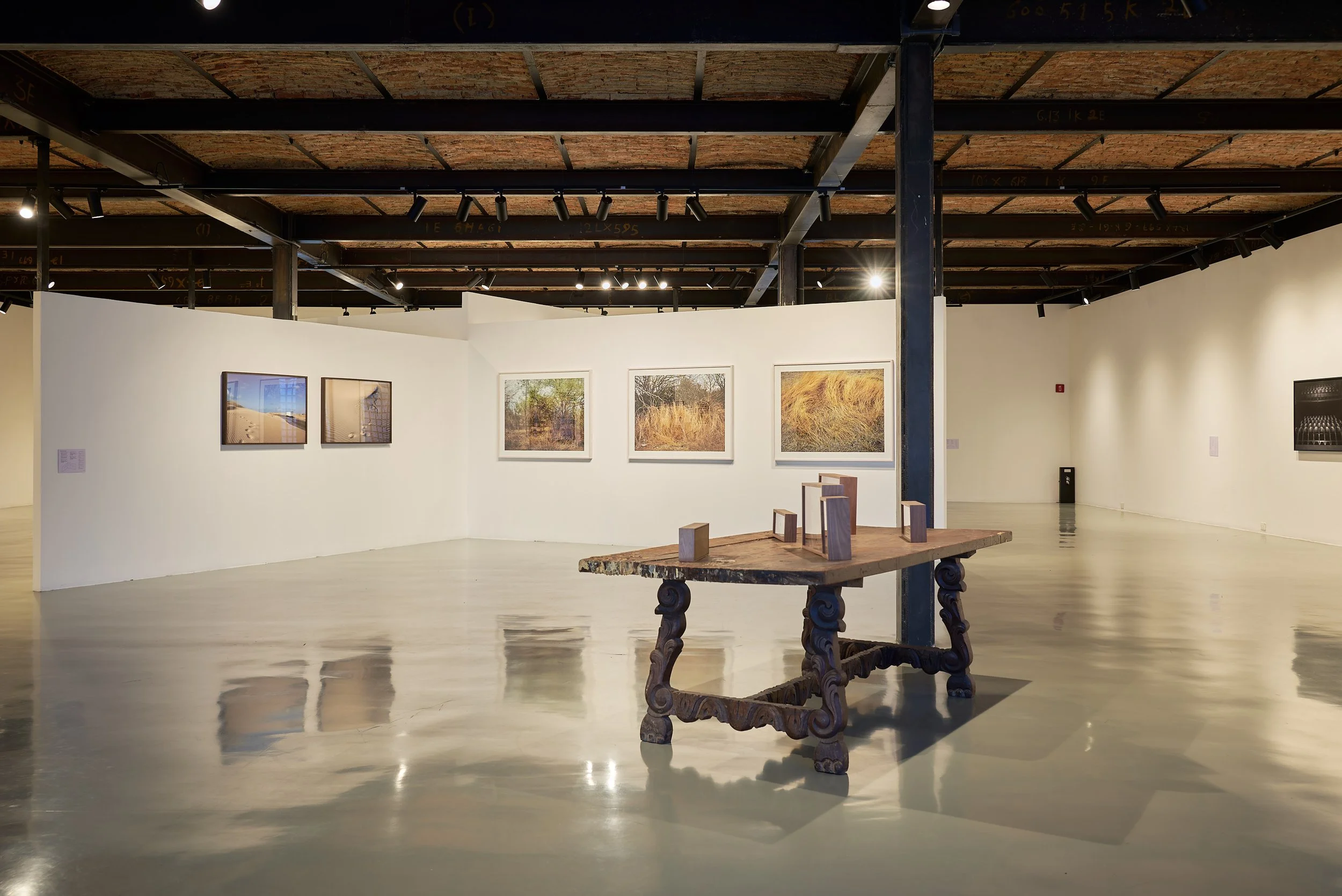
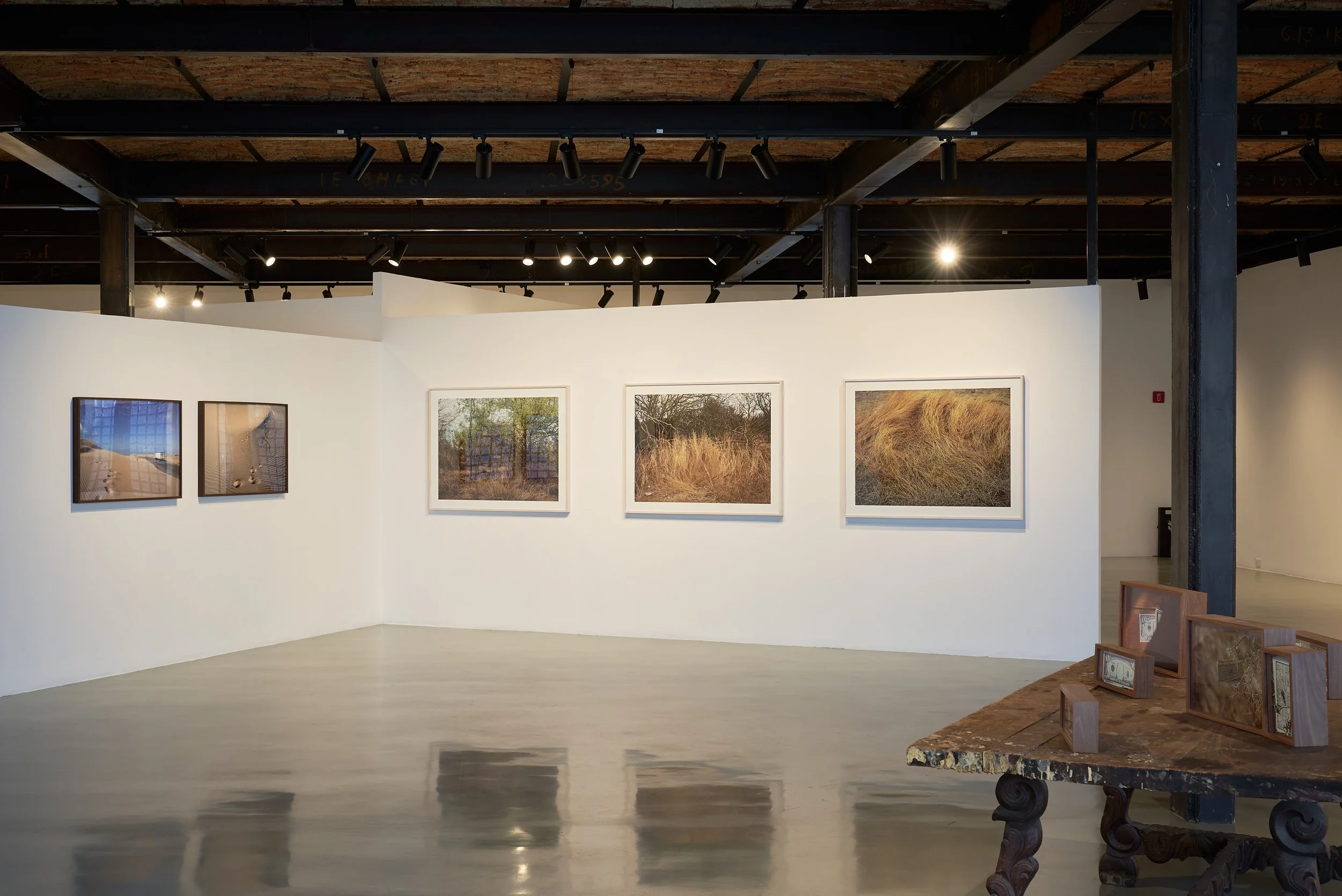
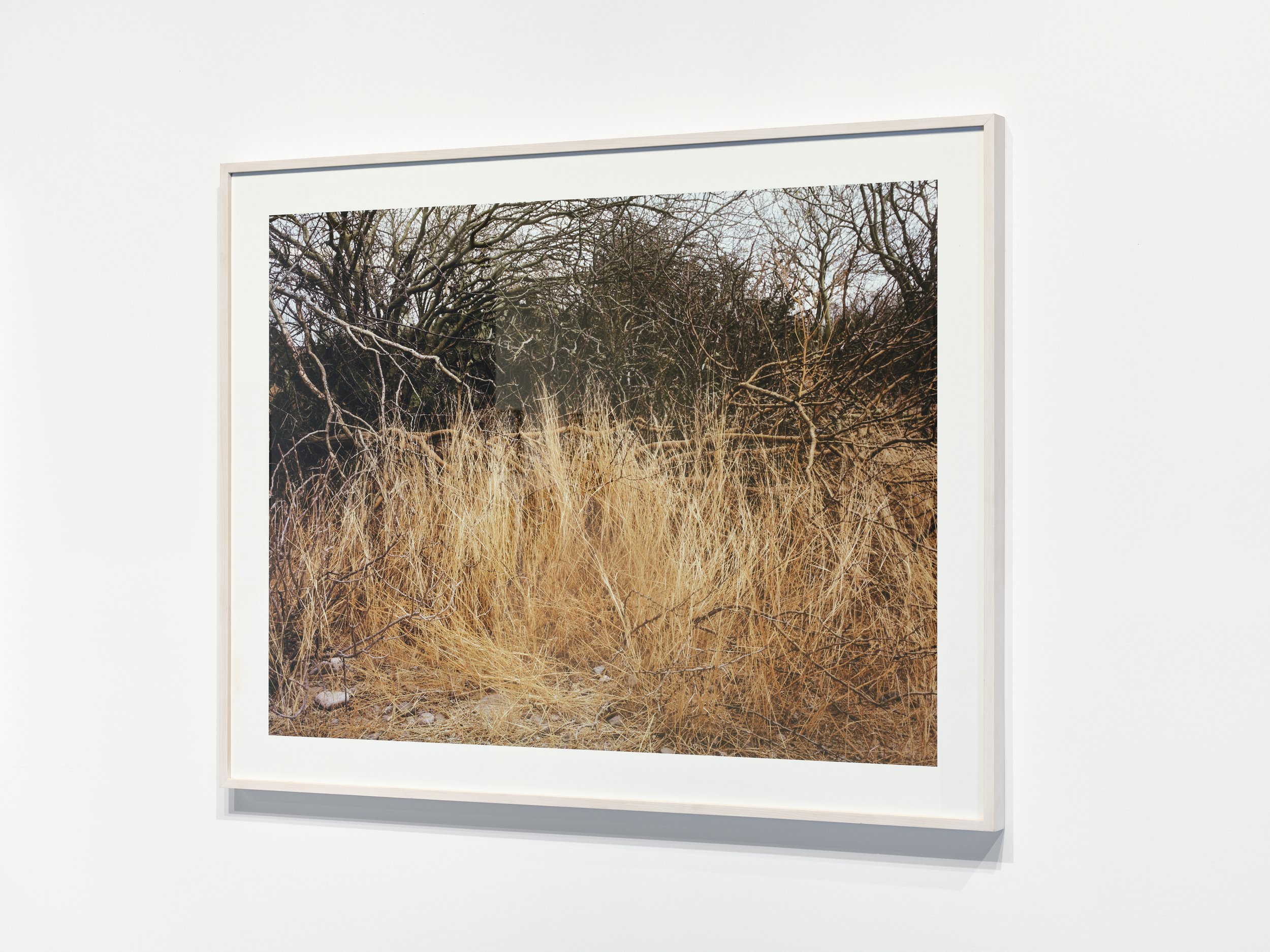
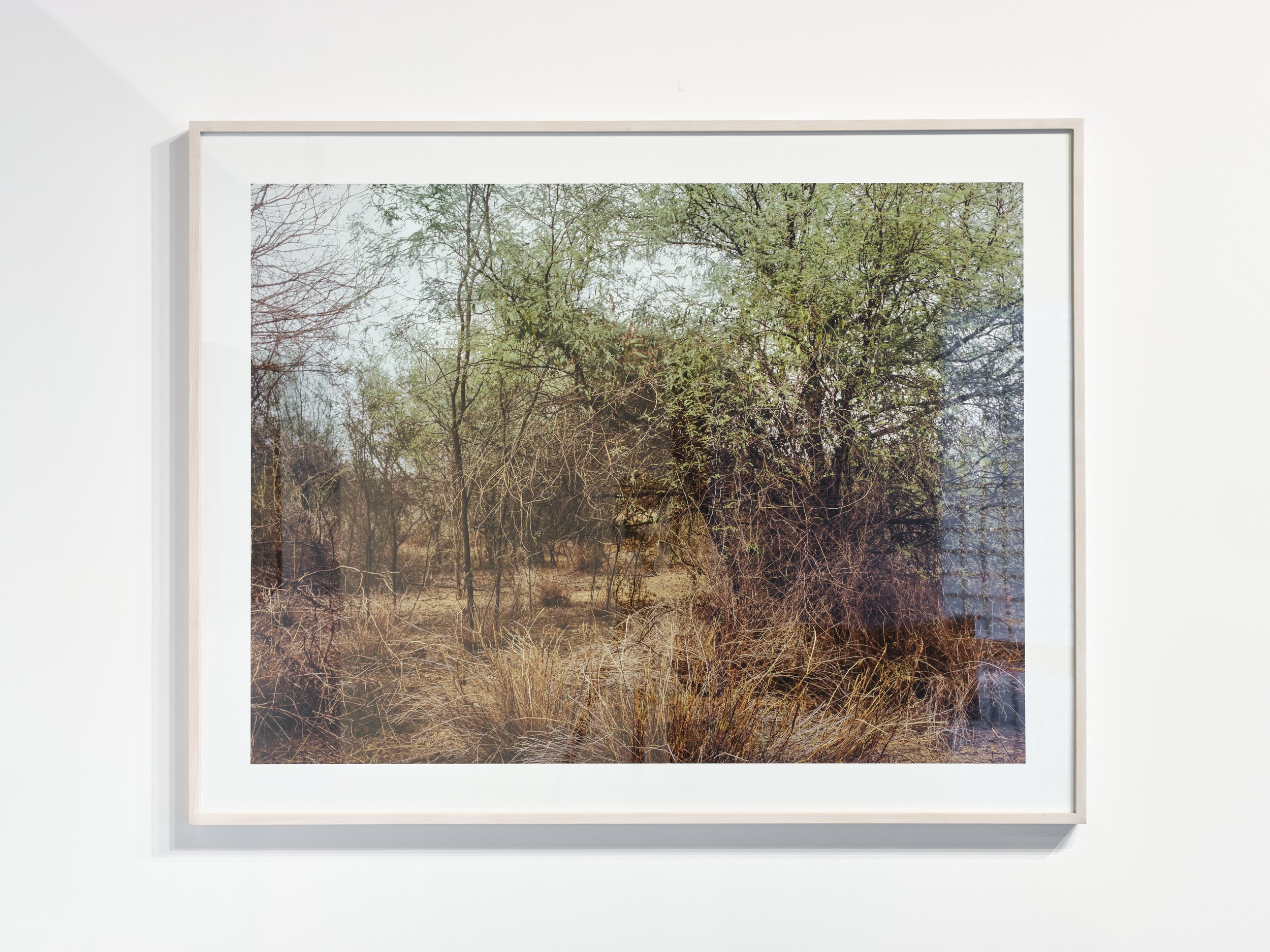
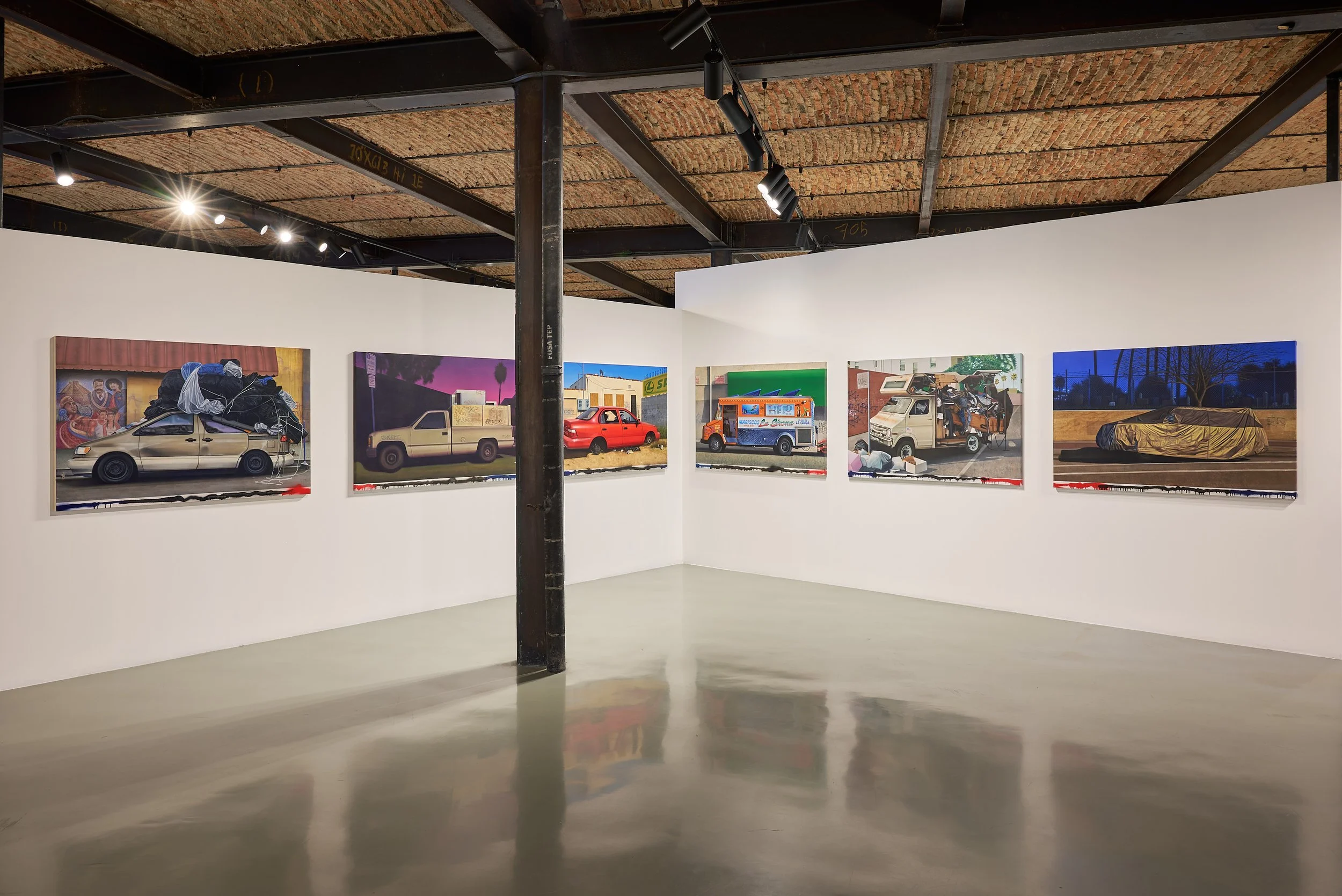
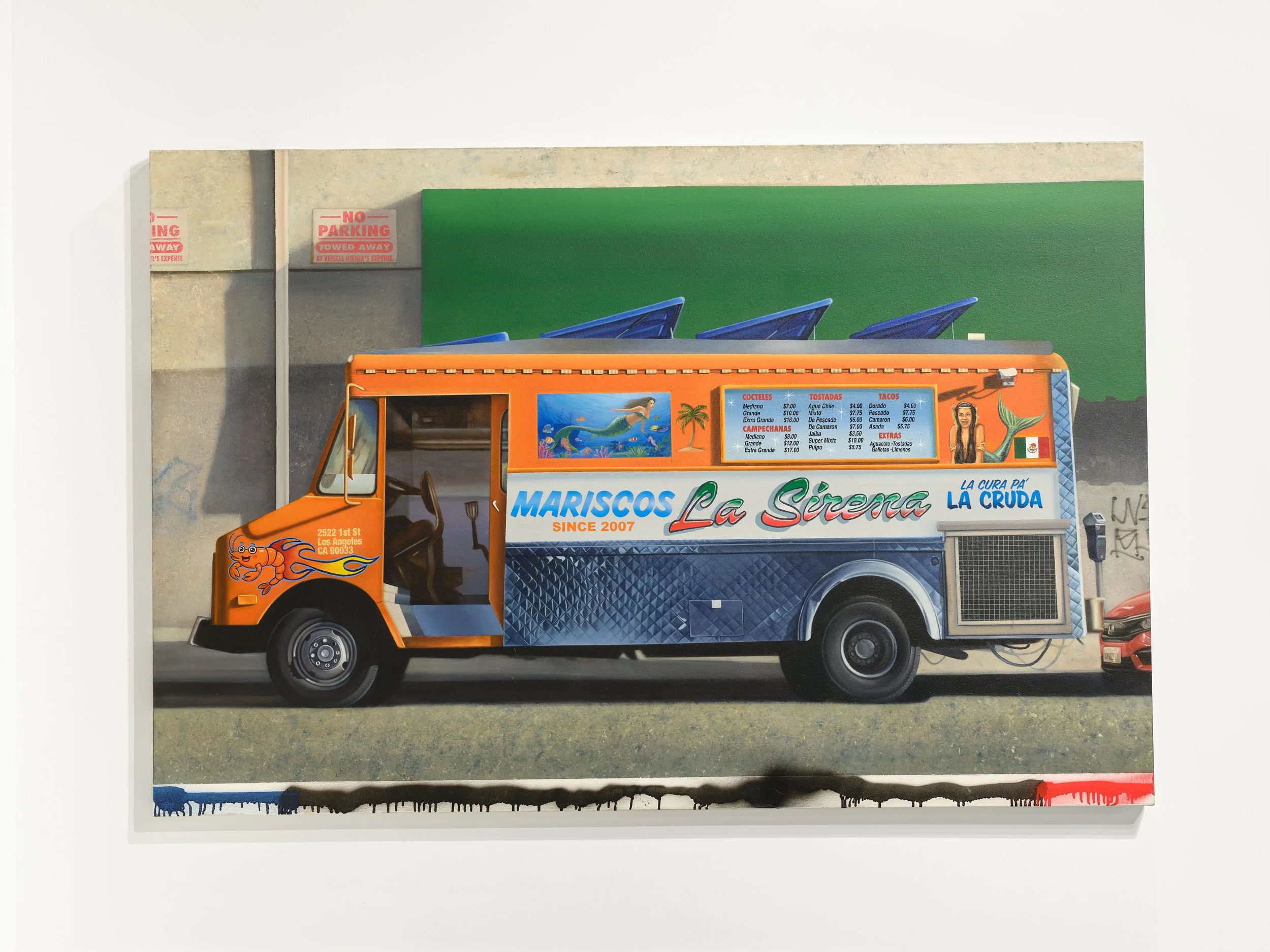
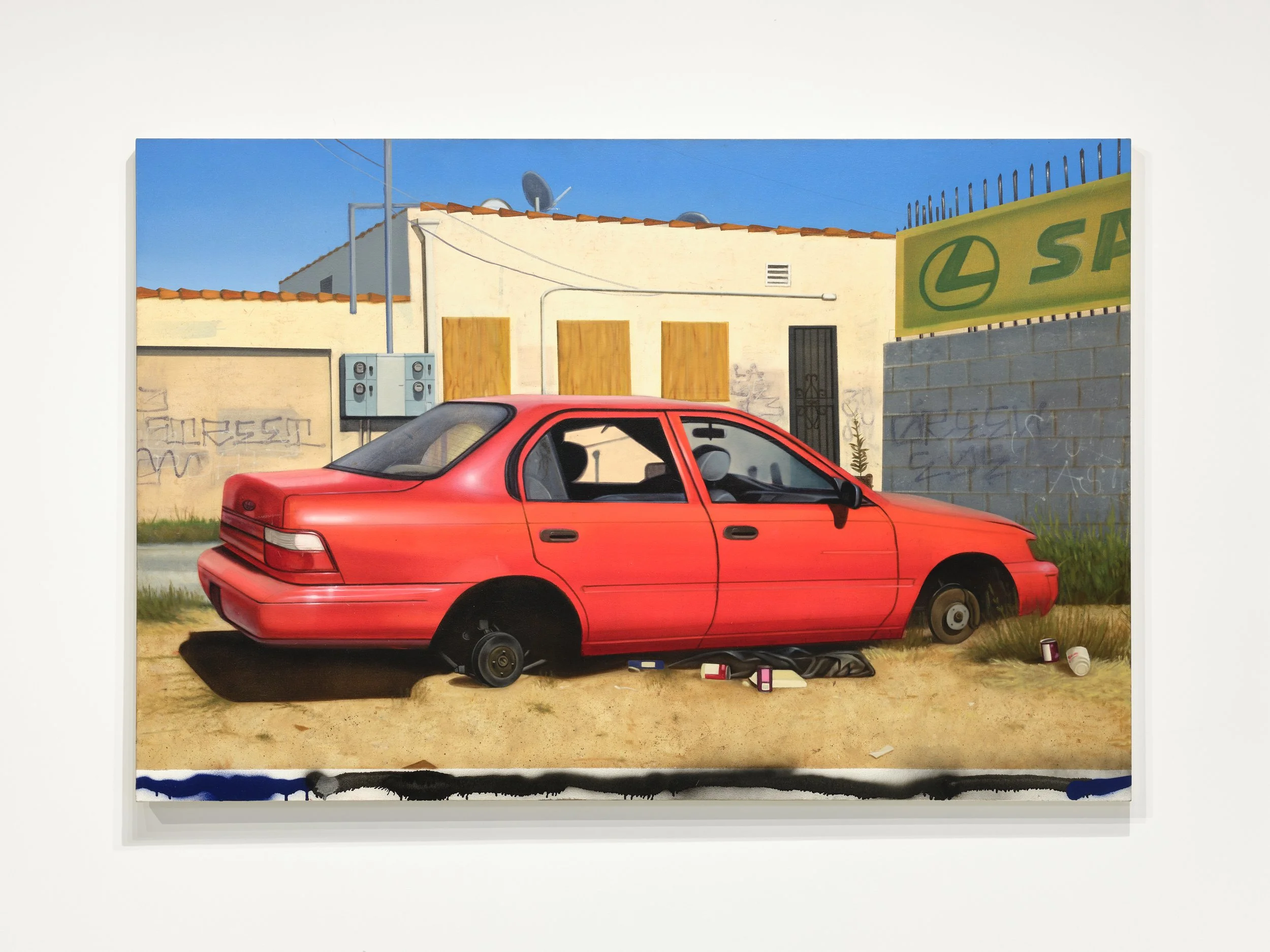
The footprints in the sand, in Javier Limon’s extremely fine photographs, or the flattened grass at the US border, show how a landscape photograph can show nature crushed by history, the way that the surface of the world keeps the score before and after someone might pass through. The delicate, flowery play on the modernist photograph, and its subsequent effect on magazine advertising in Gillian Steiner’s work, makes the medium supported in itself, while the distinct series of permanently static car ‘portraits ‘by Alfonso Gonzalez shows painting held in the face of stillness. From Megan Plunket’s slight but sophisticated representation of value as a three-dimensional object, to Nihura Monteil’s heightened, tender use of graphite to conjure an object of questionable beauty. From the sense of the ground as the theatre of real life in Yvonne Venegas’ black and white photographs of empty rehearsal rooms and auditoria leaving emptiness aside, through to the contradiction between transition and permanence in Ingrid Hernandez's more functioning documentary photographs of the home, to finally, Mario Ayala’s paintings which conjure the object of LA TV dreams, both inside and outside.
Rather than false formal radicalism, ‘Here Now’, designed on the principles of Rene Daniels’ unapologetic paintings from the 1980’s, allows a rhythm, or run, of images to work. The painting, photography and drawing of concentration, containment and content, carries a great wealth of association, and ultimate reality.
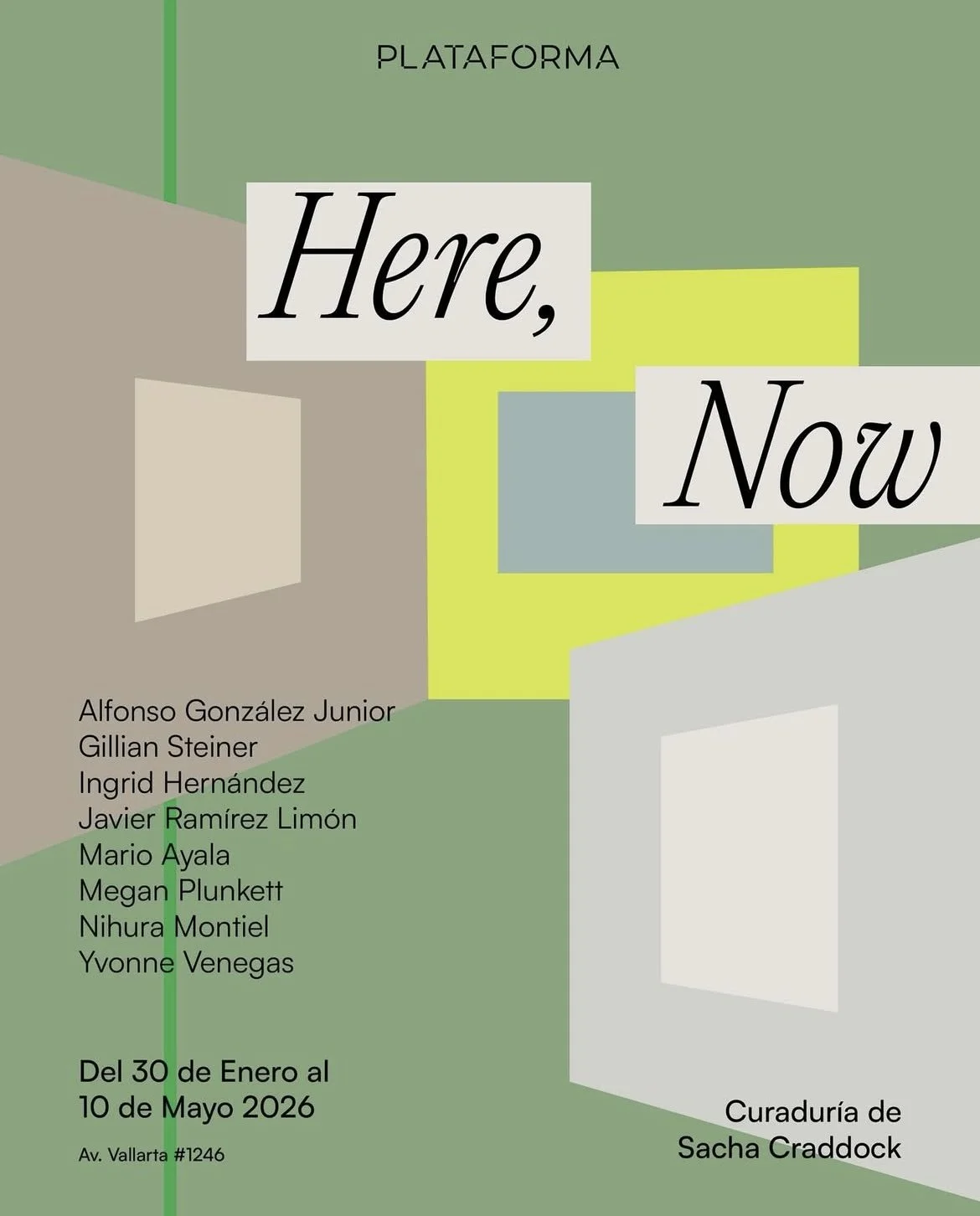
Here, Now
Group Exhibition
Curated by Sacha Craddock
January 30 – May 10, 2026
Plataforma, Guadalajara, Mexico
English
Here, Now
Made up of a series of works by eight established artists, Here Now is about starting at the same place, and looking, without initial puzzle, problem, or mystery.
The work, chosen for its ability to link the moment you look to perhaps the moment the artist was looking and thinking, balances the hope that, along with the “little death” of expectation that inevitably comes every time, art also brings sentiment and sensibility. Arriving from travels to LA and Tijuana, as well as time spent in Guadalajara, the photographs, paintings, and drawings are displayed here in the manner of arrangements in the 1980s star René Daniël’s paintings: It aims for a sense of democratic discovery.
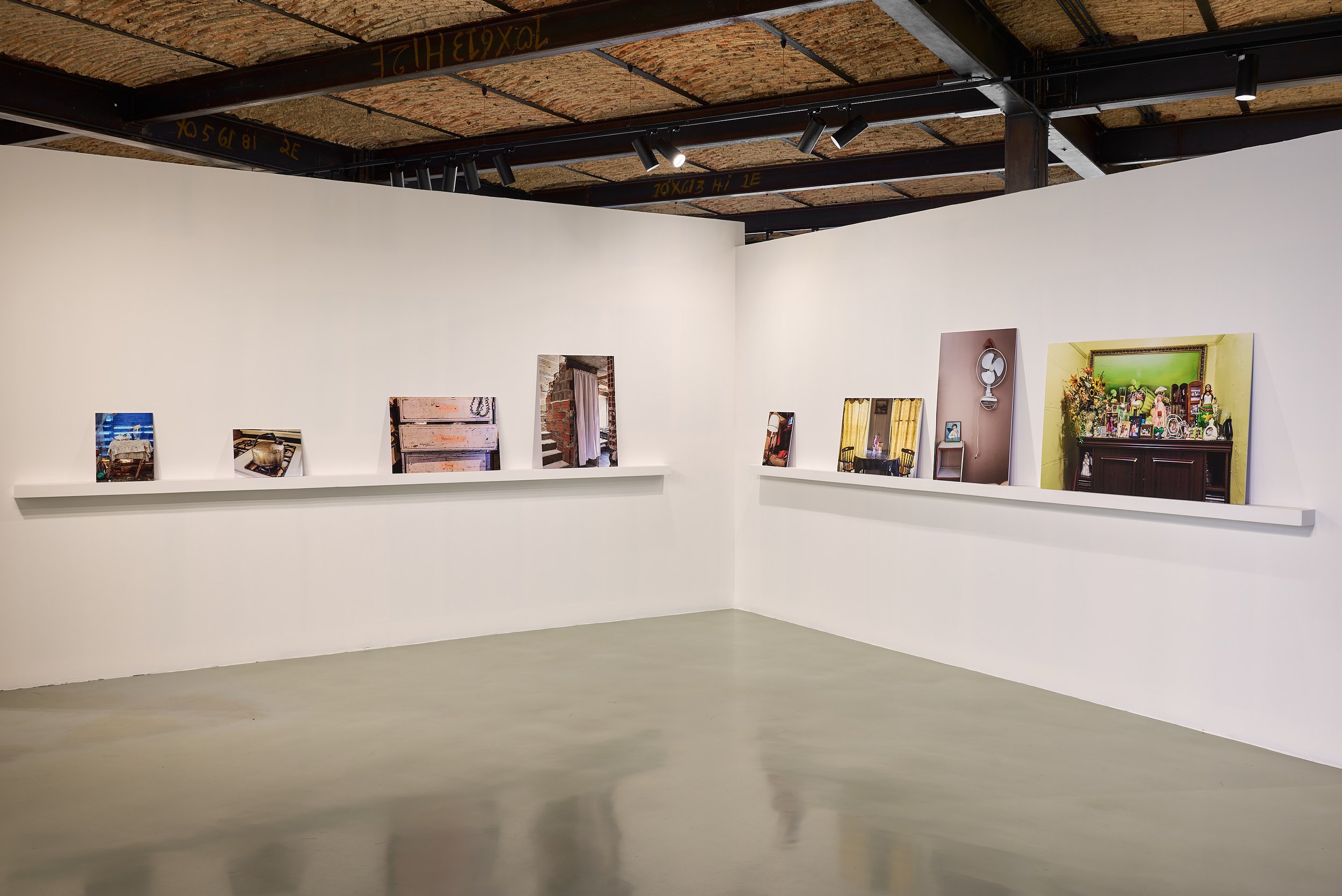
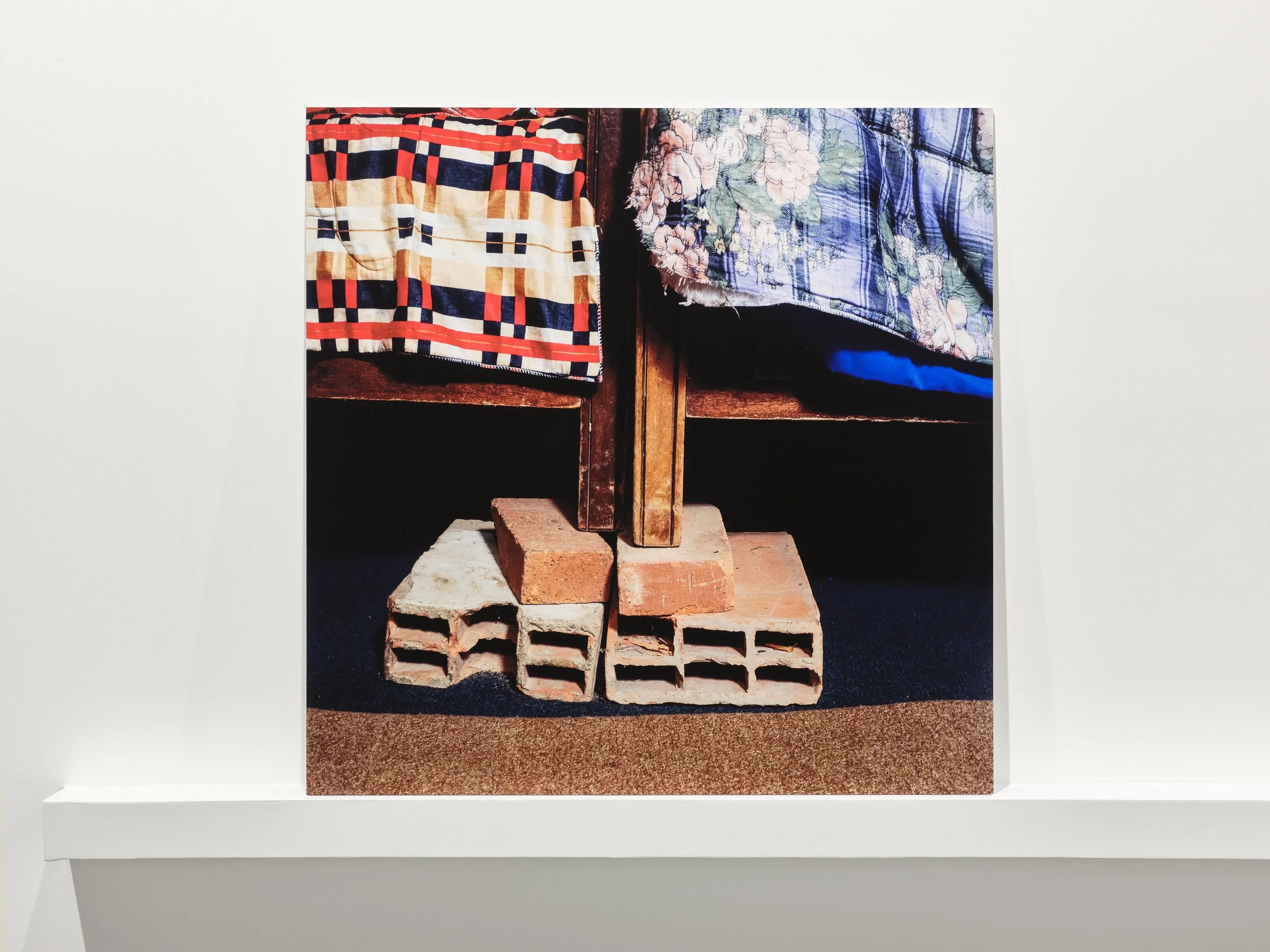
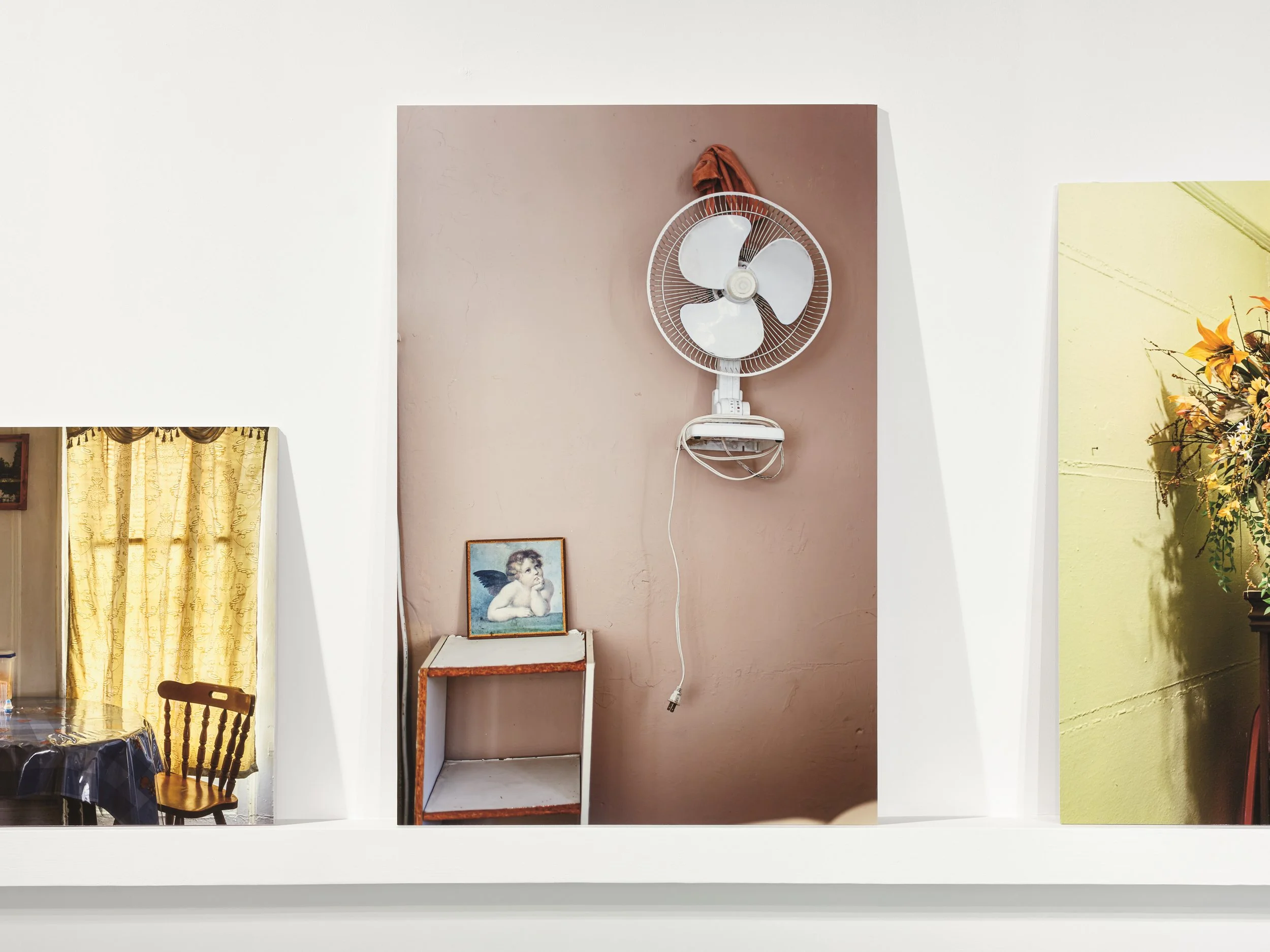
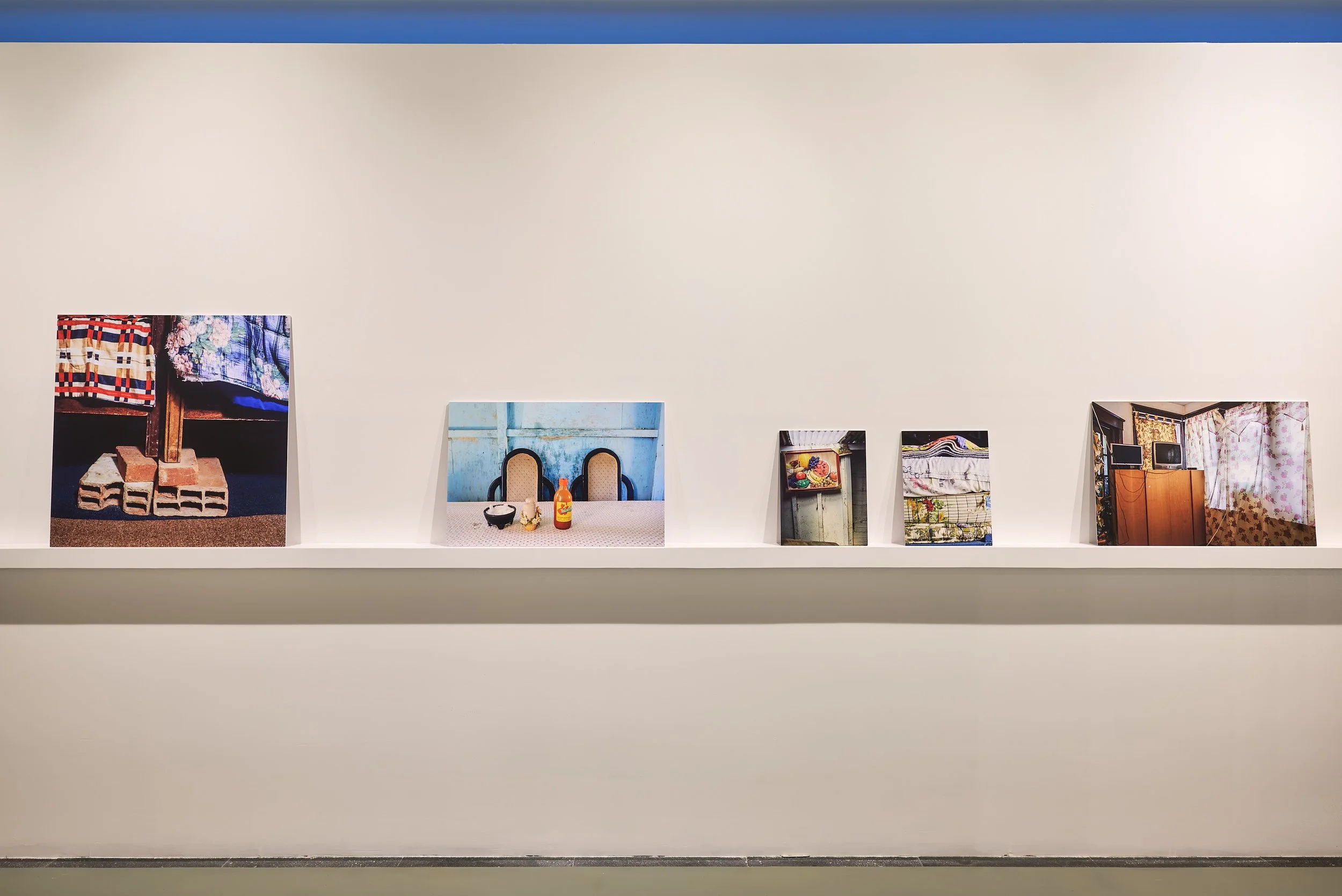
Through a solid career as an academic documenting domestic interiors caught between transition and permanence, Ingrid Hernández illuminates sometimes perfunctorily homes and precarious housing conditions. Her images of the homes of Mexicans in New York, for instance, as well as those of her family and others in Tijuana reveals much more than a love of the interior. Aesthetic shifts between still life and total interior break through the closed conditions with a discipline that brings a real, almost academic project together with the history of the artistic genre. With Hernández, there is a rerun of a particular relationship between soft and hard, bright, tawdry, and graphic. The table is set, light streams through a window hung with cloth or a blind, onto the sometimes-provisional nature of the collection of used and kept objects. Very much like anywhere, souvenirs and ornaments here become mixed up with the wires of electrical implements, and desirable yet necessary fabric is folded and re-folded. A matter of making do with circumstance clashes with the reproduction of a painting of a still life that already exists inside.
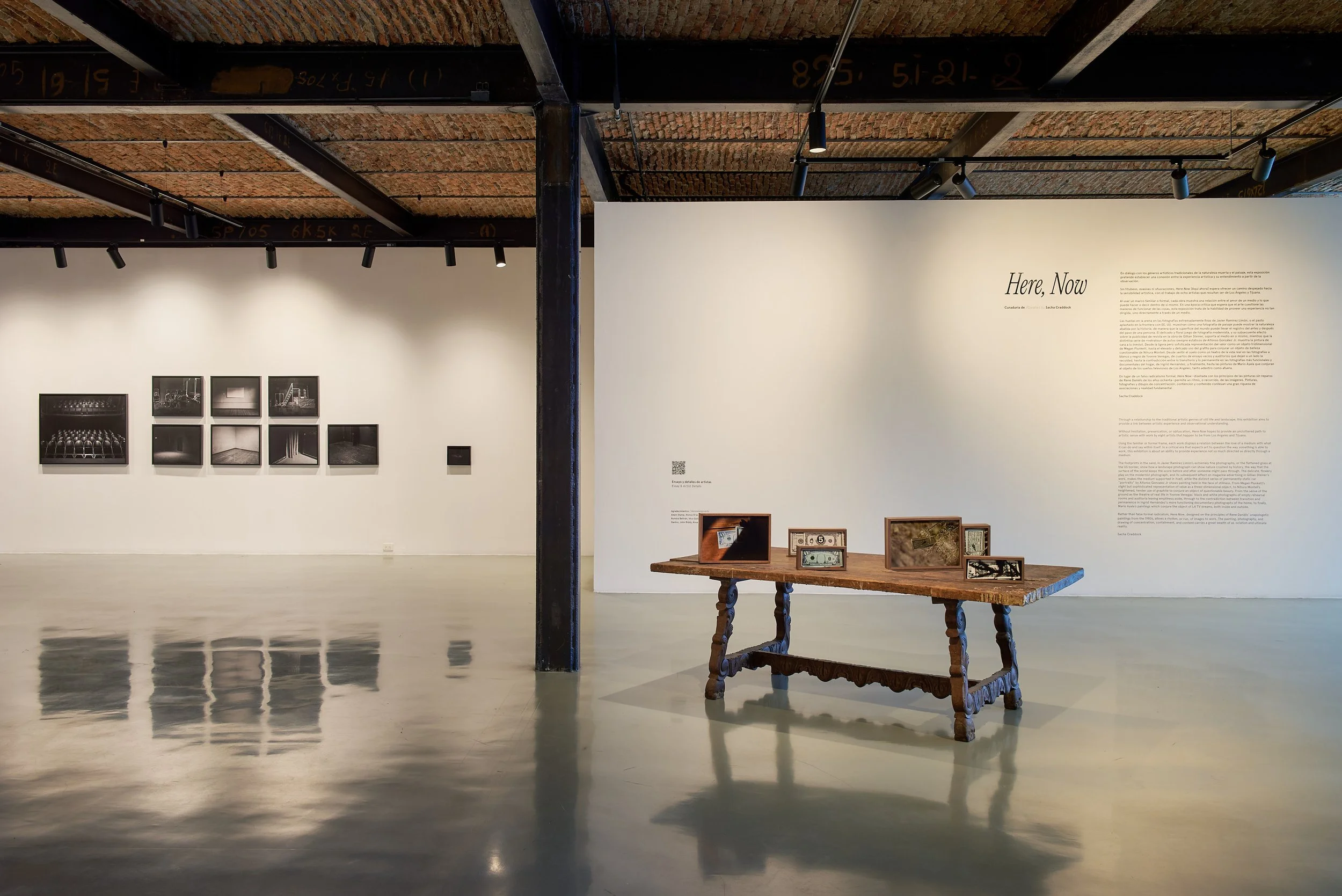
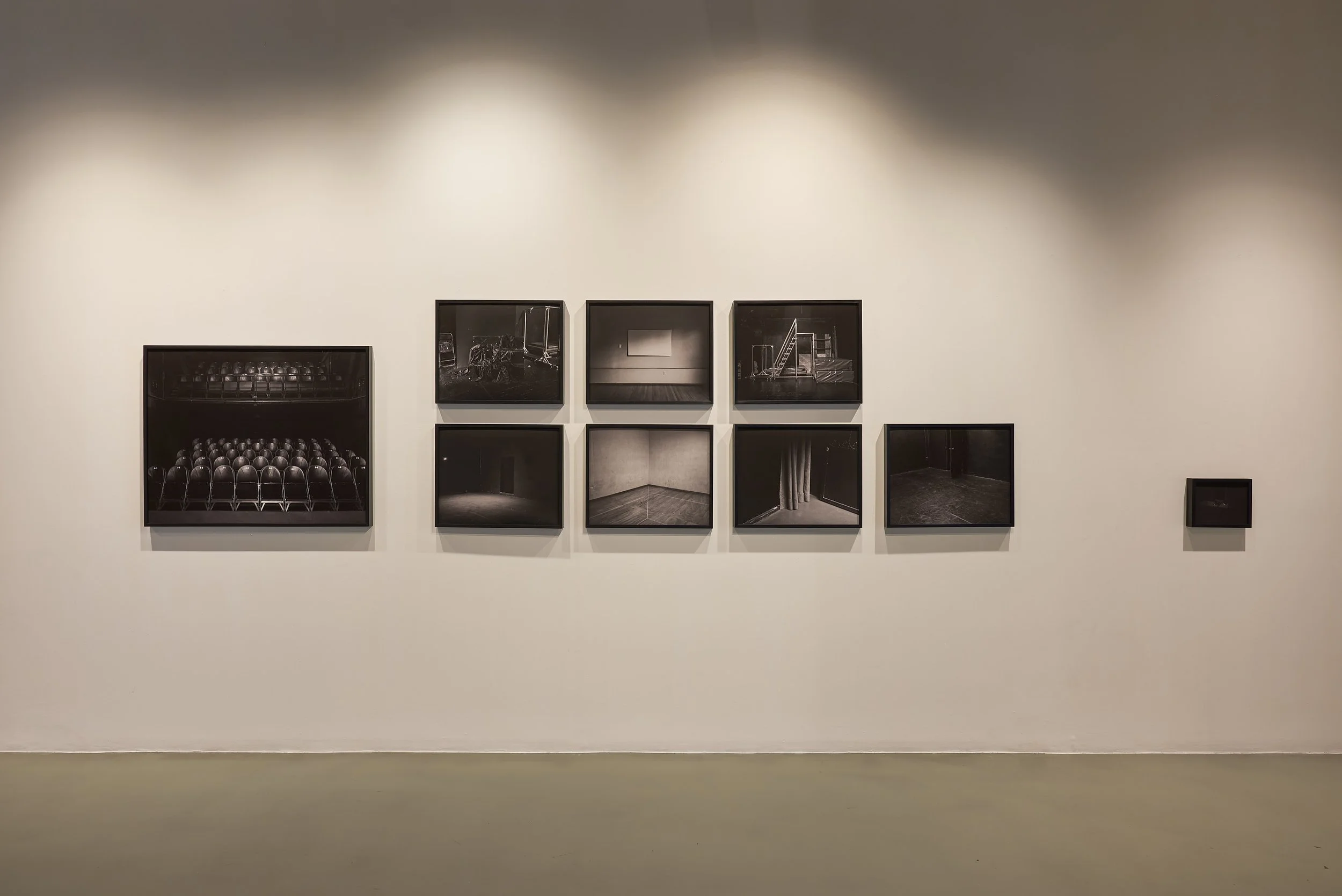
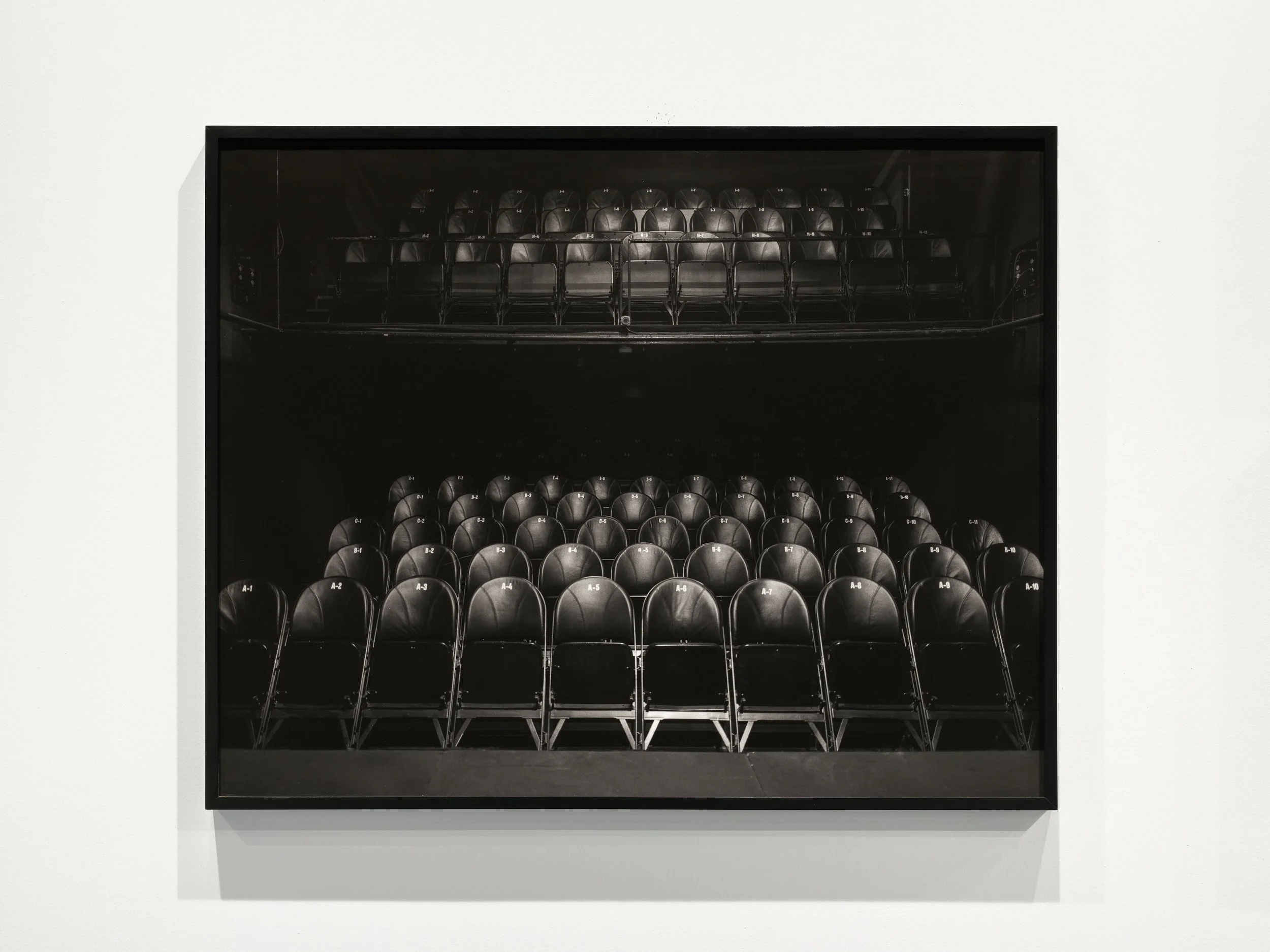
Yvonne Venegas has an enormous relationship with photography. Balancing the precarity of detail, caught momentarily in light with the emptiness of promise, before and after but not necessarily during the subject itself, a space for drama mimics and replaces the paper on which the image appears. Printed on silver gelatine, her work squeezes elusory space forward toward thin fact. Brought up in the family of Tijuana’s main social photographers, Venegas starts almost naked, somehow, in terms of object and subject, as she continues to photograph that which is about, around, in the centre, and away from the edge of a subject. With a great eye for texture and surface, she photographs the walls, floors, and structures of the place that houses the rehearsal of the theatre or ballet, for her recent series, Mexican Drama. From still life to emptiness, the initial attempt at constructing fiction, the fact of place as opposed to the fiction of theatre, means that the rehearsal is not the story. Stillness waits for a manifestation of life, empty theatre seats wink back in a strange shared darkness, and the collective rationale to play or dance just has to wait.
Javier Ramírez Limón’s photographic series, TARA, with bush, wasteland, landscapes with roads, trucks, and footprints in the sand, comes from a highly sophisticated relationship to the history of the photograph as art. His work holds air, space, time, and incident in an emptied-out, apparently matter-of-fact manner. The work in Here Now brings undergrowth, crumpled and perfect sand broken by what can be assumed are people. Footprints are left, hope, in terms of movement, as both openness and hiding are there. A pioneer for the medium and beloved mentor, Limón lived and worked in Tijuana until his death in 2018.
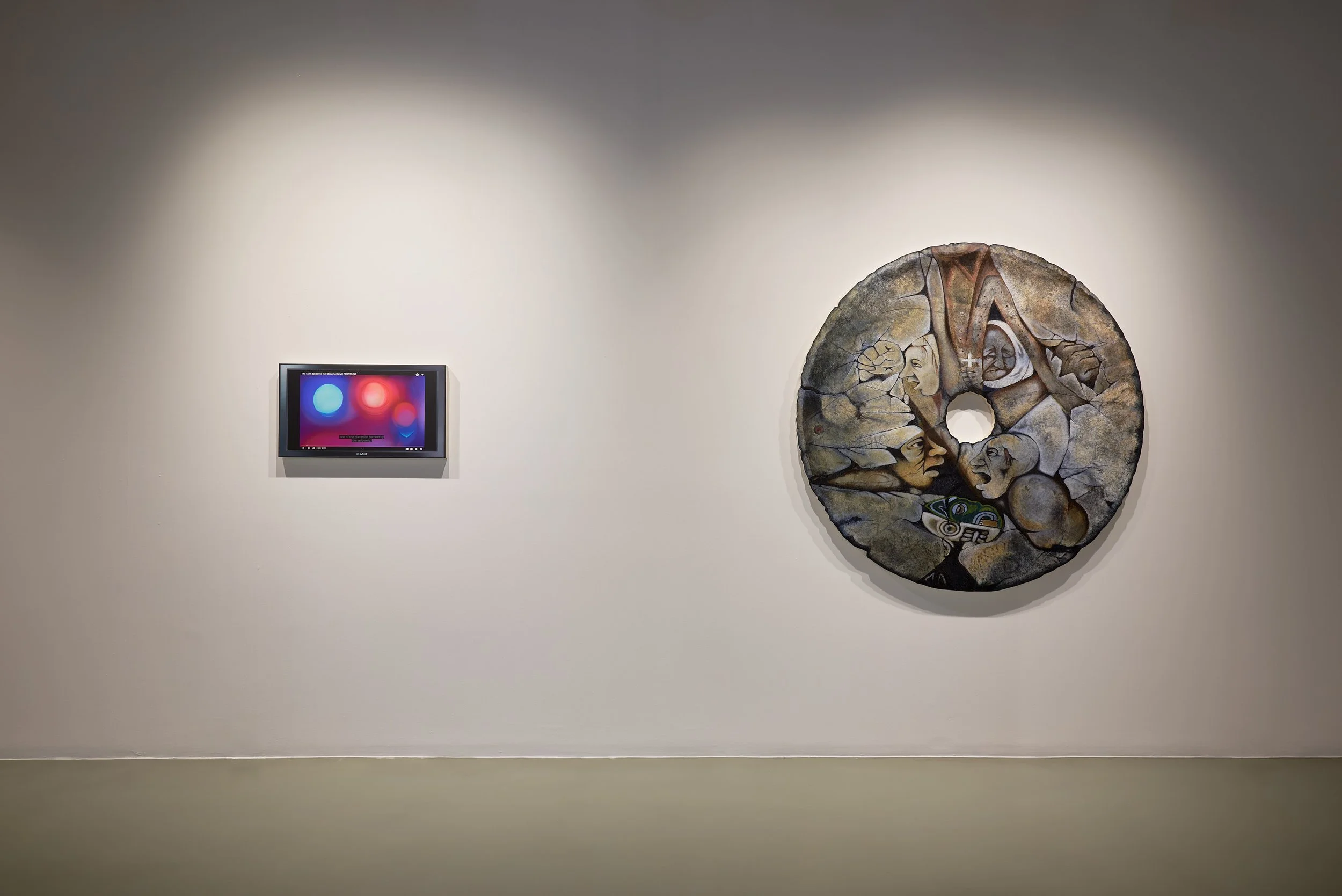
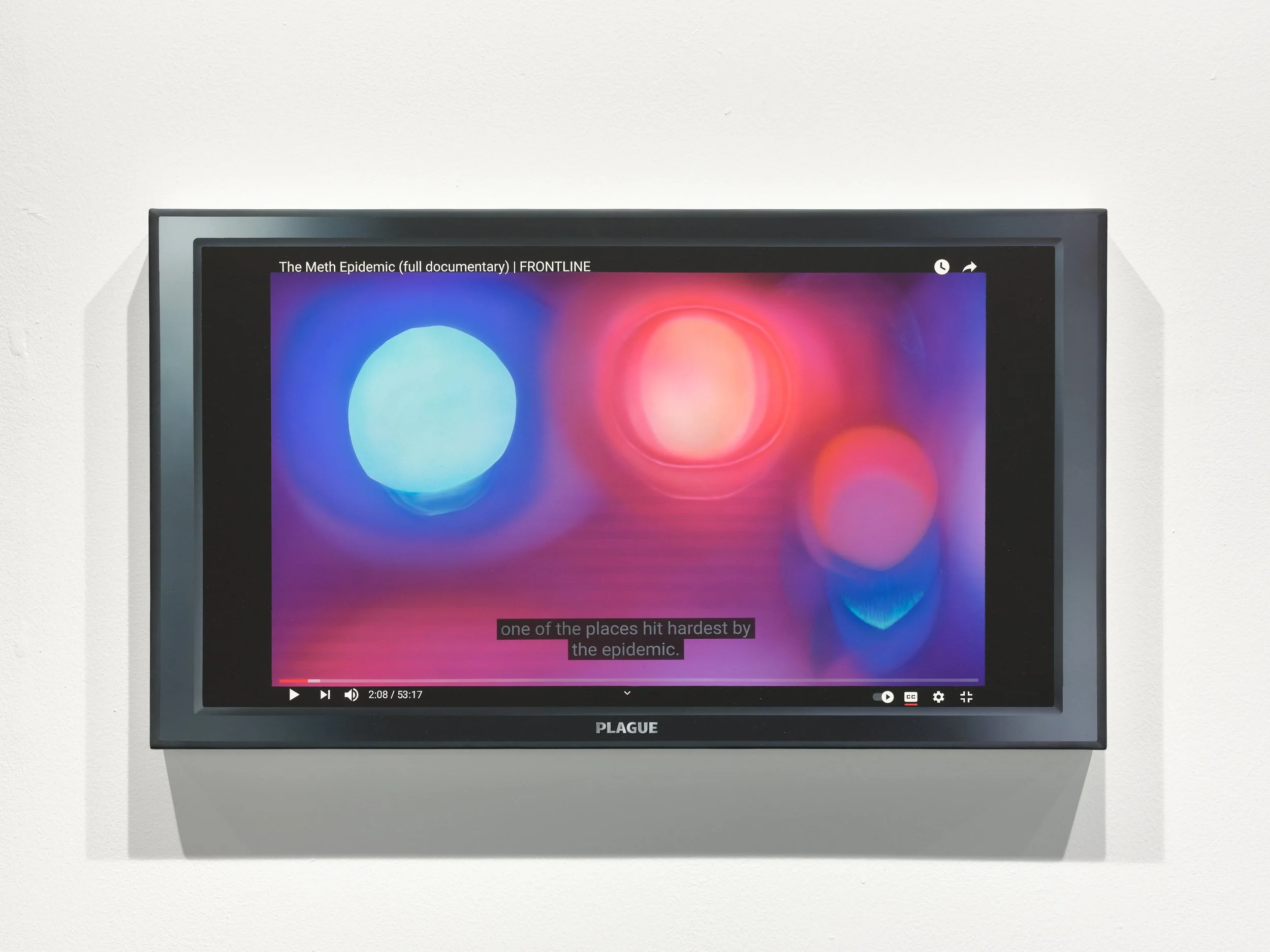
Mario Ayala’s paintings gather an apparent sense of distinct time with graphic association. His relation to the media of LA—for instance, television—with the subtitle text, brings another layer so easily, but also adds a blunt mixture of methods in which painting becomes object. This recalls early relations between art and technology, when art students would seek to represent the then-new medium of television with the then apparently old medium of paint. By representing an image of the screen as well as its surrounding wood casing, Ayala hovers between the cutout reality of stacked televisions or the circular object of almost medieval superstition, with blurred colour rings of a diagram on a television screen.
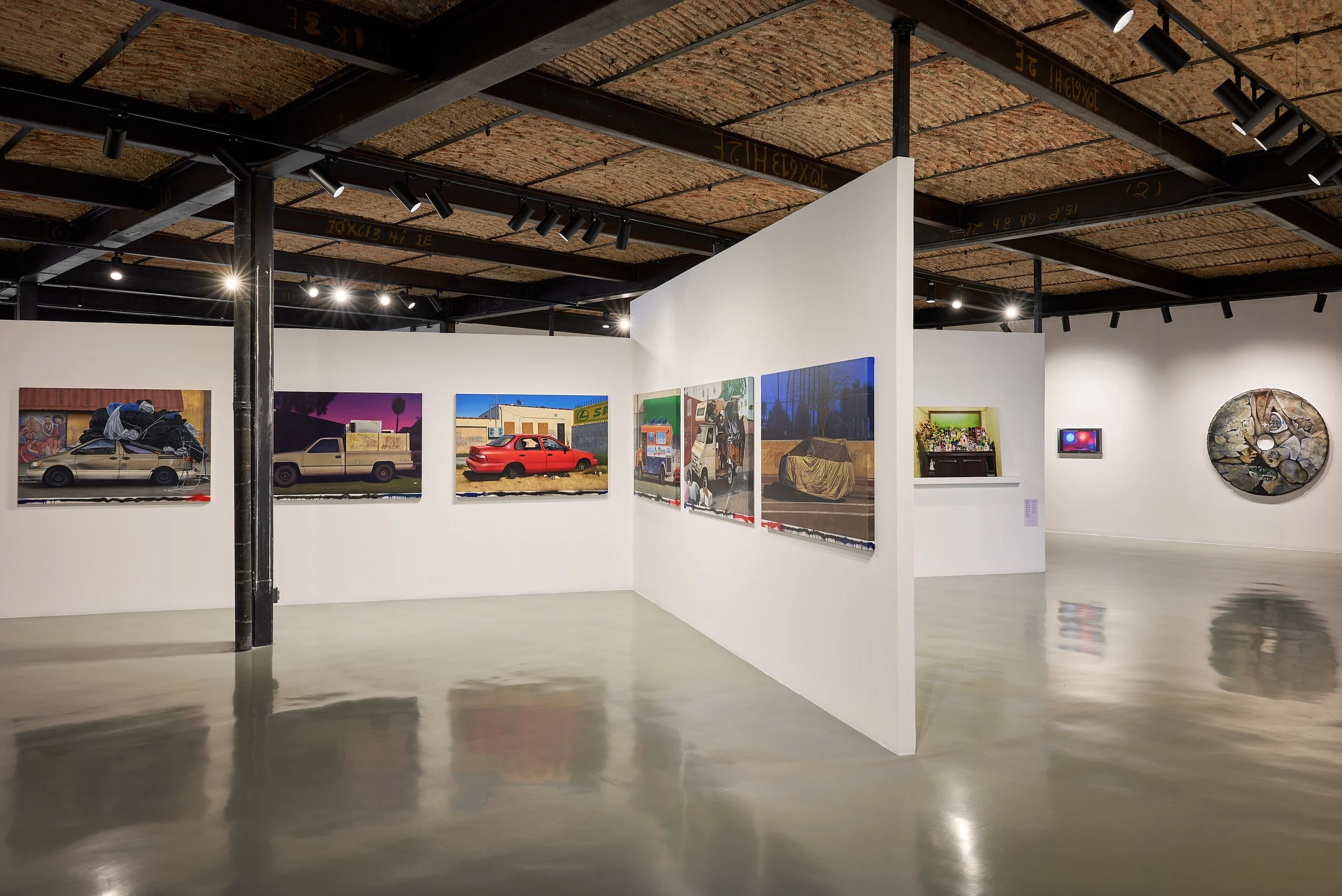
For Alfonso Gonzalez Jr., each slot in the space, frame, or edge of the canvas is fixed like a footballer on a cigarette card, to fill the volume with a space to be lived in. With a touching use of paint to almost mimic the lovingly painted surface in itself, his “car portrait”, with make-do plastic sheeting, becomes permanent. Gonzalez Jr. paints the sides of abandoned or inhabited cars seen near his studio in LA. More recently, his work has separated, with the image existing in its own description, to become the thing in itself. The series of cars, more or less broken, are loving portraits in a way. Their surface is represented, almost identically by paint. As an artist who also makes and constructs paintings that turn into a mimicry of real-scale walls themselves, extending a two-dimensional language into the gallery space, Gonzalez Jr. forever paints about the role of an artwork as illusion, as opposed to fact.
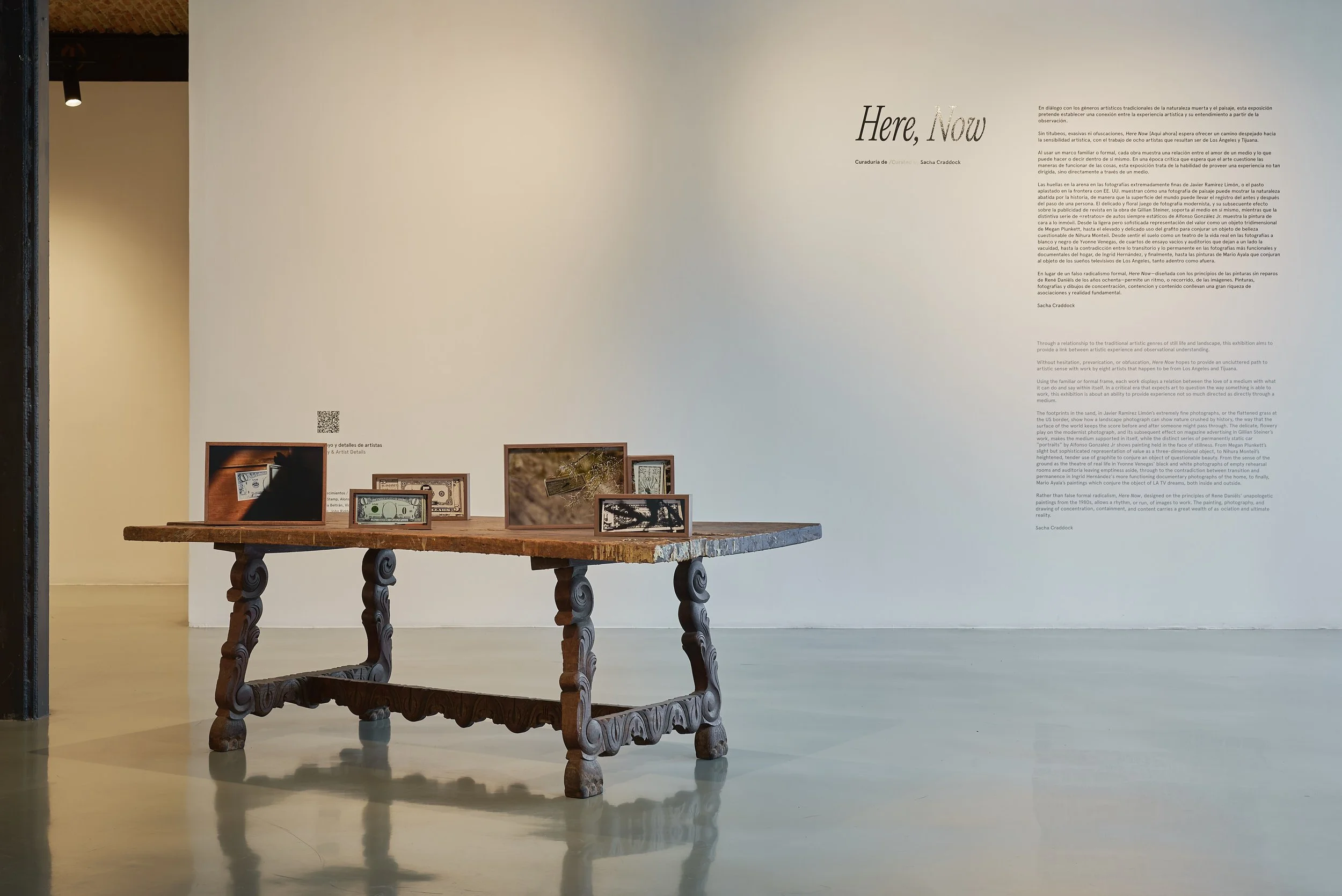
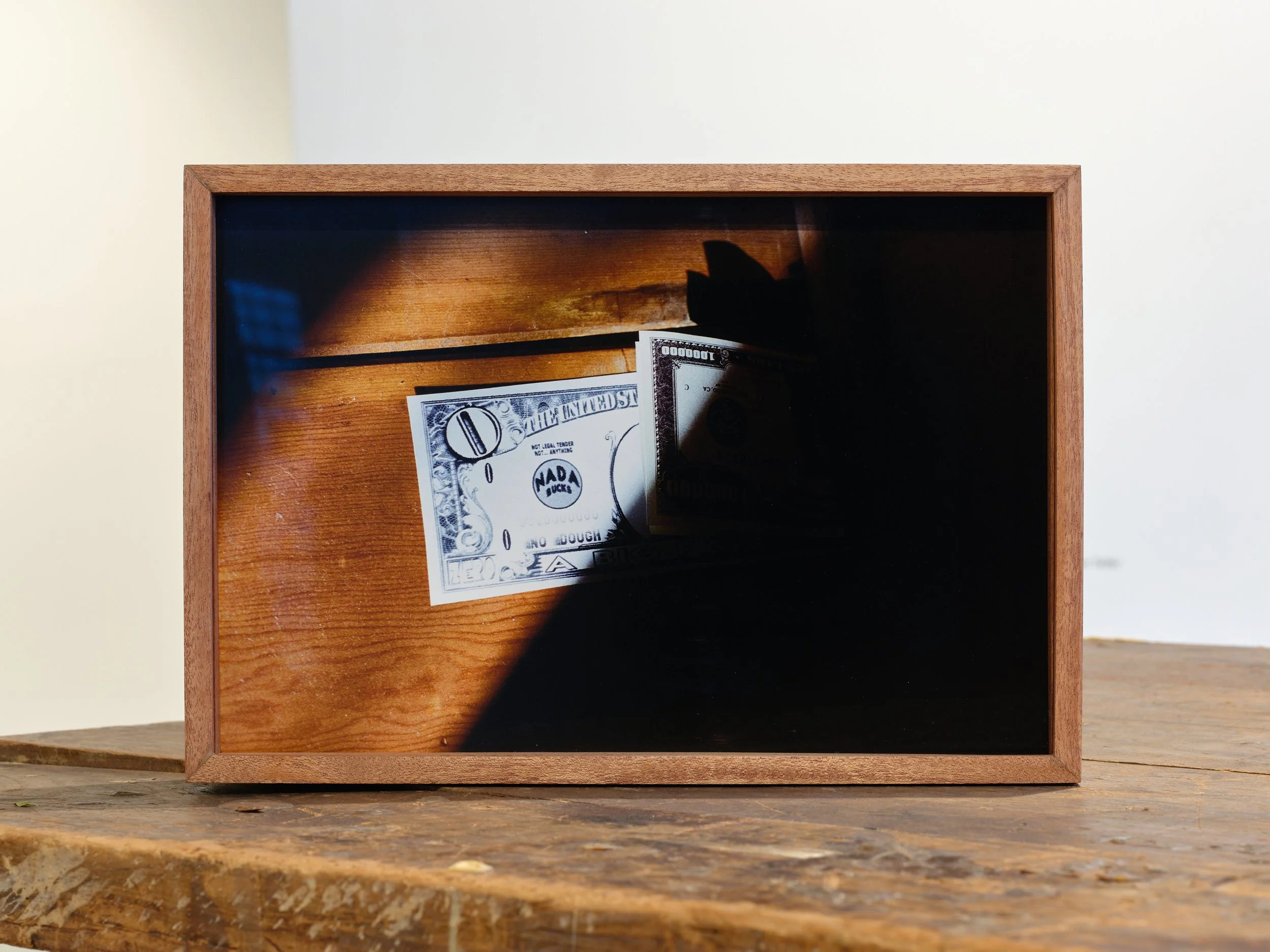
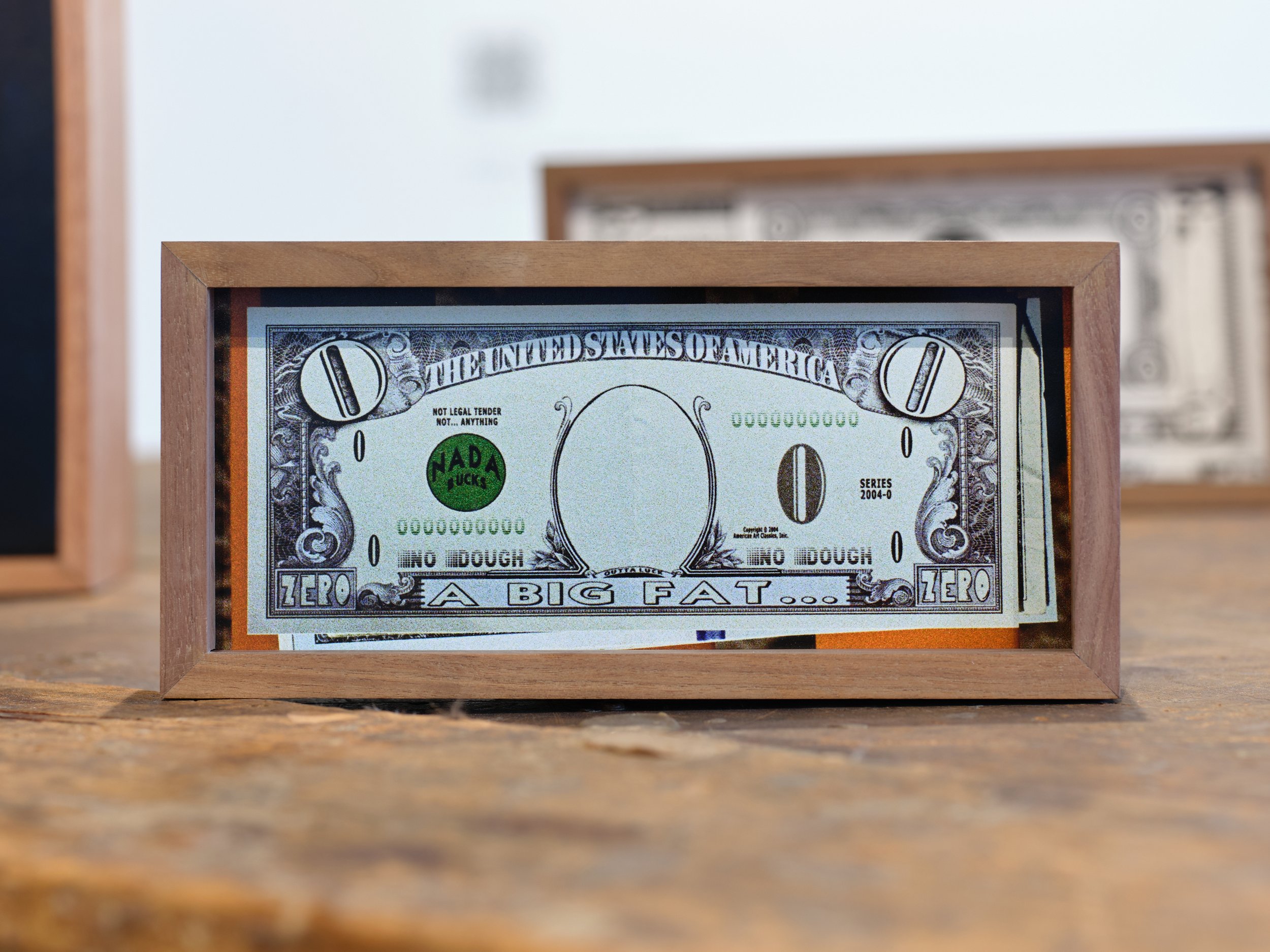
The school-age footballer wins an inscribed trophy. The value of the object is generally negligible, yet it is worth so much because of what it represents. Megan Plunkett’s Attitudinal Beliefs (2024) is a double, double, back-to-front, take on the relation between art and value. Centre stage, with the same level of significance, are the rather randomly valued or unvaluable photographs of denominational notes framed within an inch of their life. With the presence of a note left out after a board game has been packed away to clear the table, the mimicry of fake design persists. The tawdry prose of a game as something to enter over time, almost unconsciously, is symbolic of place and promise. Like the notes of different currencies attached to the ceiling of a bar in the Bahamas, the idea that something is not worth the paper it is printed on persists.
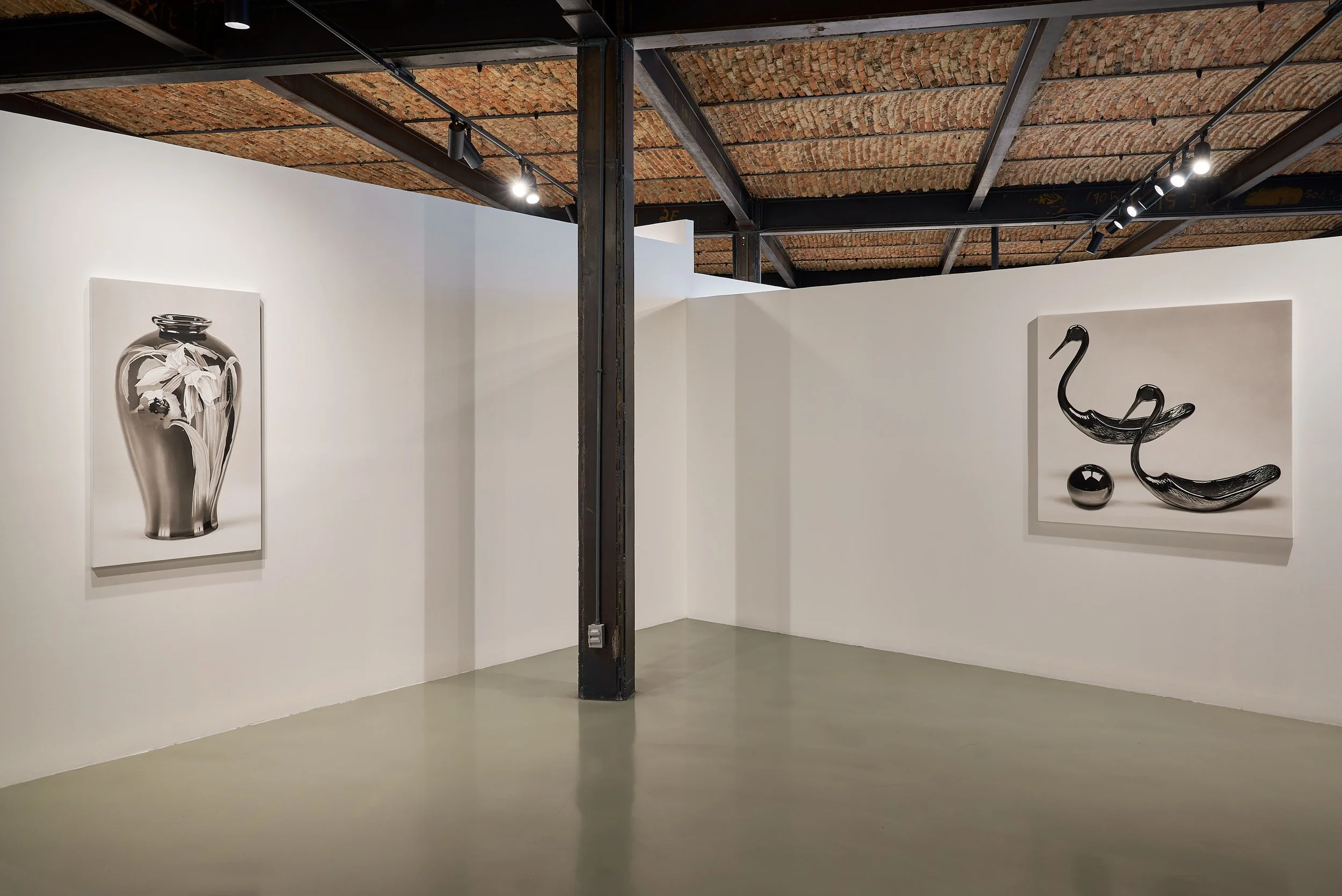
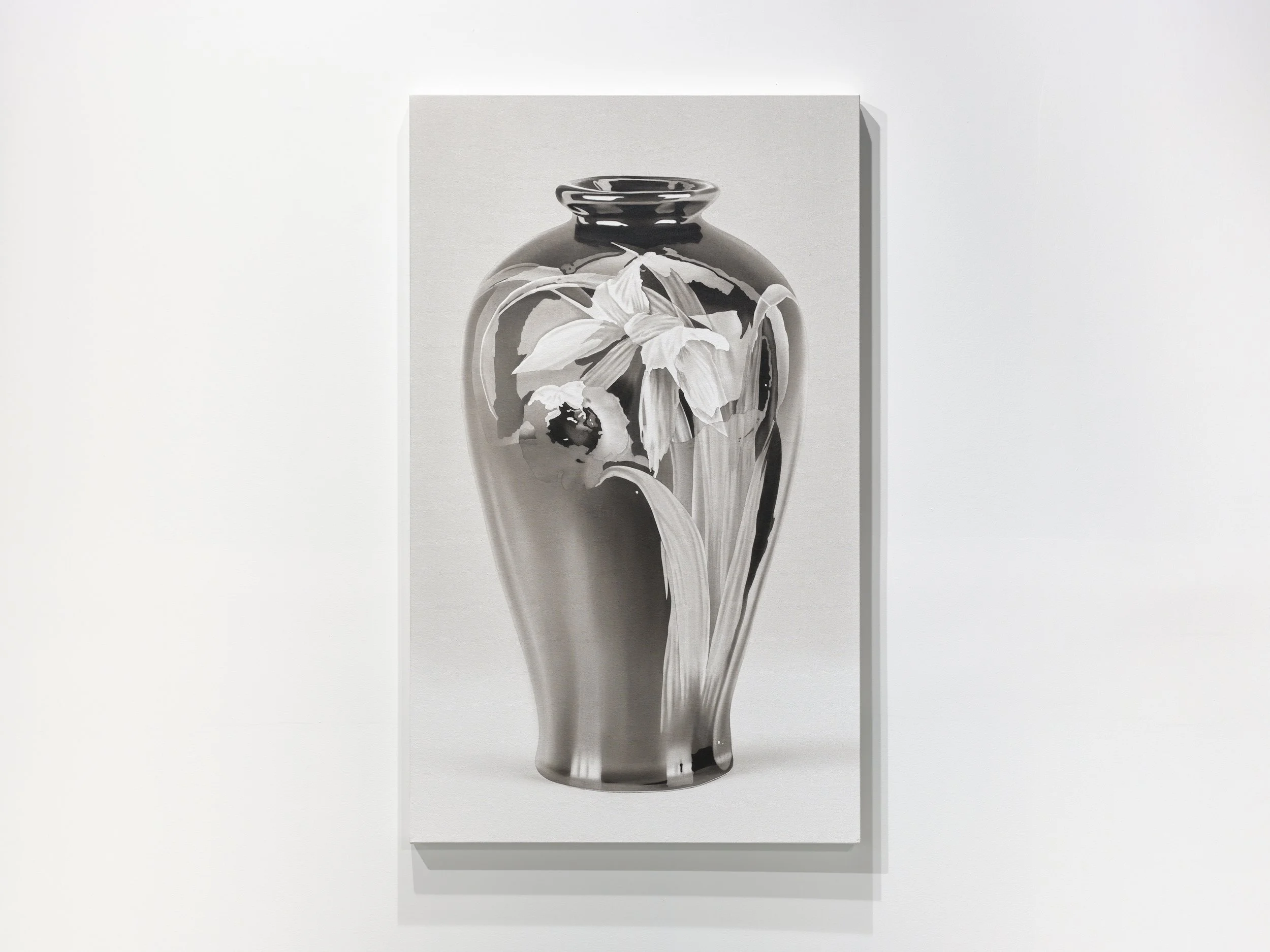
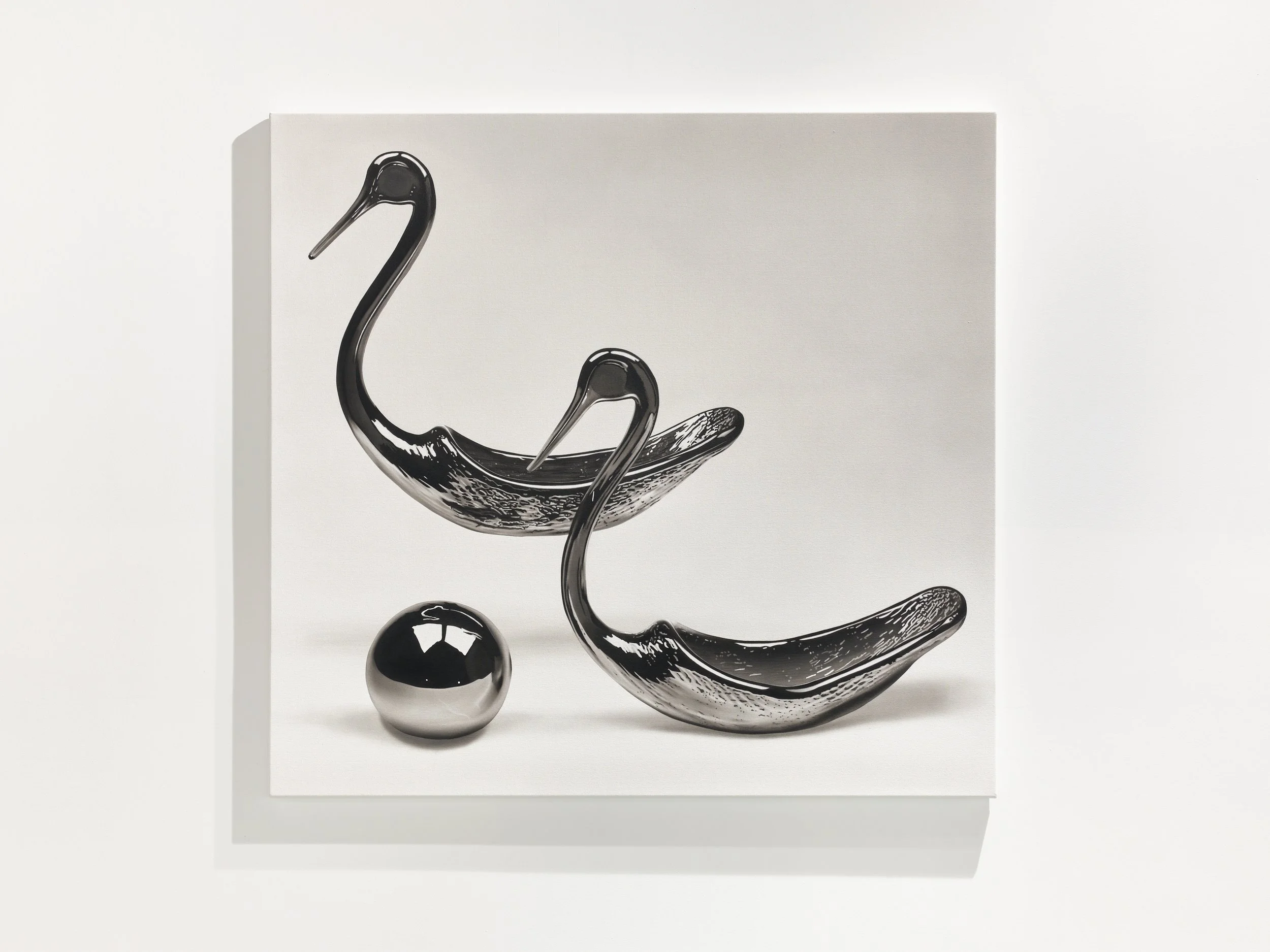
Nihura Monteil’s still and somewhat mannered work with graphite arrives out of the artist wielding charcoal with the fragile precision of a make-up artist using face powder. A decorative object, covered in much the same way that an original song might be covered, has been selected for its formal and associative qualities. While Nihura conjures, arraigns, the image across the surface, she gets to the very bottom of a relationship to still life. Touching the surface to build a highly reflective reflection of the long-conjured but empty, questionable, autonomous object, a jar, for instance, is in itself highly reflective. The artist plays with decorative generosity by reducing the arrangement of varying associations. Trying to get to the key, to the centre, the artist with virtuoso attention concentrates on an image that is turning into something else over time.
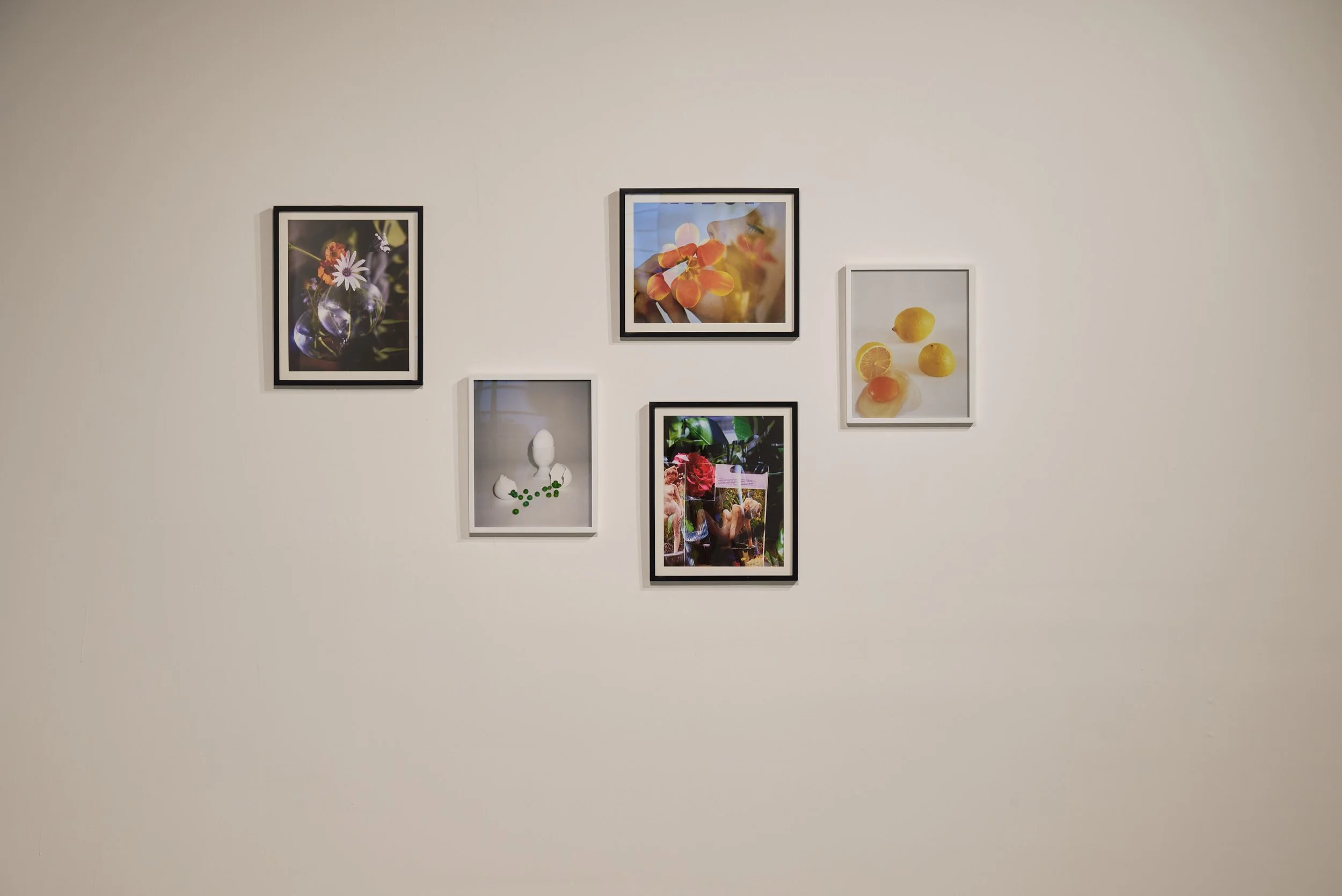
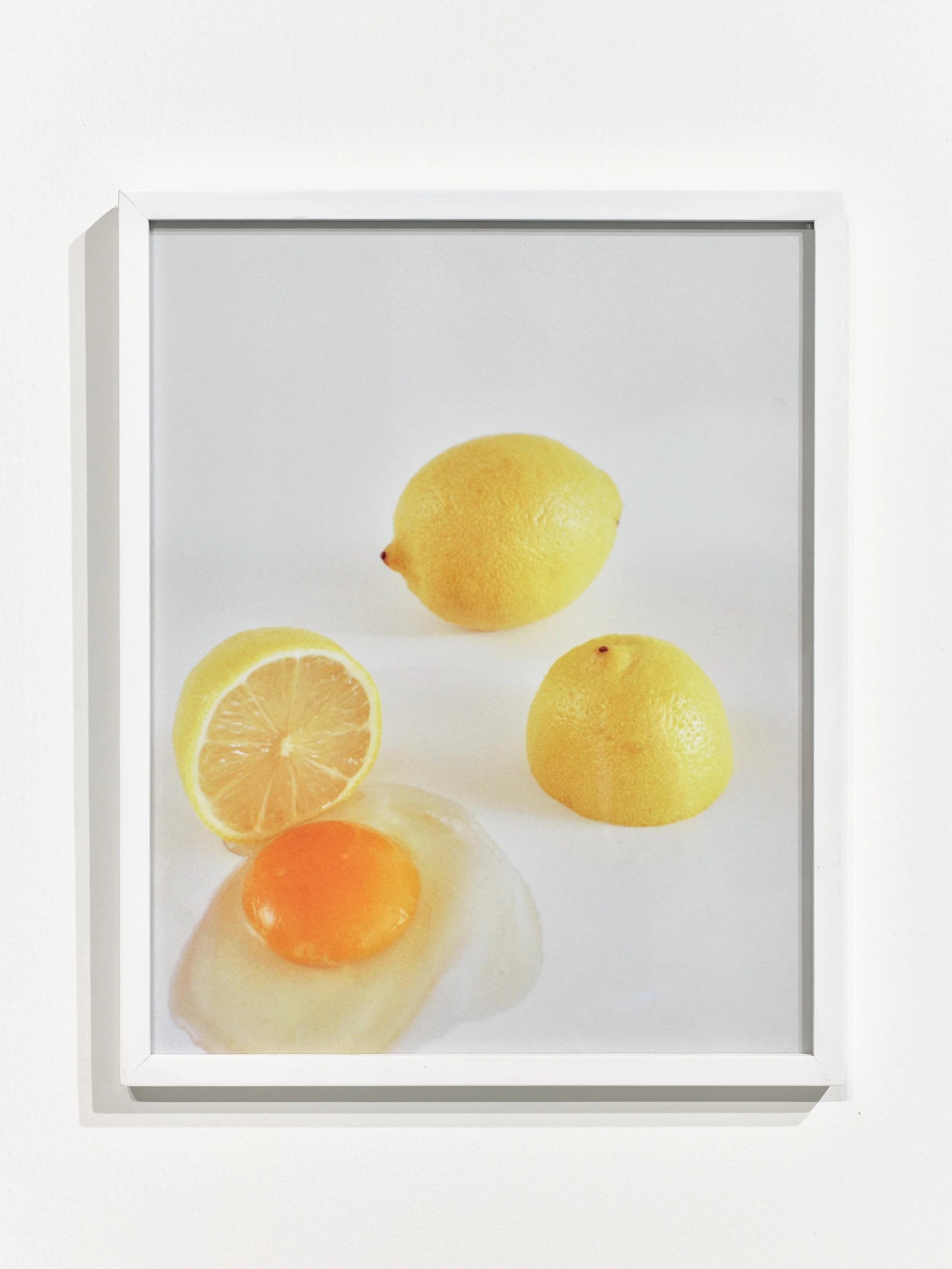
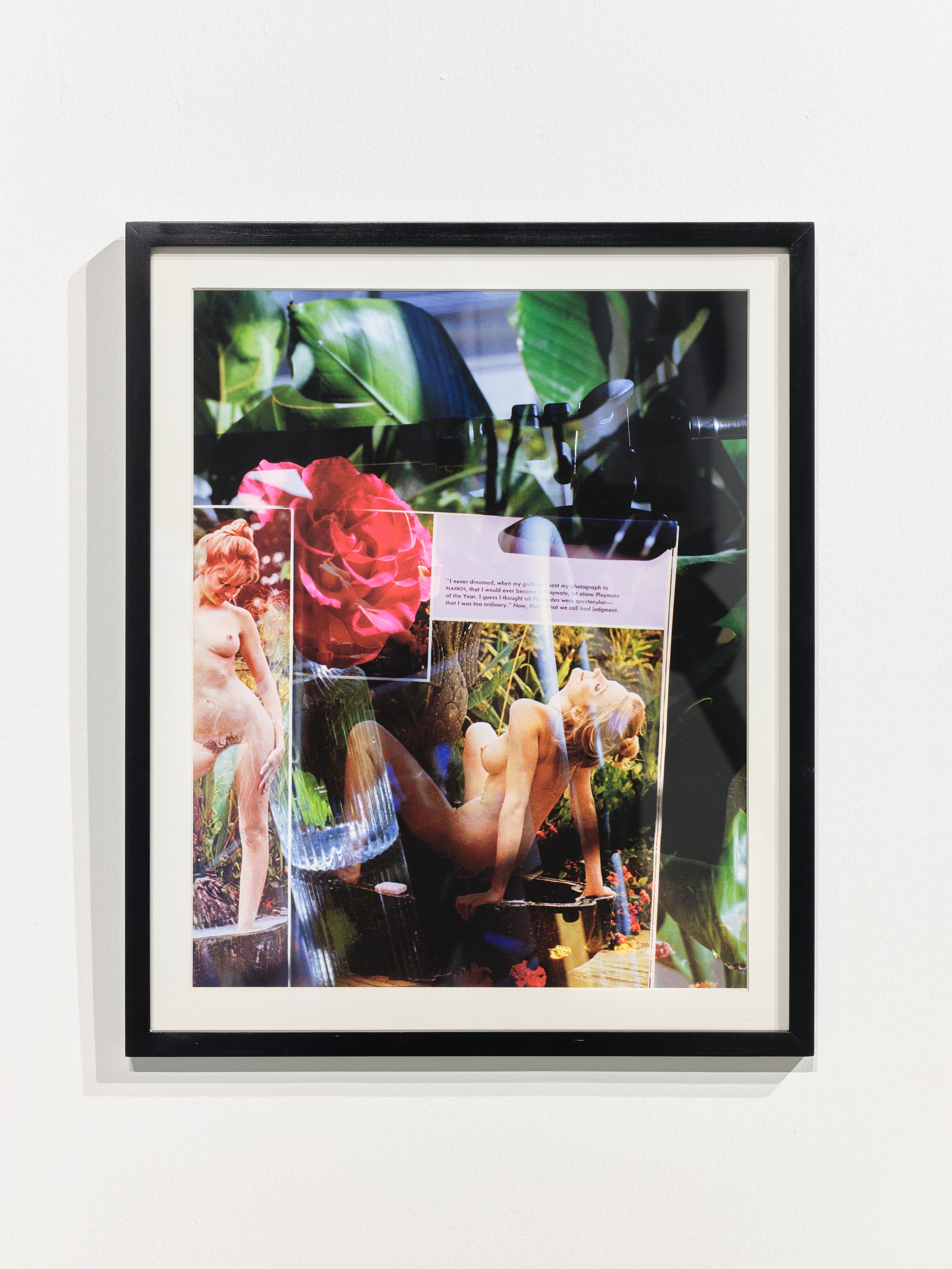
Despite a tendency in the 1980s to analyse every component in a work for its symbolic significance, Gillian Steiner’s delicate work plays with the constant passing of an object as something to be advertised as an object and vehicle for art, apparently separate from function. Her work plays with the legacy of a transition between a modernist photography of still life and the subsequent containment of that notion by advertising. Delicacy, flowery, touching, even pornographic at times, the tangibility of the arrangement resists the sense that something has, or is, there forever. A spoon photographed from one end conflates the point, literally. The deliberate breaking of the eggshell allows a retrospective glance at a post-pop era, perhaps, where an object would be photographed like an exhibit in a court case or an educational aid, but is also an empty vessel for understanding.
With material patterns in the interior, useless, or useful, bank notes, the still life as advertisement, the car abandoned, TV during COVID, and footprints that lead away from the road, and more, Here Now gathers a range of dedicated disciplines.
While drawing, covering, constructing, or developing, morphing between various layers of history and function, still life and landscape can be empty, full, or beside the point. Photography uses the history of painting very clearly. But for over a century, any distinction between media has remained about function, message, or the absence of both. Each artist, in their work, mimics the chemistry that represents a direct moment and a surrounding uncertainty. There is perhaps less to see; over time, whatever has happened will happen again. But we still place faith in the formal image.
— Copyright Sacha Craddock January 2026
Spanish
Here, Now
Compuesta por una serie de obras de ocho artistas consolidados, la exposición Here Now intenta comenzar en el mismo lugar y observar, sin rompecabezas, problema o misterio inicial.
La obra, escogida por su habilidad de conectar el momento en que observas con quizás el momento en que el artista veía y pensaba, busca equilibrar la esperanza de que, junto con la «pequeña muerte» de expectativa que inevitablemente llega cada vez, el arte también trae sentimiento y sensibilidad. Traídas de viajes desde Los Ángeles y Tijuana, así como del tiempo transcurrido en Guadalajara, las fotografías, pinturas y dibujos aquí se exhiben a la manera de los arreglos en las pinturas de René Daniëls, la estrella de los años ochenta: aspiran a un sentido del descubrimiento democrático.
A través de una sólida carrera como académica, documentando interiores domésticos atrapados entre la transición y la permanencia, Ingrid Hernández ilumina los a veces someros hogares y condiciones de vida precarias. Sus imágenes de casas de mexicanos en Nueva York, por ejemplo, así como las de su familia y de otros en Tijuana, revelan mucho más que un amor por el interior. Desplazamientos estéticos entre la naturaleza muerta e interiores totales atraviesan las condiciones cerradas con una disciplina que une un proyecto real, casi académico, con la historia de un género artístico. Con Hernández, se repite una relación particular entre lo suave y lo duro, brillante, sórdido y gráfico. La mesa está puesta, la luz entra a través de una ventana de la que cuelga una tela o persiana, y cae sobre una naturaleza, a veces provisional, de una colección de objetos usados y guardados. Como en cualquier parte, los souvenirs y ornamentos aquí se mezclan con cables de implementación eléctrica y pedazos de tela atractivos pero necesarios que han sido doblados y vueltos a doblar. Una manera de hacer lo que se puede con las circunstancias choca con la reproducción de una pintura de naturaleza muerta que ya existe adentro.
Yvonne Venegas tiene una relación enorme con la fotografía. Mantiene un balance con la precariedad del detalle, atrapada de manera momentánea en la luz con el vacío de la promesa, antes y después, pero no necesariamente durante el sujeto mismo, un espacio para el drama imita y reemplaza el papel sobre el cual aparece una imagen. Impresos en gelatina de plata, su trabajo exprime el espacio elusivo hacia adelante, hacia el delgado hecho. Venegas, quien creció en una familia de los principales fotógrafos sociales de Tijuana, comienza casi desnuda, de alguna manera, en términos de objeto y sujeto, mientras continúa fotografiando aquello que está ahí, alrededor, al centro, y lejos de la orilla del sujeto. Con un gran ojo para la textura y las superficies, ella fotografía las paredes, los pisos y las estructuras del lugar donde se realizan los ensayos de teatro o de ballet para su serie reciente titulada Mexican Drama [Drama mexicano]. De la naturaleza muerta al vacío, el intento inicial de construir ficción, el hecho del lugar en oposición a la ficción del teatro, significan que el ensayo no es la historia. La quietud espera a la manifestación de la vida, los asientos vacíos del teatro parpadean de regreso en una extraña oscuridad compartida, y el raciocinio colectivo de jugar o bailar tiene que esperar.
La serie fotográfica de Javier Ramírez Limón titulada Tara, con matorrales, páramos, paisajes con caminos, camiones y huellas en la arena, proviene de una relación sumamente sofisticada con la historia de la fotografía como arte. Su trabajo contiene aire, espacio, tiempo e incidentes de manera vaciada y aparentemente práctica. La obra presente en Here Now tiene maleza, arrugada y perfectamente rota, por lo que podemos asumir que son personas que actúan. Quedan huellas de pisadas, esperanza, en términos de movimiento, en tanto que ahí están presentes la apertura y el esconderse. Un pionero en el medio y un mentor muy querido, Limón vivió y trabajó en Tijuana hasta su muerte en 2018.
Las pinturas de Mario Ayala reúnen un aparente sentido del tiempo distinto con cierta asociación gráfica. Su relación de los medios de comunicación de Los Ángeles —por ejemplo, la televisión— con el texto del subtítulo, agrega otra capa tan fácilmente, pero también trae una mezcla burda de métodos con los cuales la pintura se vuelve objeto. Esto recuerda a las relaciones entre el arte y la tecnología, cuando los estudiantes de arte buscaban representar el nuevo medio de entonces, la televisión, con el entonces aparentemente viejo medio de la pintura. Al representar una imagen de la pantalla tan bien como su marco de madera que la envuelve, Ayala oscila entre la realidad recortada de las televisiones apiladas o el objeto de una superstición casi medieval, con anillos de colores difuminados en una pantalla de televisión.
Para Alfonso Gonzalez Jr., cada franja en el espacio, marco u orilla del lienzo está fija como futbolista en una cartita de cigarros, para llenar el volumen con un espacio que habitar. Con un conmovedor uso de la pintura que casi imita la superficie pintada amorosamente en sí misma, sus «retratos de coches», con lonas de plástico improvisadas, son, de alguna manera, retratos amorosos. Su superficie se representa casi de forma idéntica en la pintura. Como un artista que también hace y construye, las pinturas son una mímica de paredes a escala real, extendiendo un lenguaje bidimensional en el espacio del museo, González Jr. siempre pinta sobre el rol de una obra de arte como ilusión, contrario a los hechos reales.
El futbolista escolar gana un trofeo con una inscripción. El valor del objeto, por lo general, es insignificante, aunque vale mucho más por lo que representa. Attitudinal Beliefs [Creencias actitudinales] (2024), de Megan Plunkett, es una postura doble, frente y vuelta, sobre la relación entre el arte y su valor. Al centro del escenario, con el mismo nivel de significado, se encuentran fotografías —valuadas de manera arbitraria, o sin valor— notas de denominación enmarcadas a una pulgada de su vida. Con la presencia de un billete que se ha quedado afuera tras haber empacado un juego de mesa para despejar el espacio, el mimetismo de un falso diseño persiste.
El trabajo quieto y de cierta forma educado de Nihura Monteil con el grafito, proviene de su manejo del carboncillo con la frágil precisión de un artista de maquillaje que usa polvo de cara. Un objeto decorativo, interpretado en gran parte de la misma manera en que se hace un cover musical de una canción original, ha sido seleccionado por sus cualidades formales y asociativas. Mientras que Nihura conjura, procesa, la imagen sobre la superficie, llega al fondo de la relación con la naturaleza muerta. Tocar la superficie para construir un reflejo muy reflectante de un objeto vacío, cuestionable, autónomo, como un jarrón, por ejemplo, es, en sí mismo, muy reflectante. La artista juega con la generosidad decorativa al reducir la disposición de asociaciones variables. Intentando llegar a la llave, al centro, la artista se concentra, con atención virtuosa, en una imagen que se convierte en otra cosa a lo largo del tiempo.
A pesar de la tendencia en los años ochenta de analizar cada parte de una obra por su significado simbólico, la obra delicada de Gillian Steiner juega con un constante pasar de un objeto como algo a ser publicitado como objeto, y como vehículo del arte, en apariencia alejado de su función. Su obra juega con el legado de la transición de la fotografía modernista de naturalezas muertas a su posterior absorción por la publicidad. Delicada, floral, conmovedora, incluso, a ratos, pornográfica, la tangibilidad de la disposición se resiste al sentido de que algo dura para siempre. Una cuchara fotografiada de una orilla funde el punto, de forma literal. La rotura deliberada del cascarón de huevo permite una mirada retrospectiva a una era pospop, quizás, en la que un objeto podía ser fotografiado como prueba de un proceso judicial o como material pedagógico, pero también como un recipiente vacío para el entendimiento.
Con patrones materiales al interior, inútiles, o útiles, billetes, naturaleza muerta como publicidad, coches abandonados, la televisión durante COVID, huellas que no llevan a un camino, y más, Here now reúne un amplio rango de disciplinas dedicadas.
Al dibujar, tapar, construir o desarrollar, transformándose a lo largo de varias capas de su historia y función, las naturalezas muertas y los paisajes pueden estar vacíos, llenos o ser irrelevantes. La fotografía claramente utiliza la historia de la pintura, pero desde hace más de un siglo cualquier distinción entre los medios se ha mantenido en torno a su función, su mensaje o la ausencia de ambos. Cada artista, en su obra, imita la química que representa el momento exacto y la incertidumbre circundante. Hay, quizás, menos que ver; a lo largo del tiempo, lo que haya ocurrido sucederá otra vez. Pero seguimos colocando la esperanza en la imagen formal.
— Copyright Sacha Craddock Enero 2026
Images and videos credit: @registro.fotodeobra (Mauricio Vázques & Rui Sam)